
You just pasted a patient’s discharge summary into ChatGPT to draft a quick note. It felt efficient. It saved you ten minutes. But did it break the law? If that tool didn’t have a signed Business Associate Agreement (BAA) with your hospital, the answer is likely yes. As of late 2026, the gap between what healthcare teams want to do with generative AI and what they are allowed to do remains dangerously wide.
Most providers assume that if an AI tool is secure, it’s compliant. That’s a fatal mistake. Security protects data from hackers; compliance protects patients’ legal rights and your organization from massive fines. Navigating this landscape requires understanding three distinct regulatory pillars: HIPAA privacy rules, FDA oversight of medical devices, and the rigorous standards for making clinical claims.
HIPAA Is Not Automatic for AI Tools
Let’s clear up the biggest myth in healthcare tech right now: public generative AI models are not automatically HIPAA compliant. When you use consumer versions of tools like ChatGPT, Google Gemini, or Claude, you are often entering a relationship where the vendor can use your input data to train their models. For a covered entity-like a hospital or clinic-this is a violation unless specific safeguards are in place.
The core mechanism here is the Business Associate Agreement (BAA). This is a legal contract between a healthcare provider and any third-party service that handles protected health information (PHI). Without a BAA, using any platform to process ePHI violates HIPAA, even if the encryption is military-grade. Public AI vendors typically do not sign BAAs for their free tiers because they treat user inputs as potential training fuel.
To stay compliant, organizations must distinguish between two types of AI usage:
- De-identified Data Usage: You strip all identifiers (names, dates, MRNs) according to HIPAA standards before feeding data into a public model. This removes the data from HIPAA’s scope, allowing you to use general-purpose tools safely.
- Enterprise-Grade Compliant Models: You use specialized platforms that sign BAAs. Services like BastionGPT or CompliantGPT offer wrapped versions of major LLMs specifically configured for healthcare, ensuring no data retention for training purposes.
If you are using standard enterprise APIs, check the fine print. Some cloud providers, such as AWS, offer HIPAA-eligible services like Amazon Bedrock and SageMaker. However, eligibility doesn’t mean automatic compliance. You still need to configure access controls, encryption keys, and audit logs correctly. Misconfiguration is the leading cause of technical breaches in these environments.
The Three Pillars of HIPAA Protection
Compliance isn’t just about signing a paper. It’s about operationalizing three specific rules within your AI workflow. Ignoring any one of them exposes you to liability.
First, the Privacy Rule dictates how PHI can be used and disclosed. With generative AI, the risk isn’t just unauthorized access; it’s unintended disclosure. If an AI hallucinates a patient’s diagnosis or leaks context from a previous conversation, has a privacy breach occurred? The Privacy Rule requires that you maintain control over who sees the data and for what purpose. If your AI chatbot shares patient details with a third-party analytics engine without consent, you’re in trouble.
Second, the Security Rule demands administrative, physical, and technical safeguards. In the context of AI, this translates to strict role-based access controls (RBAC). Only authorized personnel should interact with AI tools processing ePHI. Furthermore, you need robust audit trails. Every prompt entered and every response generated involving PHI must be logged. If an auditor asks who accessed a patient record via an AI interface last Tuesday, you need a timestamped log entry, not a vague memory.
Third, the Breach Notification Rule kicks in when things go wrong. If PHI is compromised-even inadvertently through an AI error-you must notify affected individuals and authorities promptly. The definition of "breach" is broad. If an AI model retains sensitive data longer than permitted due to a configuration error, that could constitute a reportable incident.
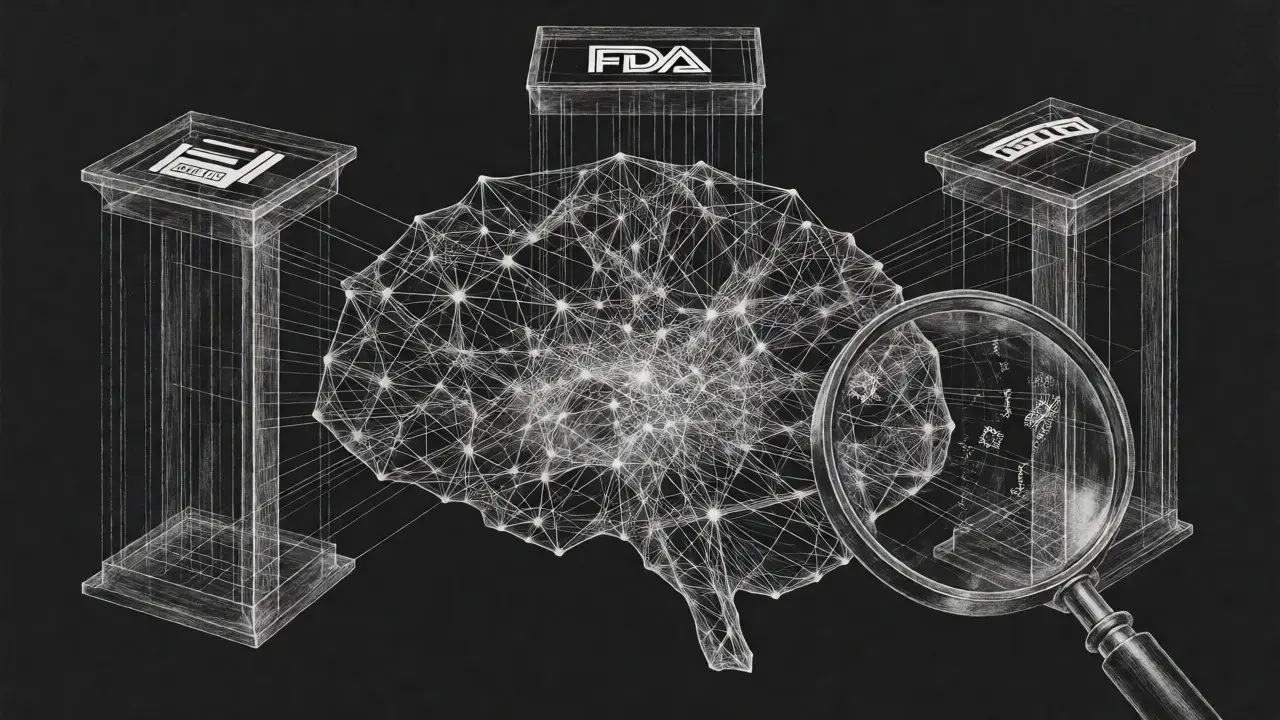
FDA Oversight: When AI Becomes a Medical Device
HIPAA covers privacy. The FDA (Food and Drug Administration) covers safety and efficacy. This is where many startups get blindsided. If your generative AI does more than just summarize text-if it influences clinical decisions-it might be classified as Software as a Medical Device (SaMD).
The FDA regulates AI based on its intended use. Consider this distinction:
| AI Function | Regulatory Status | Example |
|---|---|---|
| Administrative Support | Low Risk / Non-SaMD | Drafting appointment reminders, summarizing non-clinical notes. |
| Clinical Decision Support (CDS) | Medium/High Risk / SaMD | Suggesting differential diagnoses, recommending treatment plans. |
| Diagnostic Aid | High Risk / SaMD | Analyzing radiology images to flag anomalies for review. |
If your AI suggests a diagnosis, it falls under CDS regulations. The FDA recently updated its guidance on AI/ML-based software, emphasizing transparency and explainability. You cannot simply deploy a "black box" model that spits out a recommendation. Clinicians need to understand why the AI made that suggestion. If the model changes after retraining-a common occurrence with generative AI-the FDA may require new validation studies to prove it hasn’t degraded in performance.
For developers, this means maintaining a "locked" version of the model for clinical deployment. Continuous learning loops, while great for tech companies, are a nightmare for regulatory approval. You need a stable baseline to validate against clinical trials.
Validating Clinical Claims: The Hallucination Problem
Generative AI is probabilistic, not deterministic. It predicts the next likely word, not the medically accurate fact. This leads to hallucinations-confidently stated falsehoods. In healthcare, a hallucinated drug interaction or a fabricated citation isn’t just annoying; it’s potentially dangerous.
Making clinical claims requires evidence. If your marketing materials say your AI "improves diagnostic accuracy," you need peer-reviewed data to back that up. The Federal Trade Commission (FTC) and FDA both monitor advertising claims. You can’t claim "superhuman accuracy" without a controlled study comparing your AI against human experts.
Here is a practical checklist for validating clinical outputs:
- Grounding: Does the AI cite sources? Use Retrieval-Augmented Generation (RAG) to force the model to pull answers only from verified medical literature or internal EHR data, rather than relying on its pre-trained weights alone.
- Human-in-the-Loop: Never let AI make final clinical decisions. Implement a mandatory review step where a clinician validates the output before it enters the patient record.
- Continuous Monitoring: Set up automated tests that run daily against known gold-standard cases. If the model’s accuracy drops below a threshold (e.g., 95%), trigger an alert.
Liability is murky here. If a doctor follows an AI’s bad advice and a patient is harmed, who is sued? Currently, the burden largely falls on the provider who failed to exercise independent judgment. But if the AI was marketed as a reliable decision-support tool, the developer could face product liability suits. Clear disclaimers and transparent performance metrics are your best defense.

Governance Frameworks: NIST and HITRUST
Relying solely on HIPAA and FDA guidelines leaves gaps. To build a robust governance structure, look to frameworks like the NIST AI Risk Management Framework. Unlike HIPAA, which focuses on data protection, NIST focuses on trustworthy AI: validity, reliability, safety, security, accountability, transparency, explainability, and privacy.
Many healthcare organizations also adopt HITRUST CSF, a certifiable framework that harmonizes HIPAA, ISO, and other standards. AWS, for example, offers over 177 HITRUST-certified services. Using these pre-certified building blocks simplifies your compliance posture. It proves to auditors that you’ve already vetted the underlying infrastructure for security risks beyond basic HIPAA requirements.
A responsible AI strategy starts with policy, not technology. Before buying a tool, define your acceptable risk tolerance. Are you okay with a 5% error rate in drafting letters? Probably. Are you okay with a 5% error rate in triage recommendations? Absolutely not. Map your AI use cases to these risk levels and apply stricter controls accordingly.
Practical Steps for Immediate Compliance
If you are deploying AI today, here is your action plan:
- Audit Your Shadow IT: Find out if staff are pasting PHI into personal accounts. Ban it immediately or provide a sanctioned alternative.
- Sign BAAs: Ensure every vendor touching ePHI has a current BAA. No exceptions.
- Implement De-identification Pipelines: Build automated tools that scrub PHI before data reaches non-compliant models.
- Document Everything: Keep records of model versions, training data sources, and validation results. If the FDA comes knocking, you need a paper trail.
- Educate Staff: Train clinicians on the limitations of AI. Teach them to spot hallucinations and verify critical outputs.
The regulatory environment is shifting fast. In March 2025, HHS OCR proposed updates to the Security Rule specifically addressing AI handling. Stay agile. Compliance isn’t a one-time checkbox; it’s an ongoing dialogue between technology, law, and patient care.
Can I use ChatGPT for patient documentation?
Only if you use a HIPAA-compliant version with a signed Business Associate Agreement (BAA), such as those offered by enterprise partners or specialized wrappers like BastionGPT. The standard consumer version is not compliant because OpenAI may use inputs for training, and there is no BAA.
Does HIPAA cover AI-generated text?
Yes, if the generated text contains Protected Health Information (PHI) derived from patient data. The Privacy and Security Rules apply to the storage, transmission, and use of that data, regardless of whether it was written by a human or an algorithm.
When does AI become a medical device?
Under FDA regulations, AI becomes a Software as a Medical Device (SaMD) if it performs a clinical function, such as diagnosing, treating, or preventing disease. Administrative tasks like scheduling or billing generally do not fall under FDA jurisdiction.
What is a Business Associate Agreement (BAA)?
A BAA is a mandatory legal contract between a HIPAA-covered entity and a third-party vendor that handles PHI. It ensures the vendor adheres to HIPAA security and privacy standards. Without a BAA, sharing PHI with a vendor is a violation.
How do I handle AI hallucinations in clinical settings?
Implement a "human-in-the-loop" workflow where clinicians review and validate AI outputs before they impact patient care. Use techniques like Retrieval-Augmented Generation (RAG) to ground responses in trusted medical literature, reducing the likelihood of fabricated facts.