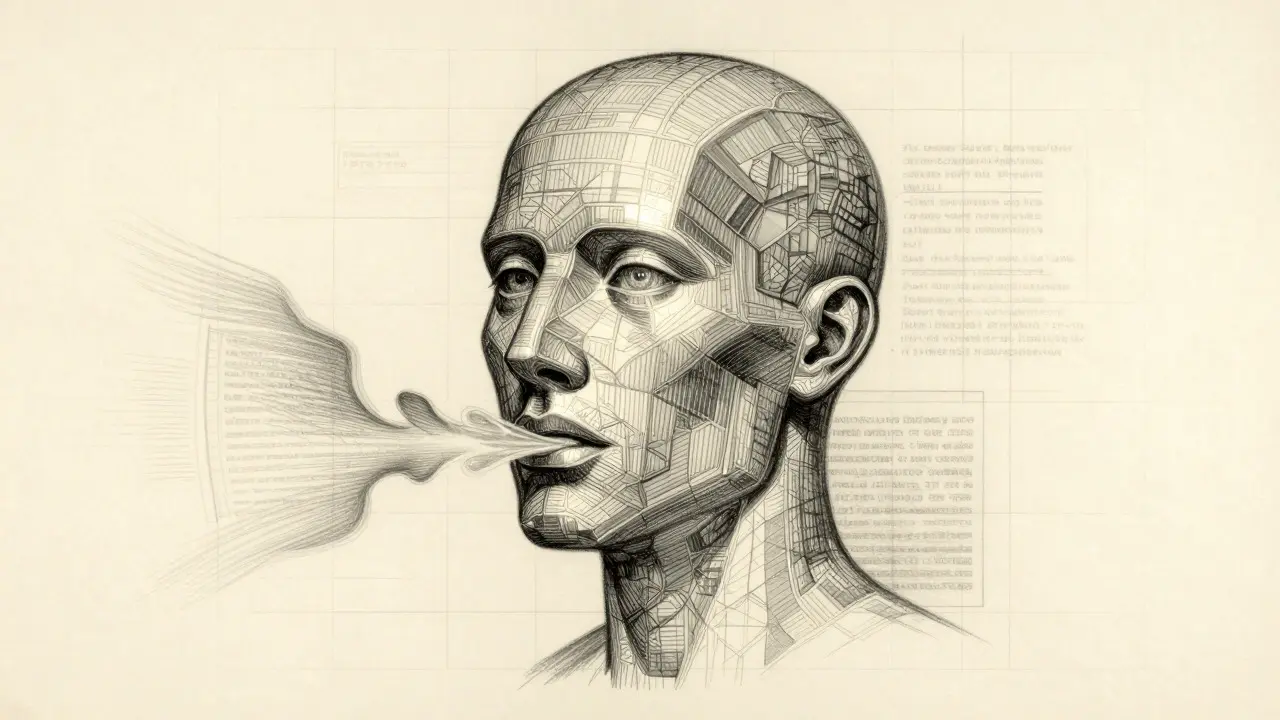
Imagine asking an AI assistant about a product launch that happened last Tuesday. If the model was trained on data from six months ago, it will confidently tell you something that is completely wrong. This is the core problem with large language models (LLMs): they are brilliant pattern matchers, but their knowledge is frozen in time. Retrieval-Augmented Generation (RAG) solves this by letting the model look up fresh information before answering. Instead of relying solely on what it learned during training, RAG fetches relevant documents from an external source and uses them as context. This simple shift transforms static text generators into dynamic, factual assistants capable of handling real-time data without expensive retraining.
Why Standard LLMs Struggle with Facts
To understand why RAG matters, you have to look at how standard LLMs fail. The biggest issue is hallucination, which is the generation of plausible but fabricated information with high confidence. A model might invent a non-existent law or cite a study that never happened. It doesn't do this because it's lying; it does it because it's predicting the next most likely word based on patterns, not verifying truth.
Then there is the knowledge cutoff. Every LLM has a specific date after which it knows nothing. Ask a current model about the latest iPhone features or last week's NBA scores, and you'll get outdated or false answers delivered with total confidence. For businesses, this is risky. If your customer support bot gives outdated pricing or incorrect policy details, you lose trust. RAG addresses both issues by grounding the model's response in verifiable, up-to-date sources rather than its internal memory.
The Core Architecture: How RAG Works
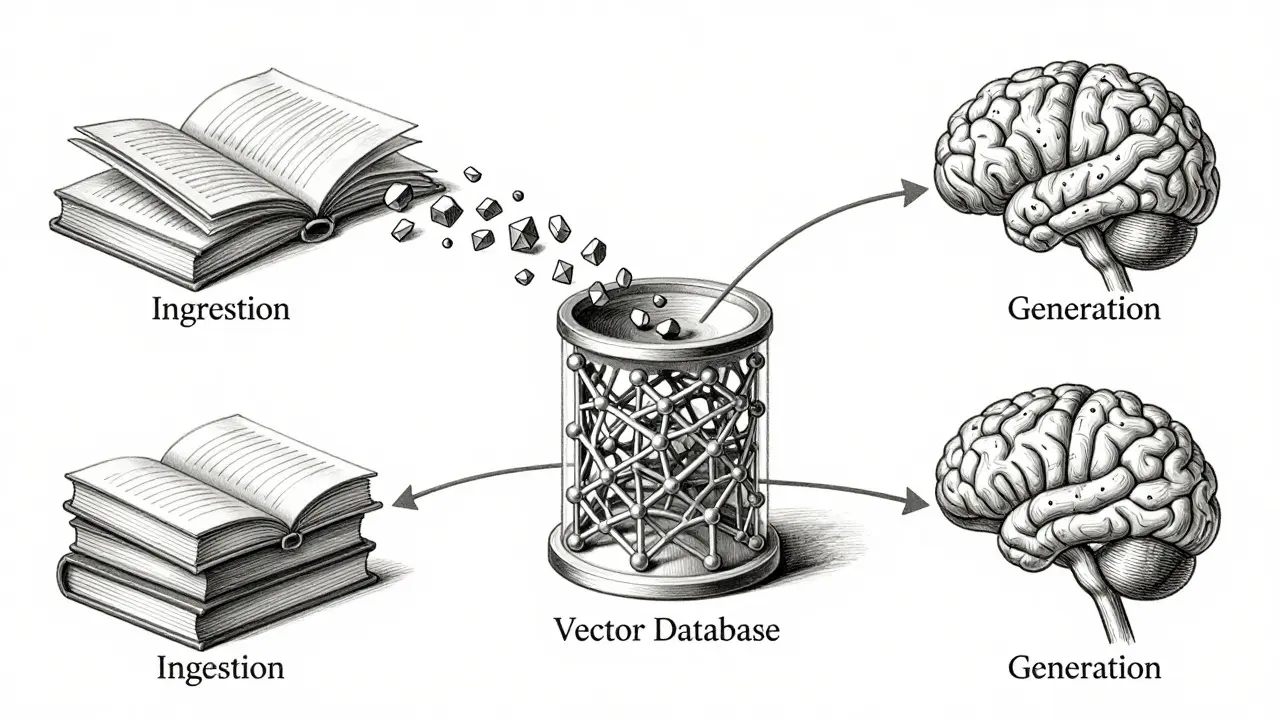
RAG operates through a four-step pipeline: ingestion, retrieval, augmentation, and generation. Understanding these steps helps explain why the system works so well for factuality control.
- Ingestion: You load authoritative data-like company manuals, legal documents, or product specs-into an external store. This usually involves breaking documents into smaller chunks and converting them into mathematical representations called embeddings.
- Retrieval: When a user asks a question, the system converts that query into the same type of embedding. It then searches a vector database, which is a specialized database designed to store and search high-dimensional vectors efficiently, to find the most semantically similar chunks.
- Augmentation: The retrieved chunks are combined with the original user question into a single prompt. This prompt explicitly tells the LLM to use only the provided context to answer.
- Generation: The LLM processes this augmented prompt and generates a response. Because the answer is based on retrieved facts, it is far more accurate and citable.
This workflow separates the "knowledge" (stored externally) from the "reasoning" (handled by the LLM). This separation is key because it allows you to update your knowledge base instantly without touching the model itself.
Vector Databases and Embedding Models
The heart of any RAG system is the retrieval mechanism. To make semantic search possible, you need an embedding model, which is a specialized neural network that converts text into numerical vectors representing meaning. Two sentences with different words but similar meanings will have very close vectors in this space.
These vectors are stored in vector databases like Pinecone, Weaviate, or Milvus. Unlike traditional SQL databases that rely on exact keyword matches, vector databases measure similarity. This means if a user asks "How do I return my shoes?", the system can find a document titled "Footwear Return Policy" even if the word "shoes" isn't in the title.
However, embeddings alone aren't always enough. In technical fields, exact terminology matters. That's why many systems use hybrid retrieval, combining dense vector search with sparse keyword matching (like BM25). This ensures you don't miss critical specific terms while still benefiting from semantic understanding. Reranking models can also be applied here to refine the top results, ensuring the LLM gets the highest quality context possible.
RAG vs. Fine-Tuning: Which Should You Choose?
A common question is whether to fine-tune an LLM or use RAG. They solve different problems. Fine-tuning adjusts the model's behavior and style using thousands of examples. It's great for changing tone or format, but it's expensive and slow. If you want to add new facts, fine-tuning requires retraining the entire model, which is computationally heavy and time-consuming.
RAG, on the other hand, is dynamic. You can update your vector database in minutes. If a price changes, you update the document in the database, and the next query reflects the new price immediately. There is no retraining cost.
| Feature | Retrieval-Augmented Generation (RAG) | Fine-Tuning |
|---|---|---|
| Update Speed | Instant (update database) | Slow (retrain model) |
| Cost | Low (no GPU training needed) | High (requires significant compute) |
| Knowledge Source | External, verifiable documents | Internalized weights |
| Citations | Easy to provide source links | Difficult to trace origin |
| Best For | Dynamic facts, enterprise data, Q&A | Style, format, domain-specific logic |
For most business applications involving factual accuracy, RAG is the superior choice. It provides transparency-you can show the user exactly which document the AI used to answer their question. This builds trust in a way that black-box fine-tuning rarely does.
Advanced Variants: Agentic RAG
Standard RAG retrieves information once, before generation begins. But what if the first retrieval isn't good enough? This is where Agentic RAG, which is a framework where the LLM acts as an agent deciding when and how to retrieve information dynamically, comes in.
In agentic systems, the LLM has tools. It can decide to search again, ask a clarifying question, or switch to a different data source mid-conversation. For example, if the initial retrieved chunk is ambiguous, the agent might perform a second, more specific search. This makes the system more robust and capable of handling complex, multi-step reasoning tasks. It moves the interaction from a simple lookup to a collaborative process between the model and the data infrastructure.
Implementation Challenges and Best Practices
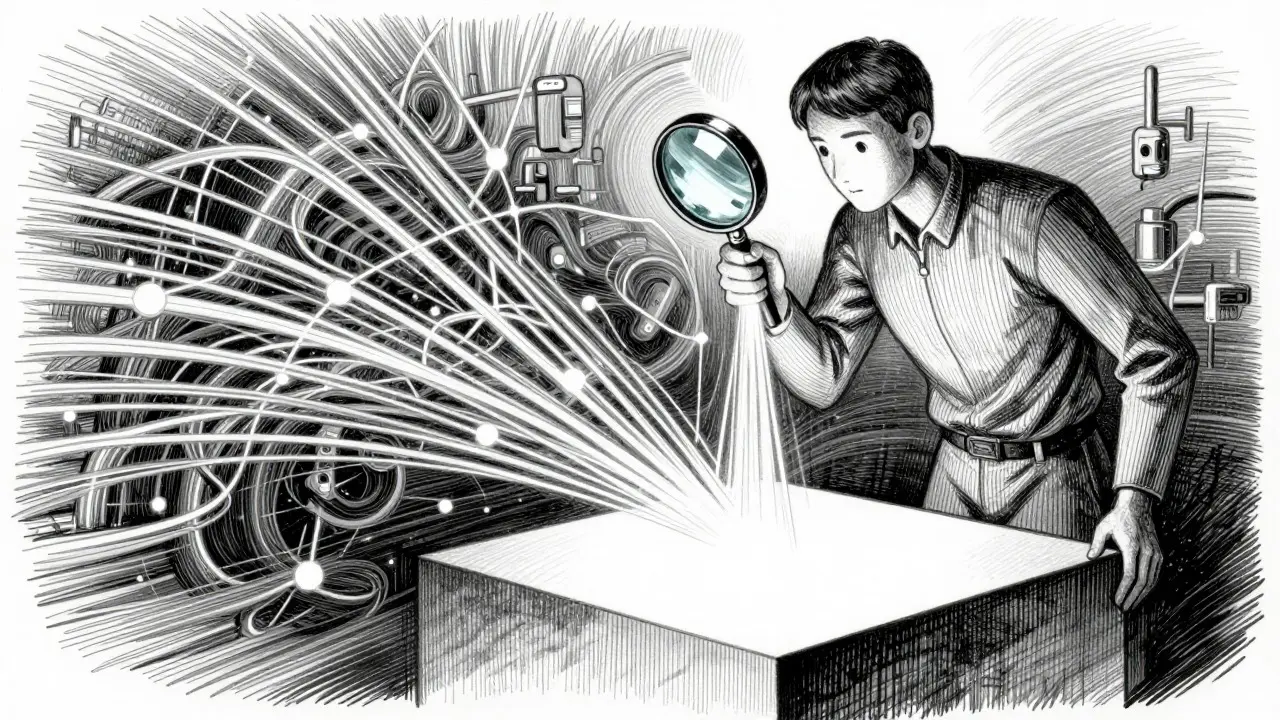
Building a RAG system isn't plug-and-play. The quality of the output depends entirely on the quality of the retrieval. If you feed the LLM irrelevant chunks, it will produce irrelevant answers, even if it's grounded in those bad facts.
- Chunking Strategy: How you break documents into chunks matters. Too small, and you lose context. Too big, and you dilute relevance. Aim for chunks that contain complete thoughts, typically 200-500 tokens.
- Data Hygiene: Garbage in, garbage out. Ensure your source documents are clean, structured, and free of conflicting information.
- Prompt Engineering: Explicitly instruct the LLM to say "I don't know" if the retrieved context doesn't contain the answer. This prevents hallucination when retrieval fails.
Monitoring is also crucial. Track which queries result in low-confidence retrievals. These are your opportunities to improve your indexing or add missing data sources.
The Future of Factual AI
RAG is evolving rapidly. We are seeing moves toward real-time data flows, where models can pull live information from APIs alongside static documents. Interpretability is also improving, with systems now tracking exactly which sentence in the retrieved document influenced which part of the final answer.
As these technologies mature, the line between a "chatbot" and a "knowledge worker" blurs. By combining the generative power of LLMs with the precision of retrieval systems, we get AI that is not just creative, but reliable. For anyone building AI solutions today, mastering RAG is no longer optional-it's the baseline for building trustworthy applications.
What is the main difference between RAG and fine-tuning?
RAG adds external knowledge at query time, allowing for instant updates and citations. Fine-tuning modifies the model's internal weights, which is slower, more expensive, and harder to update with new facts.
Does RAG eliminate all hallucinations?
No, it significantly reduces them. If the retrieval step fails to find relevant information, the LLM might still hallucinate. Good RAG systems include instructions to admit uncertainty when context is insufficient.
Which vector databases are best for RAG?
Popular options include Pinecone, Weaviate, Milvus, and Chroma. The best choice depends on your scale, budget, and integration needs. For small projects, local solutions like Chroma work well; for enterprise scale, managed services like Pinecone are often preferred.
How do I handle private data with RAG?
You store the raw documents and their embeddings in a secure, access-controlled environment. Since the LLM only sees the relevant chunks sent via prompt, you can implement permission checks at the retrieval stage to ensure users only see data they are authorized to view.
Is RAG suitable for real-time applications?
Yes, but latency must be managed. Retrieval adds milliseconds to the response time. Optimizing the vector database and using efficient embedding models ensures the total response time remains acceptable for real-time chat interfaces.


