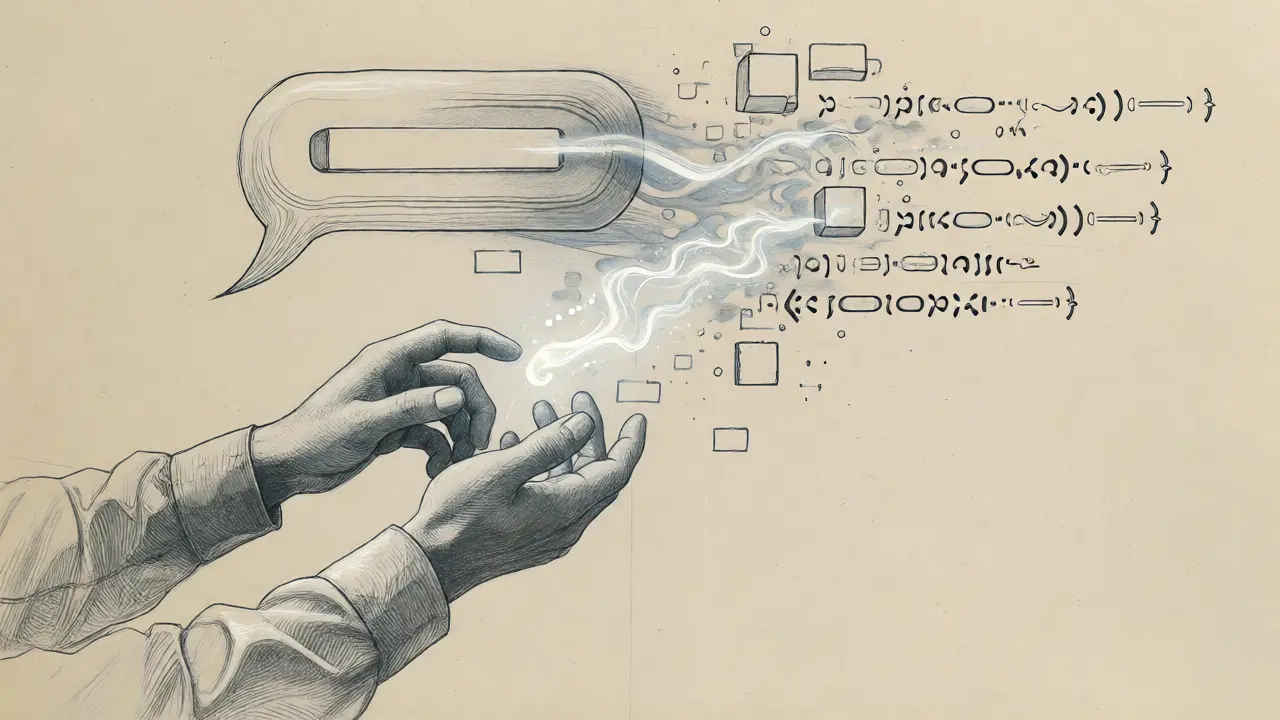
You type a sentence. The machine writes the code. You run it. It works. This isn't science fiction anymore; it's vibe coding, a development methodology where programmers describe software requirements in natural language and let Large Language Models (LLMs) generate the executable code. Coined by Andrej Karpathy in early 2025, this approach shifts your role from typing syntax to directing outcomes. But here is the catch: if you treat it like magic without understanding the mechanics, you will end up with unmaintainable spaghetti code faster than you can say "deploy."
What Actually Is Vibe Coding?
Vibe coding is not just using autocomplete on steroids. It is a fundamental shift in how we build software. In traditional development, you write precise instructions for every line of logic. In vibe coding, you provide high-level intent-"create a user login form with email validation"-and the AI handles the implementation details. You review, test, and refine. If it breaks, you tell the AI what broke, and it fixes it.
The core distinction, as noted by AI researcher Simon Willison, is minimal code understanding. If an LLM wrote every line but you fully reviewed, tested, and understood the architecture, that is just assisted coding. True vibe coding accepts that you might not know exactly how every helper function works internally, trusting the output because it passes tests and meets requirements. This trust is both its superpower and its biggest risk.
The Four Pillars of Outcome-First Development
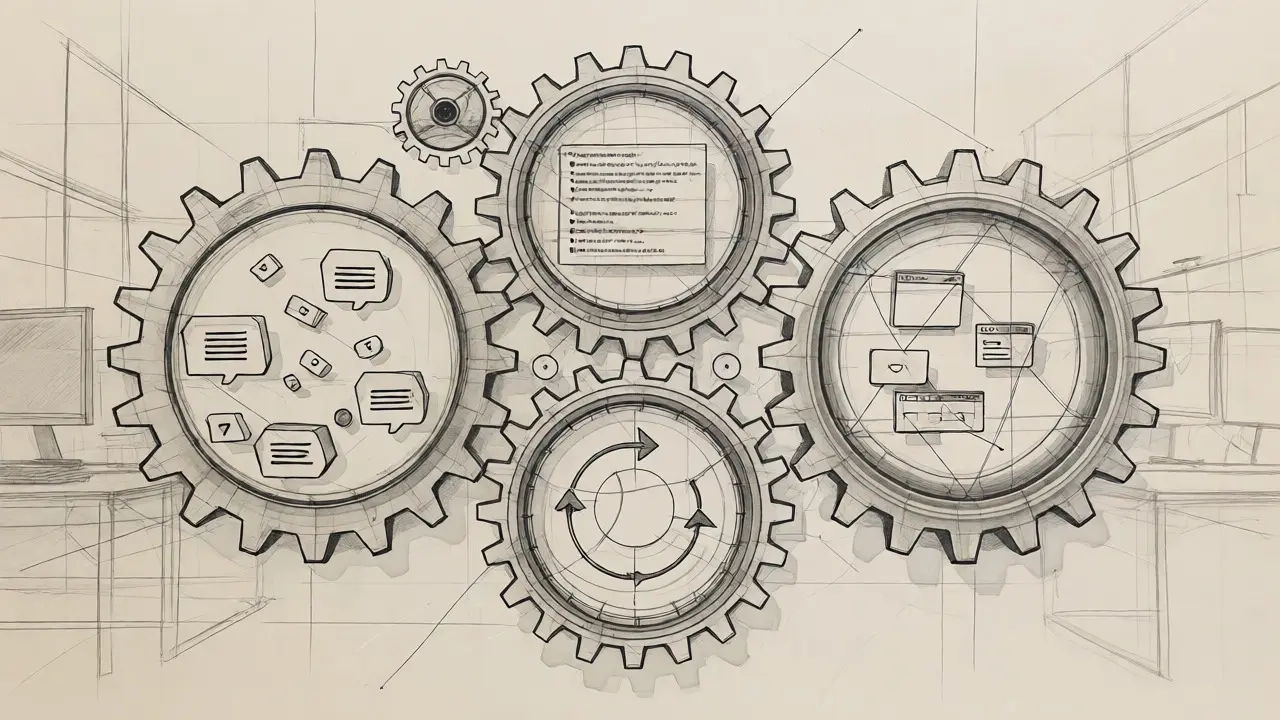
To do this right, you need to understand the four technical principles that make vibe coding work. Ignoring any one of them turns the process into chaos.
- Natural Language Input: You speak or type plain English instead of rigid syntax. Instead of writing `SELECT * FROM users WHERE id = ?`, you say "fetch all active users."
- AI-Generated Code: Models like GPT-4, Claude 3, or specialized tools like Cursor generate syntactically correct code based on your prompts. They handle boilerplate, API calls, and even complex algorithms.
- Iterative Refinement: The first draft is rarely perfect. You provide feedback-"the layout is broken on mobile," "add error handling for invalid emails"-and the AI updates the code. This loop continues until the functionality matches your vision.
- Minimal Code Understanding: You focus on behavior and interface contracts rather than internal implementation details. You verify that the button clicks and saves data, not necessarily how the database transaction is managed under the hood.
Why Developers Are Switching (And Why Some Hate It)
The speed is undeniable. Startups report 60-75% faster prototyping cycles when using vibe coding workflows. Garry Tan, CEO of Y Combinator, noted that tasks requiring a whole team of engineers can now be handled by smaller groups. For solo founders or small teams, this means you can ship an MVP in days rather than months.
But there is a dark side. Without discipline, vibe coding accumulates technical debt rapidly. Studies suggest projects heavily reliant on unchecked AI code see 30-40% more maintenance effort after six months. Why? Because AI optimizes for getting the job done quickly, not for long-term architectural elegance. It might duplicate code across files, ignore security best practices, or create inconsistent naming conventions. Senior developers often worry about this lack of structural coherence, fearing that their codebase becomes a black box they cannot debug later.
Security Risks You Cannot Ignore
If you skip security checks, vibe coding can expose your application to significant vulnerabilities. Penetration testing has shown a 22% higher vulnerability rate in AI-generated code compared to human-written equivalents. Common issues include improper input validation and insecure default configurations.
The Cloud Security Alliance highlights a critical rule: never hardcode sensitive data. AI models sometimes embed API keys or passwords directly into scripts for convenience. Always explicitly prompt the AI to use environment variables for secrets. Additionally, ensure that generated endpoints validate inputs strictly. An AI might write a clean SQL query but forget to sanitize user input, leaving you open to injection attacks.
Practical Workflow: How to Vibe Code Responsibly
So, how do you actually do this without drowning in bugs? Successful practitioners follow a structured loop that balances speed with quality.
- Describe the Outcome: Be specific about what the feature should do, not how. "Create a dashboard showing daily sales totals" is better than "Write a React component with useEffect."
- Generate and Review: Let the AI produce the code. Skim it for obvious red flags like hardcoded secrets or missing error handling.
- Test Rigorously: This is non-negotiable. Write unit tests or integration tests immediately. If the code passes tests, you can accept it even if you don't fully grasp the internal logic.
- Refine with Feedback: If something fails, paste the error message back to the AI. Ask it to fix the specific issue while preserving existing functionality.
- Deploy and Iterate: Ship it fast. Gather real-world usage data and feed that back into the next iteration.
Teams that succeed dedicate 20-30% of their time to reviewing and refining AI outputs. This "human-in-the-loop" verification ensures that the code remains maintainable. Tools like GitHub Copilot and Cursor now offer validation layers that flag potential security issues automatically, reducing critical vulnerabilities by up to 32% in some cases.

Vibe Coding vs. Traditional Development
Is vibe coding replacing traditional engineering? Not entirely. It complements it. Here is how the approaches compare in practice.
| Feature | Vibe Coding | Traditional Development |
|---|---|---|
| Primary Input | Natural language descriptions | Precise programming syntax |
| Developer Role | Director, tester, refiner | Architect, coder, debugger |
| Speed to Prototype | Very High (Hours/Days) | Moderate (Weeks/Months) |
| Code Understanding | Minimal (Focus on behavior) | Deep (Line-by-line knowledge) |
| Security Risk | Higher (Requires strict validation) | Lower (Controlled by developer) |
| Best Use Case | MVPs, Prototypes, Simple Features | Complex Algorithms, Core Infrastructure |
Who Should Adopt Vibe Coding?
This methodology shines for startups, solo developers, and teams building new features quickly. If you are a junior developer, it lowers the barrier to entry, allowing you to build full-stack apps before mastering every framework nuance. However, enterprise environments move slower. Only 29% of Fortune 500 companies allow vibe coding in production due to governance concerns. They prefer sandboxed experimentation first.
If you are working on mission-critical financial systems or complex distributed architectures, stick to traditional methods for the core logic. Use vibe coding for UI components, API wrappers, and repetitive CRUD operations. Hybrid approaches are becoming the norm: AI generates the bulk of the code, and senior engineers review the architecture and security implications.
Frequently Asked Questions
Do I still need to know how to code to use vibe coding?
You don't need to memorize syntax, but you must understand programming concepts. Knowing what variables, functions, APIs, and databases are helps you write better prompts and debug errors. Pure beginners can start, but learning basic logic accelerates proficiency significantly.
Is vibe coding secure enough for production?
It can be, but only with rigorous oversight. AI-generated code often lacks proper input validation and secret management. You must enforce security reviews, use environment variables, and run automated security scans before deploying to production.
What happens if the AI generates buggy code?
This is common. The workflow relies on iterative refinement. Paste the error message or describe the unexpected behavior back to the AI. It usually fixes simple bugs quickly. For complex logical errors, you may need to break the problem down into smaller prompts or manually adjust the code.
Which tools are best for vibe coding?
Cursor and GitHub Copilot are leading IDE-integrated tools. Claude Code and other CLI-based agents are popular for terminal-centric workflows. Choose tools that integrate well with your existing stack and offer strong context awareness for large codebases.
Will vibe coding replace software engineers?
No, it changes their role. Engineers become architects and product managers who guide AI agents. Demand for skilled developers who can design systems and validate AI outputs remains high, while demand for pure typists decreases.


