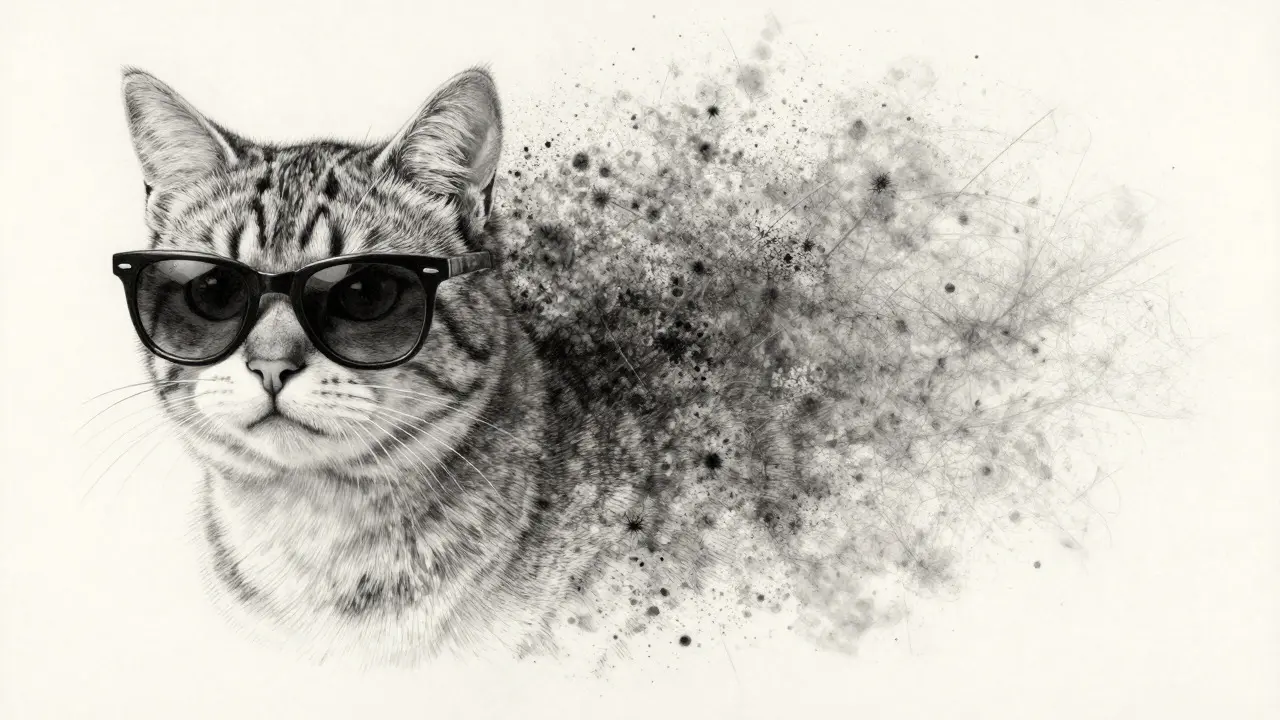
Have you ever wondered how an AI can turn a block of random static into a perfect photograph of a cat wearing sunglasses? It sounds like magic, but it’s actually math. Specifically, it’s a process called diffusion modeling, which is a type of generative artificial intelligence that creates images by learning to remove noise from data. Unlike earlier AI systems that tried to paint an image pixel by pixel in one go, diffusion models work backward from chaos to order. They start with pure visual noise and slowly clean it up until a clear picture emerges.
This technology has taken over the world of generative AI. If you’ve used tools like DALL-E, Midjourney, or Stable Diffusion, you’ve seen diffusion models in action. But how exactly does this "noise removal" trick produce such sharp, realistic results? Let’s break down the mechanics, compare them to older technologies, and look at why this method is now the industry standard for creating high-quality visuals.
The Core Concept: From Chaos to Clarity
To understand how diffusion works, imagine you have a clear photograph. Now, imagine adding a tiny bit of grainy noise to it. Then add more. Keep going until the photo is completely unrecognizable-just a field of gray static. That is the first half of the process, known as the forward diffusion process.
In technical terms, researchers Jonathan Ho, Ajay Jain, and Pieter Abbeel formalized this in their 2020 paper on Denoising Diffusion Probabilistic Models (DDPM). They showed that if you gradually corrupt an image with Gaussian noise over a set number of steps (usually around 1,000), you eventually reach a state of pure randomness. The AI doesn’t just guess what the image was; it learns the mathematical path back.
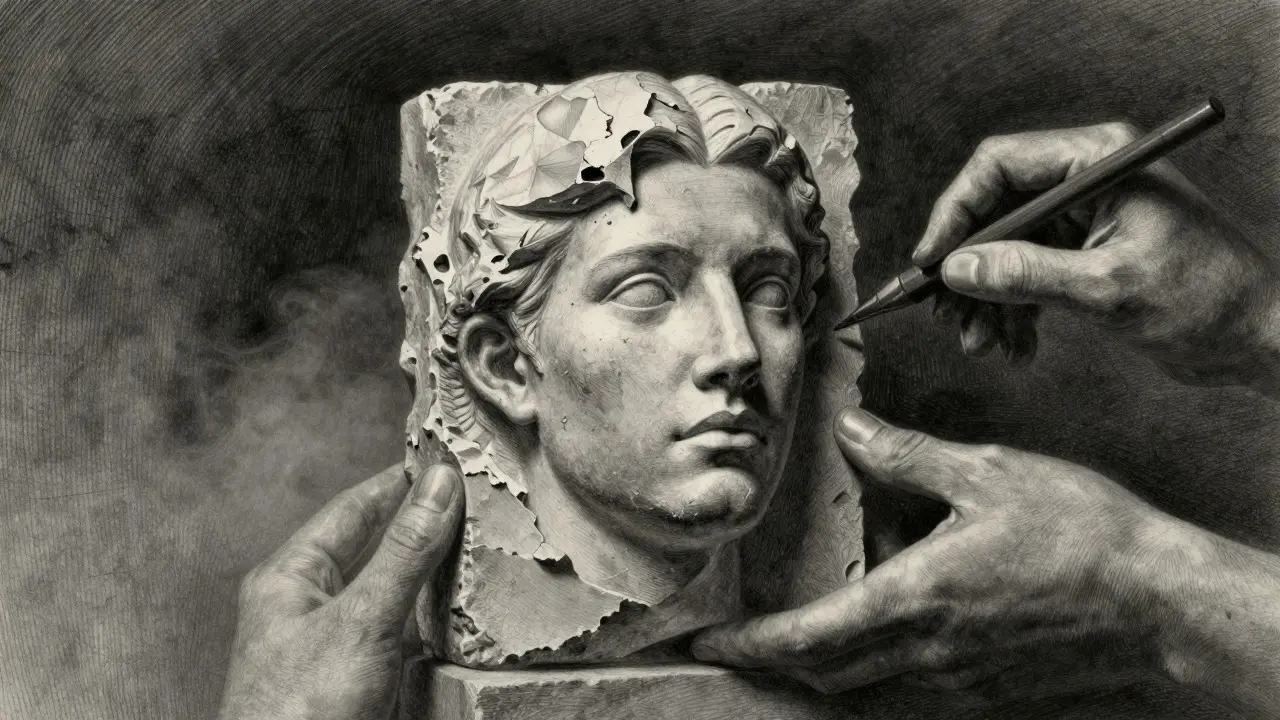
The second half is the reverse process. The AI takes that static and tries to subtract the noise step-by-step. By training on millions of images, the model learns what "noise" looks like at every stage of corruption. When you ask it to generate a new image, it starts with fresh static and uses its learned knowledge to peel away layers of noise, revealing a coherent object underneath. It’s less like painting and more like sculpting-chipping away the excess stone to reveal the statue inside.
Why Diffusion Beats GANs
Before diffusion models became dominant, Generative Adversarial Networks (GANs) were the kings of image generation. GANs work by pitting two neural networks against each other: a generator that creates fake images and a discriminator that tries to spot the fakes. It’s a constant game of cat and mouse.
While GANs are fast, they have major flaws. They often suffer from "mode collapse," where the AI gets stuck generating only one type of image (like only smiling faces) because it finds that pattern easiest to fool the discriminator. They are also notoriously unstable to train. According to NVIDIA’s 2023 research, diffusion models have largely replaced GANs because they offer superior stability and quality.
| Feature | Diffusion Models | GANs |
|---|---|---|
| Training Stability | High (98% success rate) | Low (65% success rate, prone to mode collapse) |
| Image Quality (FID Score) | Superior (Lower FID = Better realism) | Good, but often lacks fine detail |
| Generation Speed | Slower (Requires multiple steps) | Faster (Single forward pass) |
| Control & Conditioning | Excellent (Easy to guide with text prompts) | Difficult (Hard to control specific features) |
Data from the Stanford AI Index Report shows that by 2023, diffusion models powered 87% of new text-to-image systems, while GANs held only 13%. The shift happened because diffusion models simply produce better, more consistent results without the headaches of training instability.
The Technical Engine: U-Nets and Latent Space
You might wonder how these models run on consumer hardware. Early diffusion models required massive computational power because they processed every single pixel of an image. For a 512x512 image, that’s over 260,000 pixels to calculate at every step.
The breakthrough came with Latent Diffusion Models, introduced by Stability AI in 2022. Instead of working in pixel space, these models compress images into a smaller, abstract representation called "latent space." Think of it like summarizing a book instead of reading every word. The AI learns to denoise this compressed version, which is much faster and requires less memory. Once the latent image is clean, a separate decoder expands it back into a full-resolution picture.
At the heart of this process is a neural network architecture called a U-Net. This structure allows the model to capture both broad context (the whole scene) and fine details (textures and edges) simultaneously. Modern implementations use attention mechanisms within the U-Net to ensure that different parts of the image relate to each other correctly-for example, ensuring a shadow falls in the right direction relative to a light source.
Real-World Performance and Limitations
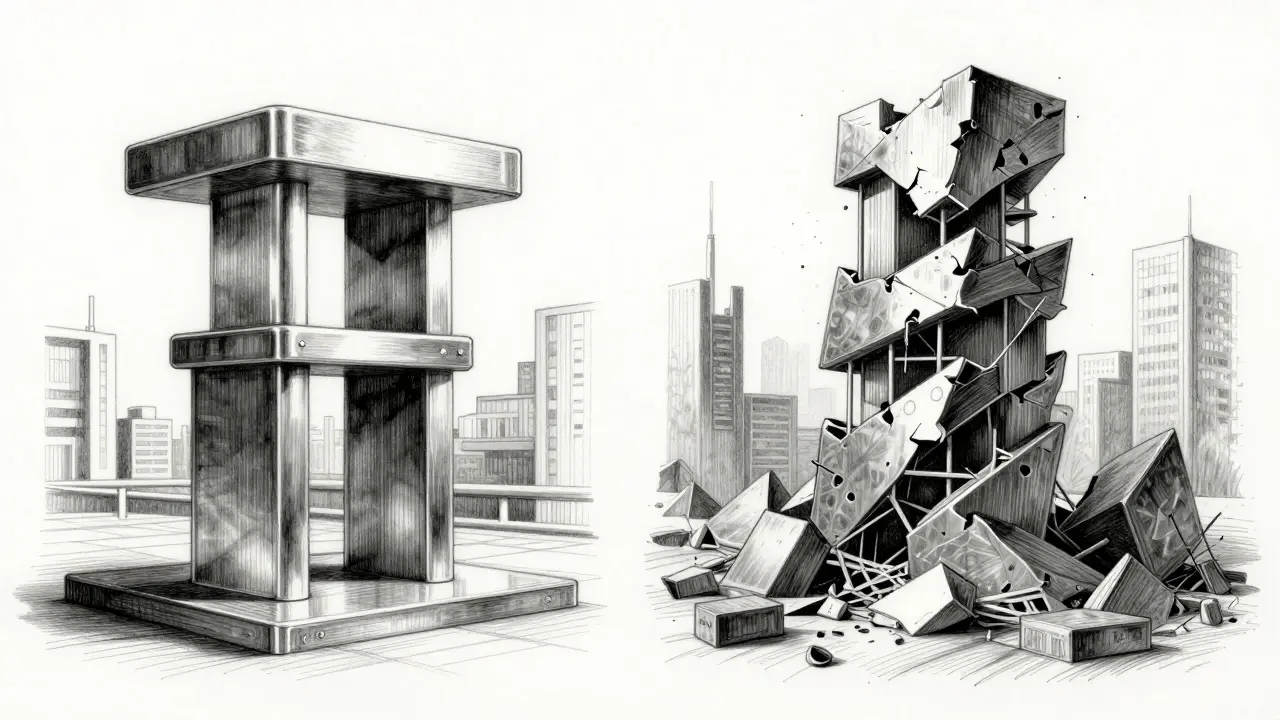
Despite their advantages, diffusion models aren’t perfect. The biggest drawback is speed. Because the model must perform dozens or hundreds of sequential steps to remove noise, generation takes time. A single high-quality image might take several seconds to minutes depending on your hardware. In contrast, a GAN can spit out an image in milliseconds.
This latency makes diffusion models less suitable for real-time applications like video game texture streaming, where GANs still hold a strong market share. However, for tasks requiring high fidelity and complex composition-like architectural visualization, product design, or artistic concept art-diffusion is unmatched.
User feedback highlights this trade-off. On platforms like Reddit, users praise the photorealistic skin textures and coherent lighting in diffusion outputs but frequently complain about the wait times and the steep learning curve associated with prompt engineering. Many novice users struggle with "negative prompting"-telling the AI what *not* to include-to avoid common artifacts like extra fingers or distorted text.
The Future: Faster and More Controllable
The field is moving quickly toward efficiency. Researchers are developing techniques like "flow matching" and distillation to reduce the number of steps needed from 50 down to just 2 or 3. Companies like NVIDIA and Meta are optimizing these models to run faster on standard GPUs, making them accessible to more developers.
We’re also seeing improvements in controllability. Newer versions of models like Stable Diffusion 3 allow for precise manipulation of objects within an image, reducing errors like duplicated subjects. As the technology matures, we can expect diffusion models to become not just faster, but more intuitive, bridging the gap between human creativity and machine execution.
What is the difference between diffusion models and GANs?
GANs use two competing networks to generate images in a single pass, which is fast but unstable. Diffusion models iteratively remove noise from random static over many steps, resulting in higher quality and more stable training, though slower generation speeds.
Why do diffusion models need so many steps?
Each step represents a small refinement in removing noise. Skipping steps can lead to blurry or incoherent images. The model needs these incremental adjustments to accurately reconstruct complex details like textures and lighting.
Can I run diffusion models on my personal computer?
Yes, especially with Latent Diffusion Models. You typically need a GPU with at least 6GB of VRAM for basic generation, though 12GB or more is recommended for higher resolutions and faster performance.
What is "latent space" in diffusion models?
Latent space is a compressed, abstract representation of an image. By processing this smaller data format instead of raw pixels, diffusion models save significant computational resources and memory during the generation process.
Are diffusion models replacing all other AI image generators?
For high-quality, detailed image generation, yes. Diffusion models dominate the market for text-to-image tools. However, GANs remain relevant in niche areas requiring extreme speed, such as real-time video processing or low-latency gaming applications.