
For years, the biggest AI breakthroughs were locked behind paywalls and proprietary servers. But that era is ending. Today, open-source generative AI isn't just a niche for hobbyists; it's the engine driving enterprise innovation, creative freedom, and transparent technology. From running large language models on a laptop to generating game assets in real-time, the community has built a robust ecosystem that challenges the status quo. If you're wondering where this movement is heading, the answer lies not just in better models, but in how we govern them.
The Shift from Proprietary to Open Ecosystems
The momentum for open-source AI exploded when Meta released LLaMA in early 2023, but the roots go deeper. Earlier work like EleutherAI's GPT-NeoX (2021) and Stability AI's Stable Diffusion (2022) proved that high-quality AI didn't need to be closed off. By late 2025, the Linux Foundation AI & Data ecosystem alone hosts over 68 actively maintained projects. Matt White, Executive Director of the PyTorch Foundation, notes that more than 100,000 developers from 3,000 organizations are now contributing globally. This isn't accidental growth; it's a strategic shift. Companies want control. They want to verify what their AI is doing. With 78% of Fortune 500 companies citing data privacy concerns with proprietary models, the transparency offered by open weights and code has become a business necessity, not just an idealistic choice.
Leading Models and Their Technical Realities
Not all open-source models are created equal. Understanding the technical specs helps you choose the right tool for your job. Here’s how the major players stack up as of mid-2026:
| Model | Key Architecture/Specs | Primary Strength | Hardware Requirement |
|---|---|---|---|
| LLaMA 3 | 8B-70B params, Grouped-Query Attention | Enterprise LLM adoption (41.7% share) | 16GB VRAM (8B version) |
| Stable Diffusion 3 | Rectified Flow Transformer, 2.1B params | Image generation customization (68.2% market share) | NVIDIA A100 for optimal speed |
| BigScience BLOOM | 176B params, Autoregressive Transformer | Multilingual support (46+ languages) | 320GB GPU memory / 8x A100 80GB |
| Gemma 2 | 9B & 27B params, Multi-framework compatible | Coding benchmarks (68.4% HumanEval) | Consumer hardware compatible |
LLaMA 3 dominates enterprise use because it balances performance with accessibility. You can run the 8B version on a standard workstation, which makes prototyping fast. However, if you need deep multilingual capabilities, BLOOM is still the leader, despite its massive size. For creative teams, Stable Diffusion 3 offers unparalleled control over image generation, outperforming proprietary tools in customization, even if it lags slightly in photorealism compared to DALL-E 3.

Governance: The New Bottleneck
As these models spread, governance has become the most critical challenge. It’s no longer just about who trains the model; it’s about who owns the rights, how licenses are applied, and how compliance is managed. Stanford HAI warned in 2025 about "fragmentation risks," noting that 83 distinct licensing frameworks complicate enterprise adoption. This legal maze causes real delays. In IBM’s November 2025 survey, 28% of companies delayed adopting open-source AI due to license uncertainty. To address this, the OpenChain AI Working Group launched in June 2025 with 47 corporate members. They’ve already standardized 87% of license compliance processes, creating a clearer path for businesses to adopt these tools without legal headaches. For developers, this means checking licenses isn't optional-it's part of the engineering workflow.
Community Dynamics and Practical Implementation
The strength of open-source AI lies in its community, but communities have quirks. On Reddit’s r/LocalLLaMA, users celebrate the ease of running models locally. One popular post highlighted running a 7B LLaMA version on a MacBook Pro M2 using Ollama in under five minutes. This accessibility drives adoption. However, documentation quality varies wildly. While LLaMA 3 scores well in community assessments, specialized models often suffer from outdated examples. This inconsistency creates friction. Enterprise deployment typically requires Python proficiency, containerization skills, and GPU optimization knowledge. Common pitfalls include hardware under-provisioning and license compliance errors. The good news? Tooling is maturing. Ollama and LM Studio have lowered the barrier to entry, reducing the average learning curve from 8.2 weeks in early 2024 to 4.7 weeks by late 2025. Support channels like Discord also play a huge role; LLaMA 3’s active server provides rapid responses, whereas less popular models can leave users waiting hours for help.
Future Trajectories: Edge, Specialization, and Hybrid Models
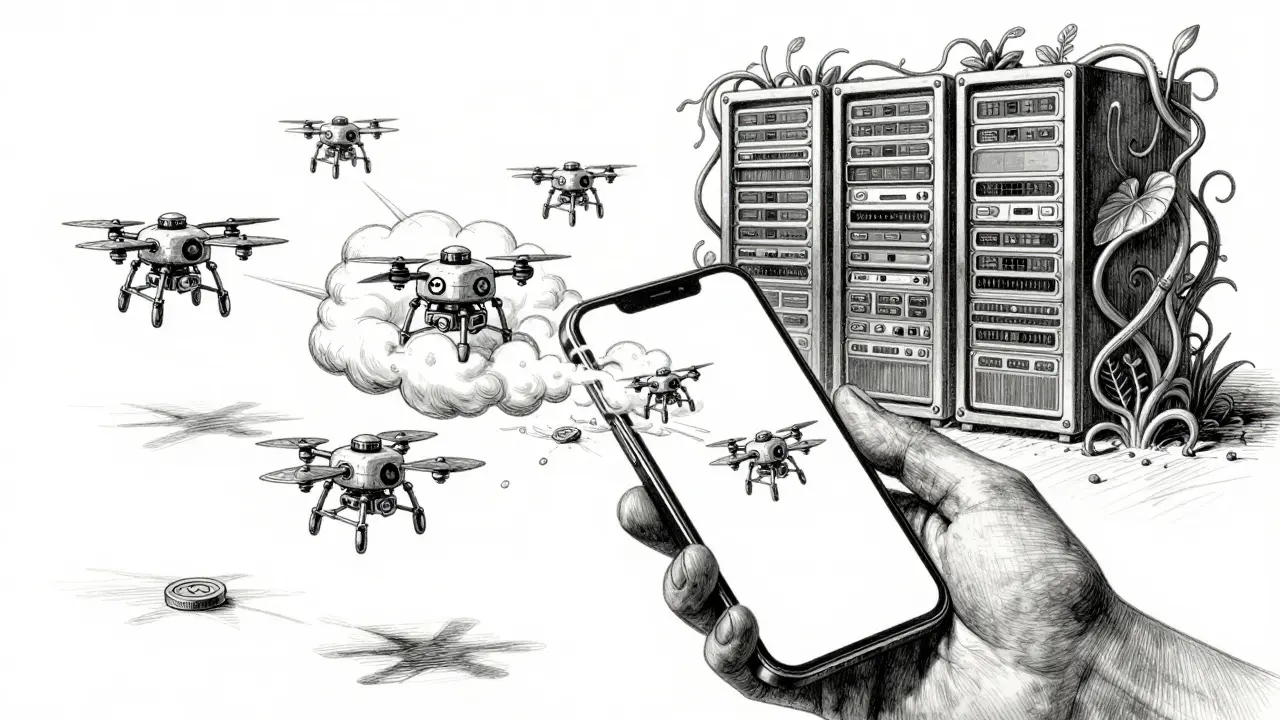
Where is this going next? Three trends define the roadmap through 2027. First, edge AI specialization. We’re seeing smaller models like Microsoft’s Phi-3-mini achieve near-frontier performance on smartphones. This shift allows AI to run locally, preserving privacy and reducing latency. Second, domain-specific ecosystems. Healthcare and finance are building tailored models that outperform general-purpose ones in specific tasks. Third, hybrid architectures. Most enterprises aren't choosing between open and closed; they’re combining them. They use open base models for flexibility and add proprietary fine-tunes for competitive advantage. This hybrid approach is adopted by 58% of surveyed enterprises. As regulatory pressures mount, such as the EU’s AI Act requiring transparency documentation, these hybrid models offer a way to comply while maintaining innovation. The future isn't about one giant model; it's about a network of specialized, governed, and accessible systems working together.
Frequently Asked Questions
What is the main advantage of open-source generative AI over proprietary models?
The primary advantages are transparency, cost reduction, and control. Open-source models allow you to inspect the code and weights, ensuring security and compliance. They also eliminate licensing fees for inference, and let you customize the model specifically for your needs without relying on a vendor's roadmap.
Which open-source model is best for enterprise customer service?
Meta's LLaMA 3 is currently the leader in enterprise adoption for customer service scenarios. It holds a 41.7% market share among open-source LLMs in business applications due to its strong multilingual capabilities and balance between performance and hardware requirements.
How does AI governance affect open-source adoption?
Governance impacts adoption through licensing clarity and regulatory compliance. Fragmented licenses can delay deployment, as seen in 28% of companies facing legal uncertainty. Initiatives like the OpenChain AI Working Group are helping standardize these processes, making it easier for enterprises to integrate open-source models into their workflows safely.
Can I run large open-source AI models on consumer hardware?
Yes, but with limitations. Smaller variants like LLaMA 3 8B or Gemma 2 9B can run on consumer GPUs with 16GB VRAM. Tools like Ollama and LM Studio make this process straightforward. However, massive models like BLOOM (176B parameters) still require significant data center-grade hardware, such as multiple A100 GPUs.
What is the future of open-source AI in 2026?
The future points toward edge AI, domain specialization, and hybrid architectures. We expect more efficient small models capable of running on phones, industry-specific models for sectors like healthcare, and a widespread adoption of hybrid approaches where companies combine open base models with proprietary fine-tuning.