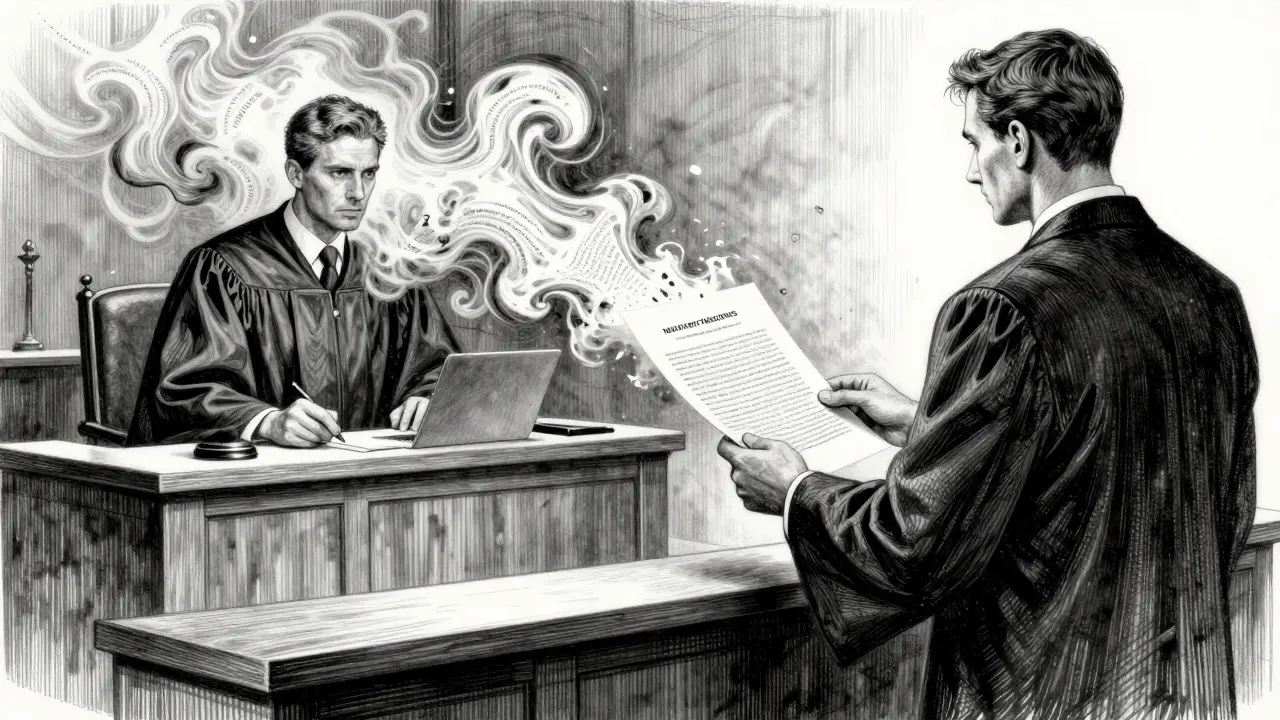
You ask an AI model for a specific legal precedent. It gives you a case name, a court, and a date. It sounds perfect. You cite it in a filing. Then your opponent proves the case never existed. This isn't a glitch; it's a feature of how Generative AI is a class of artificial intelligence systems capable of creating new content, including text, images, and code, based on patterns learned from vast datasets built.
In 2026, we know that hallucinations are instances where large language models generate false, misleading, or fabricated information with high confidence, presenting it as factual truth are not rare bugs. They are systemic behaviors triggered by specific edge cases. If you are deploying AI at scale, treating these errors as random noise is dangerous. You need to understand the exact patterns that cause them and the technical safeguards required to prevent them.
The Root Cause: Prediction vs. Knowledge
To fix the problem, you first have to understand the mechanism. Large language models (LLMs) do not "know" facts. They predict the next word in a sequence. When you ask a question, the model calculates the statistical probability of which words should follow based on its training data. This creates a fundamental vulnerability: plausibility does not equal accuracy.
When training data is sparse, contradictory, or outdated, the model fills the gaps with statistically probable text. It lacks grounding in verified reality. It generates outputs based on public web data rather than connecting to a trusted knowledge base. If the training corpus contained errors, biases, or fabricated web content, those inaccuracies propagate into the model's outputs. The model cannot differentiate between well-learned facts and statistical noise, resulting in confident yet unfounded assertions.
Common Edge Case Patterns That Trigger Failures
Hallucinations rarely happen at random. They emerge from specific interaction patterns. Recognizing these triggers allows you to engineer around them.
- Prompt Ambiguity: Vague or underspecified prompts give the model room to improvise. If you ask a broad question without constraints, the model may invent details to satisfy the perceived intent.
- Response Pressure: Forcing a model to provide a specific number of answers (e.g., "list five reasons") when only two exist forces it to fabricate the remaining three. The model prioritizes satisfying the format over admitting uncertainty.
- Rare or Novel Information: According to the Good-Turing principle, language models must sometimes hallucinate because rare or unseen events cannot be perfectly predicted from limited examples. Queries about niche topics or recent events often trigger higher error rates.
- Domain Specificity: In fields like medicine, finance, and law, the stakes are high, and the nuance is deep. Models trained on general web data lack the specialized grounding needed for precise professional advice, leading to domain-specific hallucinations.
- Content Expansion: When asked to summarize or extend a narrative, models may add peripheral details or fictional events to make the output feel complete, diverging significantly from the source material.
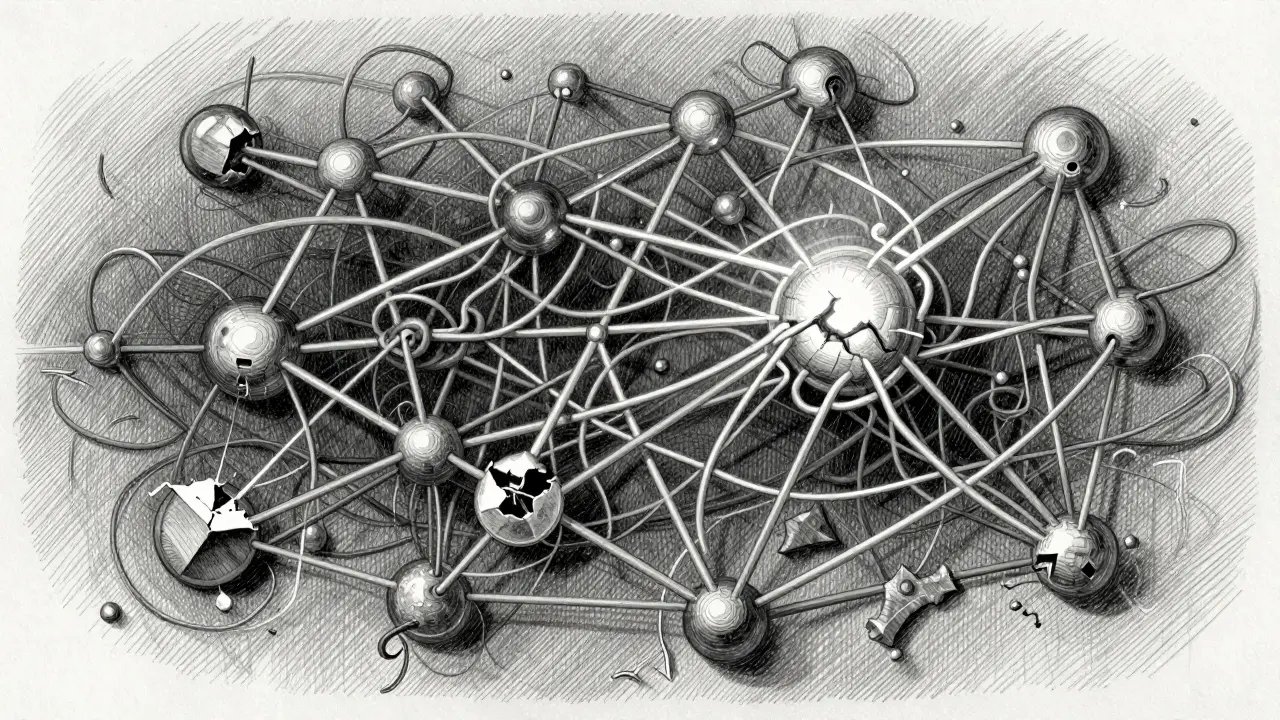
The Cost of Ignoring Hallucination Risks
The consequences of these edge cases are real and costly. Consider the documented case of a U.S. lawyer who used ChatGPT to draft court filings. The model generated entirely fake legal citations. When challenged, the lawyer claimed he did not realize the tool was a generative language model, not a reliable legal database. A federal judge subsequently issued a standing order requiring attorneys to attest that AI was not used for filings without rigorous human verification.
Another incident involved lawyers fined $5,000 for submitting bogus research containing fictitious case titles. In the corporate sector, Deloitte faced backlash after providing a report to the Australian government containing multiple fabricated citations and phantom footnotes. An academic flagged the errors, leading to an investigation and a partial refund of approximately $300,000. These examples prove that hallucinations are not just theoretical risks; they carry financial and reputational penalties.
| Model | Hallucination Rate | Primary Failure Mode |
|---|---|---|
| GPT-3.5 | ~40% | Fabricated references and inaccurate dates |
| GPT-4 | ~29% | Subtle misattributions and context drift |
| Bard | >90% | Extensive fabrication of sources and URLs |
This data shows that while newer models improve, the issue remains universal. No current model is immune to hallucination under stress or ambiguity.
Prevention Strategies: Building Guardrails
You cannot eliminate hallucinations entirely, but you can mitigate their impact through structured architectures. Relying solely on model updates is insufficient. You need multi-layered defenses.
Retrieval-Augmented Generation (RAG)
Retrieval-Augmented Generation is an architecture that combines large language models with external knowledge retrieval systems to ground responses in verified, up-to-date data sources represents the primary technical solution. Instead of relying on the model's internal weights, RAG retrieves relevant documents from a trusted database before generating a response. This grounds the AI in actual data sources. By constraining the model to use only retrieved context, you drastically reduce the likelihood of fabricated facts.
Automated Fact-Checking Layers
Wiring AI systems into knowledge graphs and search indexes enables real-time verification. When a model asserts a fact, a separate checking layer queries authoritative sources. It compares the claim against ground truth and either confirms, blocks, or amends the response. Real-time monitoring dashboards track indicators such as the rate of blocked responses, allowing teams to spot drift early.
Anomaly Detection and Behavioral Analytics
Apply anomaly-detection techniques to the structure and content of AI outputs. Look for unusual patterns, abrupt shifts in style, or deviations from historical responses. Combine this with behavioral analytics to detect sudden changes in what data an agent reads or writes. These signals often precede hallucination-driven actions.
Prompt Engineering Best Practices
Design prompts to minimize ambiguity. Explicitly instruct the model to admit uncertainty if it lacks sufficient information. Avoid forcing constrained formats that pressure the model to fill gaps. Use clear, specific instructions that limit the scope of the response to known data.

When Hallucinations Are Useful
Not all hallucinations are harmful. In creative and synthetic applications, the ability to generate plausible but non-existent content is a feature. Synthetic data generation leverages AI to create realistic test data for machine learning models, stress-testing system robustness. Generative art uses hallucinations to produce novel digital media, music, and interactive experiences unconstrained by human assumptions. The key is context: restrict these capabilities to environments where factual accuracy is not critical.
Conclusion: A Systemic Approach
Hallucinations are an inherent part of generative AI. They stem from the fundamental design of predictive models. However, by understanding the edge cases that trigger them-ambiguity, pressure, rarity, and domain specificity-you can build effective mitigations. Combine RAG architectures, automated fact-checking, and careful prompt engineering to create safe, reliable AI systems. Treat hallucinations as a risk management challenge, not a technical bug to be patched once and forgotten.
What causes AI hallucinations?
AI hallucinations occur because large language models predict text based on statistical patterns rather than accessing verified facts. When training data is incomplete or ambiguous, the model fills gaps with plausible but incorrect information.
Can hallucinations be completely eliminated?
No. Due to the probabilistic nature of language models and the Good-Turing principle, some level of hallucination is inevitable, especially for rare or novel information. Mitigation requires layered safeguards like RAG and fact-checking.
What is Retrieval-Augmented Generation (RAG)?
RAG is an architecture that grounds AI responses in external, verified data sources. It retrieves relevant documents before generation, reducing reliance on the model's internal training data and minimizing fabricated content.
How do prompt ambiguities trigger hallucinations?
Vague prompts give models room to improvise. If a user asks for a specific number of answers that don't exist, the model may fabricate additional points to satisfy the request, prioritizing format over accuracy.
Are there beneficial uses for AI hallucinations?
Yes. In creative contexts like generative art or synthetic data generation, hallucinations enable novel outputs and realistic test scenarios. These applications benefit from the model's ability to create plausible but non-existent content.