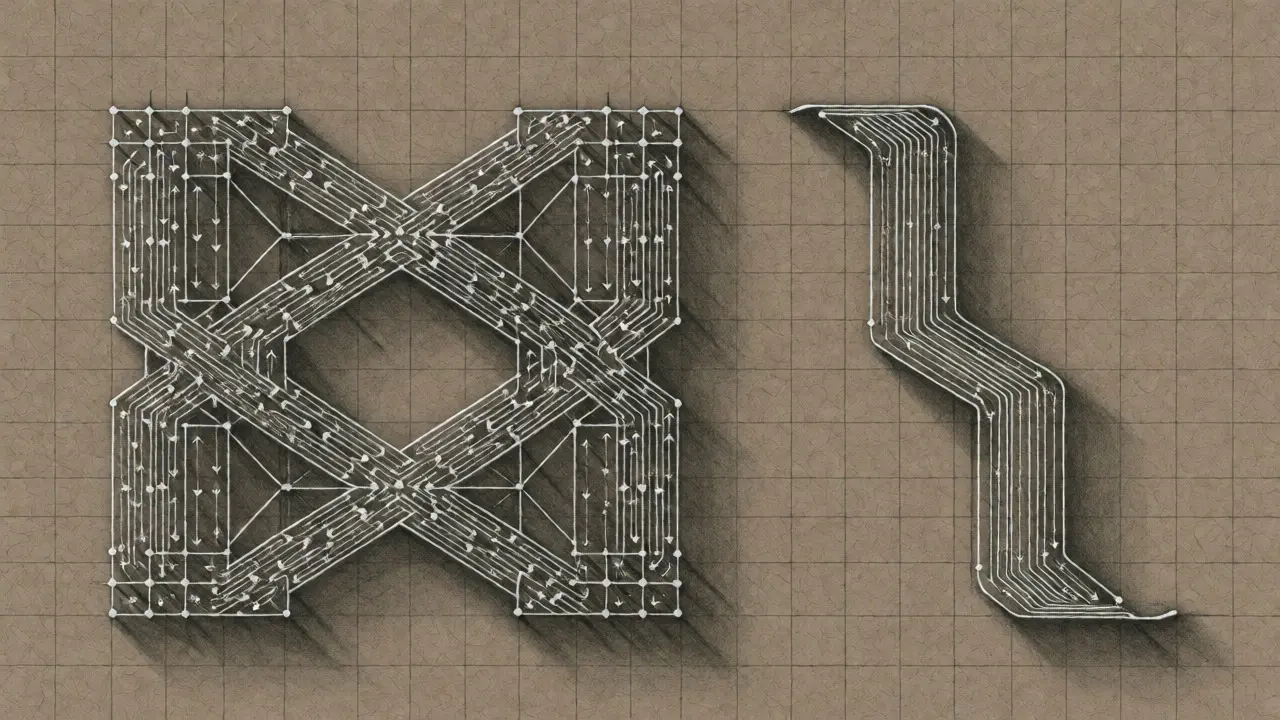
You’ve probably noticed that most of the big names in AI right now-ChatGPT, Claude, Llama-are built on a specific type of decoder-only transformer architecture. But for years, the industry standard was different. The original Attention Is All You Need paper from 2017 introduced an encoder-decoder model structure with two distinct components. So, why did we switch? And does it actually matter which one you use?
It matters a lot. Choosing between these architectures isn’t just about following trends; it’s about how your model processes information, how fast it runs, and what tasks it can handle well. If you’re building an app that needs to translate documents precisely, you might want the old-school encoder-decoder setup. If you’re building a chatbot that needs to write creative stories or answer questions with minimal setup, decoder-only is likely your best bet.
Quick Summary / Key Takeaways
- Decoder-only models (like GPT-4, Llama 3) dominate commercial applications because they are faster, easier to scale, and great at free-form text generation.
- Encoder-decoder models (like T5, BART) excel at tasks where input and output structures differ significantly, such as translation and summarization, due to their ability to fully understand input context before generating output.
- Inference speed: Decoder-only models are generally 15-22% faster than comparable encoder-decoder models because they skip the separate encoding phase.
- Context understanding: Encoder-decoder models often achieve higher accuracy on complex comprehension tasks because the encoder reads the entire input bidirectionally.
- Future trend: Hybrid architectures are emerging, but decoder-only will likely remain dominant for general-purpose AI assistants through 2027.
The Core Difference: How They Process Text
To understand the trade-offs, you need to look under the hood. Both architectures rely on Transformers a neural network architecture based on attention mechanisms, but they arrange the parts differently.
An encoder-decoder model works like a translator. First, the encoder component that processes the input sequence into a contextual representation reads the entire input sentence. It uses bidirectional self-attention, meaning every word looks at every other word in the input simultaneously. This gives the model a complete picture of the context. Then, the decoder component that generates the output sequence autoregressively takes this encoded representation and generates the output one token at a time. Crucially, the decoder also pays attention to the encoder’s output via cross-attention.
A decoder-only model skips the separate encoder. It treats the input prompt and the generated output as a single continuous stream. It uses causal (masked) self-attention, which means each token can only look at previous tokens in the sequence, not future ones. When you ask a question, the model doesn't "read" the whole question in one go and then start writing; it predicts the next word based on everything that came before it, including the prompt itself. This makes the process simpler and more uniform.
Why Decoder-Only Won the Commercial Race
If encoder-decoder models are so good at understanding context, why did companies like OpenAI and Meta pivot to decoder-only? The answer lies in scalability and simplicity.
Decoder-only models have a massive advantage in inference speed. Because there is no separate encoding step, the computational overhead is lower. Benchmarks from the MLPerf Inference 3.0 suite show that encoder-decoder models require 23-37% more memory and take 18-29% longer to generate responses compared to decoder-only models with similar parameter counts. For a service handling millions of queries per day, those milliseconds add up to huge costs.
They are also better at few-shot learning. This is the ability to perform a new task with just a few examples in the prompt, without retraining the model. Decoder-only models are exceptionally good at this. A study by Stanford CRFM found that decoder-only models achieved 45.2% accuracy on the SuperGLUE benchmark with zero-shot prompting, compared to 32.7% for encoder-decoder models. This means businesses can deploy a single decoder-only model for many different tasks-writing emails, coding, chatting-without needing specialized fine-tuning for each one.

Where Encoder-Decoder Still Shines
Don’t count encoder-decoder out yet. While decoder-only dominates general chatbots, encoder-decoder models still hold the crown for specific tasks where precise input-output mapping is critical.
Consider machine translation. Translating a sentence from English to German requires a deep understanding of the source grammar and structure. Encoder-decoder models like T5 a text-to-text transfer transformer developed by Google leverage the encoder’s bidirectional view to grasp nuances that a causal decoder might miss. On the WMT14 English-German translation benchmark, T5-base scores a BLEU score of 32.7, while comparable decoder-only models score around 28.4.
Similarly, in summarization, the goal is to condense a long document into a short paragraph. The encoder reads the whole document to identify key themes, and the decoder generates the summary. BART-large, an encoder-decoder model, achieves a ROUGE-L score of 40.5 on the CNN/DailyMail dataset, outperforming many decoder-only alternatives. If your application requires high fidelity to the source material-like legal contract analysis or medical report generation-the structured approach of encoder-decoder is often safer.
Technical Trade-offs: Memory, Latency, and Context
When you’re choosing an architecture, you’re balancing three main factors: accuracy, speed, and cost. Here’s how they stack up.
| Feature | Encoder-Decoder (e.g., T5, BART) | Decoder-Only (e.g., GPT-4, Llama 3) |
|---|---|---|
| Input Processing | Bidirectional (sees all input tokens at once) | Causal/Masked (sees only previous tokens) |
| Inference Speed | Slower (18-29% longer latency) | Faster (optimized for autoregressive generation) |
| Memory Usage | Higher (requires storing encoder states) | Lower (single stream processing) |
| Best Use Case | Translation, Summarization, Structured Data-to-Text | Chatbots, Creative Writing, Code Generation, General QA |
| Fine-Tuning Effort | Higher (complex pipeline, 2-3 weeks typical) | Lower (simpler pipeline, faster iteration) |
| Context Window | Typically smaller (avg 4,096 tokens) | Often larger (up to 1M+ tokens in latest models) |
One major pain point for developers using encoder-decoder models is implementation complexity. A survey of ML engineers showed that onboarding time for encoder-decoder projects is 35% longer than for decoder-only projects. You have to manage two separate modules and ensure they interact correctly during training. With decoder-only models, you’re essentially just predicting the next word in a sequence, which simplifies the codebase and debugging.
Real-World Implications for Developers
If you’re deciding which architecture to use for your next project, ask yourself these questions:
- Is the output highly dependent on the exact structure of the input? If yes, consider encoder-decoder. For example, converting a JSON table into natural language text benefits from the encoder’s holistic view of the data structure.
- Do you need low-latency responses for a user-facing chat interface? If yes, go decoder-only. Users expect instant replies, and the speed advantage is noticeable.
- Do you have limited labeled data? Decoder-only models are more efficient at learning from raw text and adapting to new tasks via prompting, reducing the need for expensive datasets.
- Are you working in a specialized domain like healthcare or law? These fields often require precise extraction and transformation of information, where encoder-decoder models may offer better reliability despite higher costs.
Interestingly, the lines are blurring. New hybrid architectures are appearing. Microsoft’s Orca 3, for instance, combines a small encoder module with a decoder-only backbone. This suggests that while decoder-only wins on efficiency, the industry recognizes the value of some encoder-like capabilities for complex reasoning.
The Future: Convergence or Specialization?
Predictions suggest that decoder-only models will maintain about 85% of the market share for general-purpose applications by 2027. However, encoder-decoder models aren’t disappearing. They are carving out niches in enterprise sectors where accuracy trumps speed. Gartner projects that 42% of new encoder-decoder deployments through 2027 will come from healthcare and legal industries, driven by the need for rigorous input-output alignment.
For now, if you’re building a general AI assistant, stick with decoder-only. It’s faster, cheaper, and easier to work with. If you’re building a specialized tool that transforms structured data or translates languages with high precision, don’t ignore the power of the encoder.
Frequently Asked Questions
Can I convert an encoder-decoder model to a decoder-only model?
Not directly, as the architectural components differ fundamentally. An encoder-decoder model has cross-attention layers connecting the encoder and decoder, which a pure decoder-only model lacks. However, you can train a new decoder-only model on the same data, or use techniques like distillation to compress an encoder-decoder model’s knowledge into a smaller decoder-only student model.
Why do decoder-only models have larger context windows?
Decoder-only models treat input and output as a single sequence, making it easier to extend the maximum length limit without redesigning the interaction between two separate modules. Modern optimizations like Rotary Position Embeddings (RoPE) allow decoder-only models to handle contexts of 1 million tokens or more, whereas traditional encoder-decoder setups struggle with very long inputs due to memory constraints in the encoder stage.
Which architecture is better for code generation?
Decoder-only models are currently superior for code generation. Tasks like completing functions or writing scripts are inherently sequential and benefit from the autoregressive nature of decoders. Models like GitHub Copilot and CodeLlama use decoder-only architectures because they excel at predicting the next line of code based on preceding context, achieving high performance in benchmarks like HumanEval.
Do encoder-decoder models require more GPU memory?
Yes, typically. During inference, an encoder-decoder model must store the hidden states of the entire input sequence from the encoder to use them in the decoder’s cross-attention layers. This doubles the memory footprint compared to a decoder-only model, which only maintains the KV cache for the current generation step. This makes encoder-decoder models more expensive to serve at scale.
Is the 'Attention Is All You Need' paper still relevant?
Absolutely. Published in 2017, it introduced the Transformer architecture that underpins both encoder-decoder and decoder-only models. While the specific configurations have evolved (e.g., removing the encoder), the core mechanism of multi-head self-attention remains the foundation of modern Large Language Models. Understanding this paper is essential for grasping how current LLMs function.
Next Steps for Your Project
If you’re starting from scratch, begin with a pre-trained decoder-only model like Llama 3 an open-source large language model by Meta or Mistral a European AI company known for efficient open-weight models. They offer the best balance of performance and ease of use. Test your specific use case-if you find the model struggling with complex instructions or structured outputs, experiment with an encoder-decoder model like T5 Google's text-to-text transfer transformer to see if the bidirectional input processing improves results. Remember, there is no one-size-fits-all solution; match the architecture to the job.