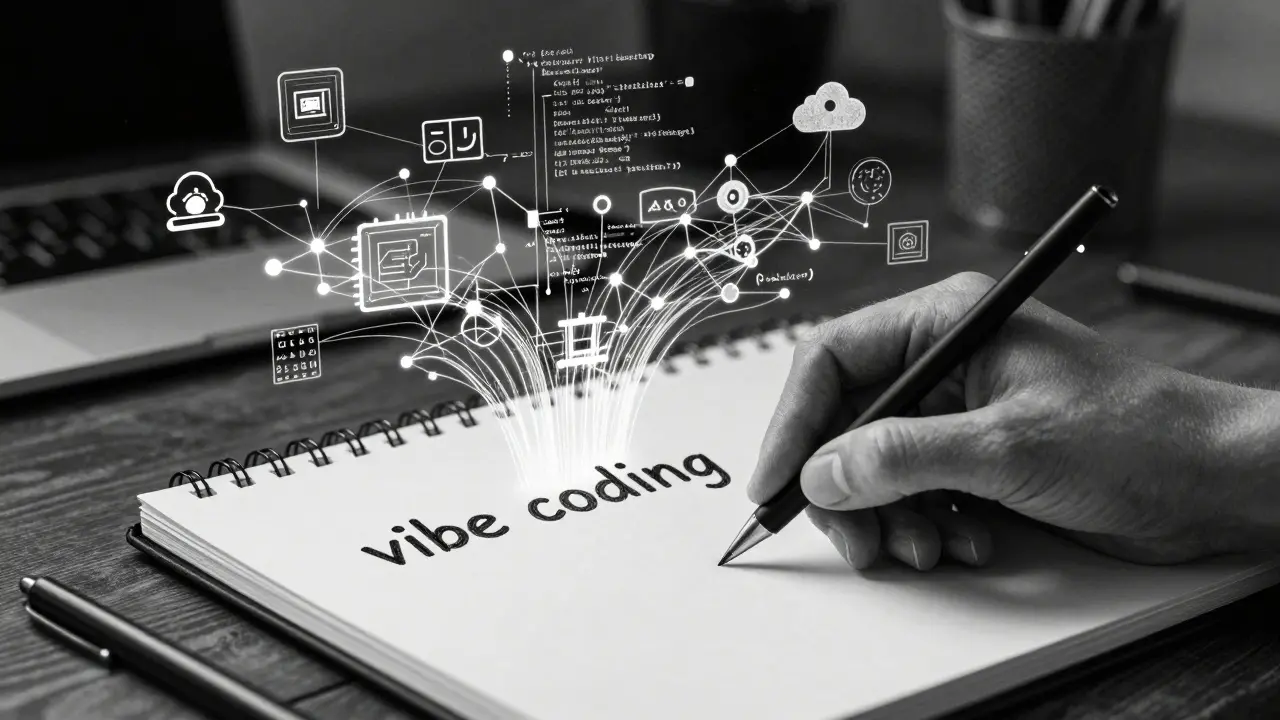
Imagine needing to build a working prototype of a smart agriculture system for a client meeting tomorrow. In the past, this meant spending days configuring sensors, writing low-level firmware, setting up cloud endpoints, and debugging connection issues. Today, you can describe what you want in plain English, and an AI writes the code for you. This is vibe coding, defined as an AI-assisted software development methodology where human intent expressed in plain language is converted into executable code by large language models (LLMs). Coined by Andrej Karpathy in February 2025, this approach is rapidly changing how we handle Internet of Things (IoT) projects.
For IoT demos specifically, vibe coding solves the "blank page problem." It allows you to generate device simulations and cloud-based dashboards in hours instead of weeks. According to data from Riseup Labs in 2024, this method reduces time-to-market by approximately 60-70%. But does it actually work for complex hardware interactions? Let’s look at how to use it effectively, where it falls short, and how to secure your prototypes.
How Vibe Coding Accelerates IoT Prototyping
The core value of vibe coding in IoT is speed and accessibility. You don’t need to be an expert in embedded systems or cloud architecture to get started. Microsoft’s 2025 analysis showed a 45% reduction in the barrier to entry for non-traditional developers. If you understand the domain-like knowing how soil moisture sensors behave-you can create a functional demo that previously required specialized programming skills.
Here is why it works so well for demos:
- Rapid Iteration: Lemberg Solutions found that vibe coding is 83% faster than traditional methods for creating prototypes. Tasks that took days now take hours.
- Broad Platform Support: The generated code typically supports major platforms like AWS IoT Core, Azure IoT Hub, and Google Cloud IoT Core. It also handles common languages such as Python, JavaScript, and Node-RED.
- Democratization: Domain experts can build tools without hiring expensive engineering teams for every small test.
However, speed comes with trade-offs. While GitHub’s 2025 State of AI in Software Development survey notes that initial development time drops from 40-60 hours to just 4-8 hours, you must add about 35% more time for refining the code to make it production-ready. Vibe coding gets you to "working" fast, but not necessarily "robust" immediately.
Simulating IoT Devices with Natural Language Prompts
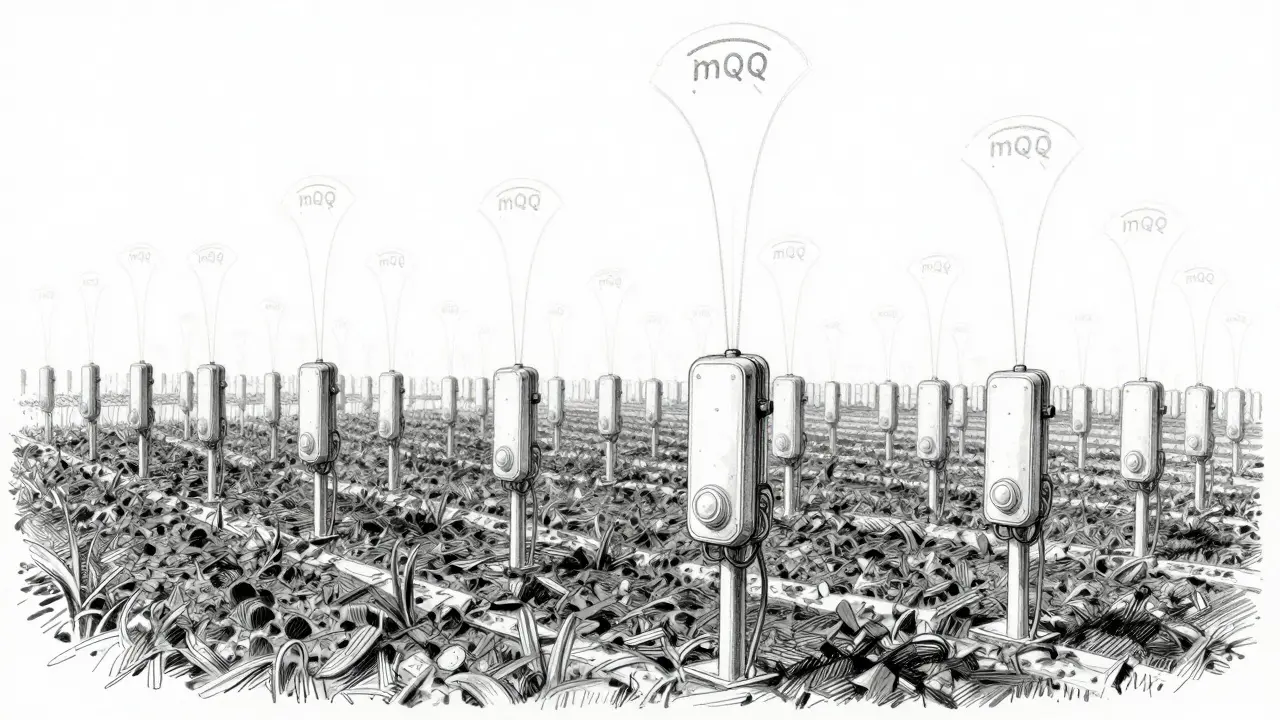
One of the biggest hurdles in IoT development is testing. You rarely have physical devices ready during the early design phase. Vibe coding excels here by generating realistic device simulators. Instead of wiring up ten temperature sensors, you ask the AI to simulate them.
To get good results, your prompts need to be specific. A vague request like "make a sensor simulator" will yield generic, often broken code. Instead, provide context and constraints. Here is an example of a high-quality prompt structure:
"Create a Python script that simulates 10 temperature sensors. Each sensor should send data via MQTT to AWS IoT Core every 5 seconds. Generate random values between 20-25°C. Include error handling for network interruptions and ensure the connection reconnects automatically if dropped."
This level of detail helps the Large Language Model (LLM) understand the protocol (MQTT), the platform (AWS IoT Core), the frequency (every 5 seconds), and the edge cases (network errors). Dr. Elena Rodriguez, Principal IoT Architect at AWS, noted that embedding these architectural constraints directly into prompts is key to success.
Be aware of limitations though. TechVerx benchmarks show that while dashboard logic is generated quickly, hardware-specific drivers are tricky. About 78% of developers reported challenges when trying to simulate Bluetooth LE or Zigbee protocols using vibe coding. These low-level hardware interactions often require precise timing and memory management that current LLMs struggle to replicate accurately.
Building Real-Time Cloud Dashboards
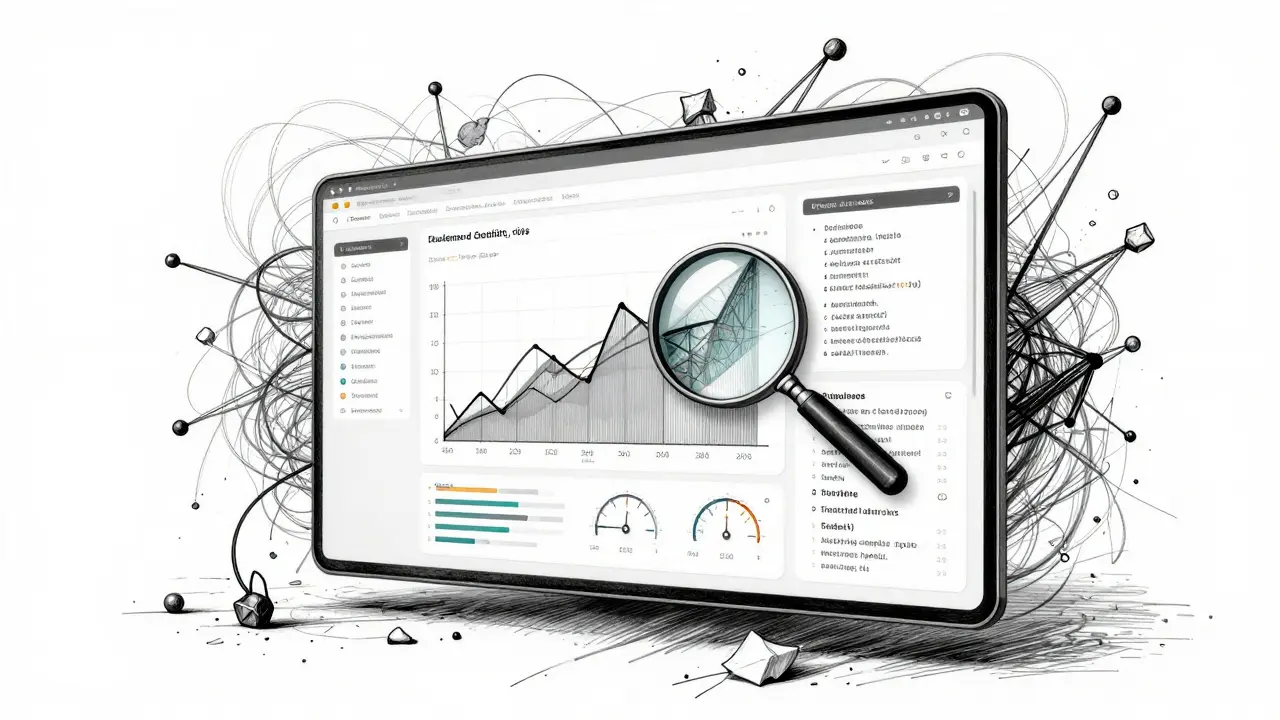
Once your simulated devices are sending data, you need a way to visualize it. This is where vibe coding truly shines. Creating interactive dashboards traditionally involves heavy frontend work with React or Angular. With AI assistance, you can generate complete visualization interfaces in minutes.
Joget’s 2025 analysis showed successful connections to 92% of common IoT data sources, including InfluxDB, TimescaleDB, and Firebase. You can ask the AI to create a Grafana dashboard configuration or a custom React interface that updates in real-time.
| Feature | Vibe Coding | Traditional Development | No-Code Platforms (e.g., Losant) |
|---|---|---|---|
| Setup Time | Minutes to Hours | Days to Weeks | Hours |
| Customization Flexibility | High (40% greater than no-code) | Very High | Moderate |
| Learning Curve | Low (Prompt Engineering) | High (Coding Skills) | Low (UI Familiarity) |
| Data Source Integration | Wide (92% coverage) | Unlimited | Limited to Pre-built Connectors |
Users on Reddit’s r/IoT community frequently praise this aspect. One developer shared how they built a complete soil moisture monitoring dashboard in six hours-a task they estimated would take 30 hours traditionally. However, they did spend four additional hours fixing MQTT connection issues in the generated code. This highlights a crucial point: the AI builds the structure, but you must verify the connectivity logic.
Security Risks and Code Quality Issues
Speed is great, but security cannot be an afterthought in IoT. IAS Research documented a concerning trend: 63% of initial AI-generated IoT code samples contained hardcoded credentials or insufficient TLS implementation. Hardcoding passwords into scripts is a critical vulnerability that exposes your entire network.
When using vibe coding, you must enforce strict governance. Here are three essential practices:
- Specify Security in Prompts: Don’t assume the AI knows best. Explicitly state requirements like "Implement TLS 1.3 with certificate rotation" or "Use environment variables for all secrets."
- Review Connection Logic: MIT’s Professor David Chen warned in IEEE Software (November 2025) that over-reliance on vibe coding creates fragile systems. He noted that 89% of demo projects failed stress tests beyond 72 hours due to poor state management. Check how your code handles disconnections and reconnections.
- Avoid Production Use Without Audit: Gartner reports that while 83% of Fortune 500 companies use vibe coding for prototyping, only 37% deploy AI-generated code in production. Keep AI code for demos and internal tools until you have thoroughly audited it.
Microsoft’s security team recommends treating AI-generated code as untrusted input. Always scan it for vulnerabilities before connecting it to any live cloud infrastructure.
Best Practices for Effective Implementation
To get the most out of vibe coding for IoT demos, follow a structured workflow. Riseup Labs suggests that developers need about 15-20 hours of training to master prompt engineering for IoT contexts. Focus on understanding communication patterns like MQTT and CoAP rather than memorizing syntax.
Use "prompt chaining" for complex tasks. Instead of asking for one massive application, break it down:
- Step 1: Generate the device simulator script.
- Step 2: Create the cloud endpoint configuration.
- Step 3: Build the dashboard frontend.
- Step 4: Write the integration logic connecting them.
This iterative approach reduces errors and makes debugging easier. If the dashboard doesn’t update, you know exactly which part of the chain broke. Additionally, leverage specialized tools. GitHub Copilot currently leads with 58% market share for IoT applications, offering better contextual understanding of AWS services compared to competitors like Amazon CodeWhisperer.
Finally, maintain human oversight. As Andrej Karpathy emphasized, vibe coding augments your ability to express intent; it does not replace judgment. You must understand the underlying architecture to spot when the AI hallucinates a feature or misses a critical edge case.
Future Trends and Market Adoption
The landscape for AI-assisted IoT development is evolving rapidly. Gartner predicts that vibe coding will account for 65% of IoT demo development by 2026, up from 28% in 2024. We are seeing a shift toward hybrid approaches. In 72% of enterprise implementations, vibe coding handles high-level dashboard and simulation logic, while traditional development maintains control over critical device communication layers.
New tools are emerging to address current gaps. AWS announced an "IoT Vibe Assistant" scheduled for Q2 2026, promising native integration with AWS IoT Core and automatic generation of security-compliant device shadows. Meanwhile, startups like IoTFlow are raising funding to develop domain-specific LLMs trained exclusively on IoT code patterns.
Despite the optimism, challenges remain. Forrester suggests a more conservative adoption rate of 47%, citing integration complexity with legacy industrial systems. Healthcare and manufacturing sectors are adopting slower due to regulatory constraints. FDA compliance concerns, for instance, lead 61% of healthcare IoT developers to restrict vibe coding to internal demos only.
As you experiment with vibe coding, keep these trends in mind. The technology is moving toward greater specialization and security awareness. By staying informed and applying rigorous review processes, you can harness its power to build impressive IoT demos without compromising quality or safety.
What is vibe coding in the context of IoT?
Vibe coding is an AI-assisted development method where you describe desired functionality in natural language, and Large Language Models (LLMs) generate the executable code. In IoT, it is primarily used to rapidly create device simulators and cloud dashboards for demos, significantly reducing development time from weeks to hours.
Can vibe coding replace traditional IoT programming?
Not entirely. While it accelerates prototyping and dashboard creation, it struggles with low-level hardware access, complex firmware optimization, and resource-constrained edge devices. Most enterprises use a hybrid approach, using vibe coding for high-level logic and traditional coding for critical hardware interactions.
Is AI-generated IoT code secure?
By default, no. Studies show that 63% of initial AI-generated IoT code samples contain security flaws like hardcoded credentials or weak encryption. You must explicitly specify security requirements in your prompts (e.g., TLS 1.3) and perform thorough manual audits before deploying any code.
Which AI tools are best for IoT vibe coding?
GitHub Copilot currently leads with 58% market share for IoT applications due to its strong integration with AWS and other cloud platforms. Amazon CodeWhisperer is another popular choice, especially for AWS-centric workflows. Specialized templates in Azure AI Studio are also gaining traction for rapid dashboard generation.
How do I write effective prompts for IoT simulations?
Be specific about protocols, platforms, and constraints. Instead of "make a sensor," say "Create a Python MQTT client simulating a temperature sensor sending data to AWS IoT Core every 5 seconds with values between 20-25°C, including reconnection logic." Breaking complex tasks into smaller, chained prompts also improves accuracy.


