
You have the idea. It’s brilliant, it solves a real problem, and you’re ready to build it. But then reality hits: you don’t know how to code. Hiring a dev team costs tens of thousands of dollars and takes months. Traditional no-code tools still require a steep learning curve. Enter vibe coding. This isn't just a buzzword; it is a fundamental shift in how software gets built. By describing what you want in plain English, AI translates your vision into working code. For non-technical founders, this means going from zero to a functional prototype in days, not months.
What Is Vibe Coding?
Vibe coding is a development approach where users describe desired functionality in natural language, and generative AI systems translate those descriptions into executable code. The term gained traction around 2023-2024 with the rise of advanced AI assistants like GitHub Copilot and Google's Gemini. Unlike traditional programming, which requires memorizing syntax and logic structures, vibe coding relies on clear communication of intent.
Think of it as having a senior developer sitting next to you who listens to your instructions and types them out instantly. You say, "Create a dashboard that shows customer acquisition metrics with filters by date," and the AI generates the HTML, CSS, and JavaScript needed to make that happen. According to data from Knack's 2024 analysis, this method eliminates seven major stressors for founders, including the need to learn programming languages and navigate complex architecture diagrams. It democratizes development, allowing domain experts to build tools that serve their specific industry needs without technical intermediaries.
Why It Matters for Non-Technical Founders
Speed is currency in the startup world. Traditional custom development for a basic Minimum Viable Product (MVP) typically takes 4-6 weeks and costs between $15,000 and $50,000, according to Clutch.co's 2024 report. Vibe coding slashes this timeline to 1-3 days, often costing less than $500 in platform subscriptions. This acceleration allows founders to validate business concepts rapidly. Instead of spending months building a product nobody wants, you can test your hypothesis with real users in under a week.
The barrier to entry has also dropped significantly. DataCamp's 2024 study found that founders with no technical background required only 1.7 hours on average to produce their first functional prototype using vibe coding platforms. Compare that to the 80+ hours needed for basic proficiency in traditional no-code platforms like Bubble or Webflow. The difference is the elimination of syntax barriers. You aren't learning a new visual programming language; you are simply articulating your requirements clearly. This shift enables faster iteration cycles, meaning you can pivot based on user feedback almost immediately.
Top Tools for Vibe Coding in 2026
Not all AI coding assistants are created equal, especially for non-technical users. Here are the leading platforms currently dominating the space:
- Knack: Known for its Instant Page Construction, Knack excels at generating responsive UI components from text descriptions. Its "Founder Mode" simplifies prompts specifically for business validation.
- Google Cloud Gemini: Offers robust enterprise-grade integration and operates entirely in-browser. It is particularly strong for founders who plan to scale within the Google ecosystem.
- GitHub Copilot: While originally aimed at developers, its expanded natural language capabilities allow sophisticated prompt engineering for more complex logic flows.
- Netlify AI: Provides an integrated development environment that speeds up deployment and hosting, making it easy to share prototypes with stakeholders.
Each tool has strengths. Knack is great for internal business apps, while Gemini offers broader cloud connectivity. Choose based on whether you need simple CRUD (Create, Read, Update, Delete) applications or more integrated workflows.
How to Build Your First Prototype
Getting started is simpler than you might think. Follow these steps to turn your idea into a clickable prototype:
- Define Your Core Feature: Don't try to build everything. Identify the one feature that solves the primary pain point. For example, if you're building a fitness app, start with workout logging, not social networking.
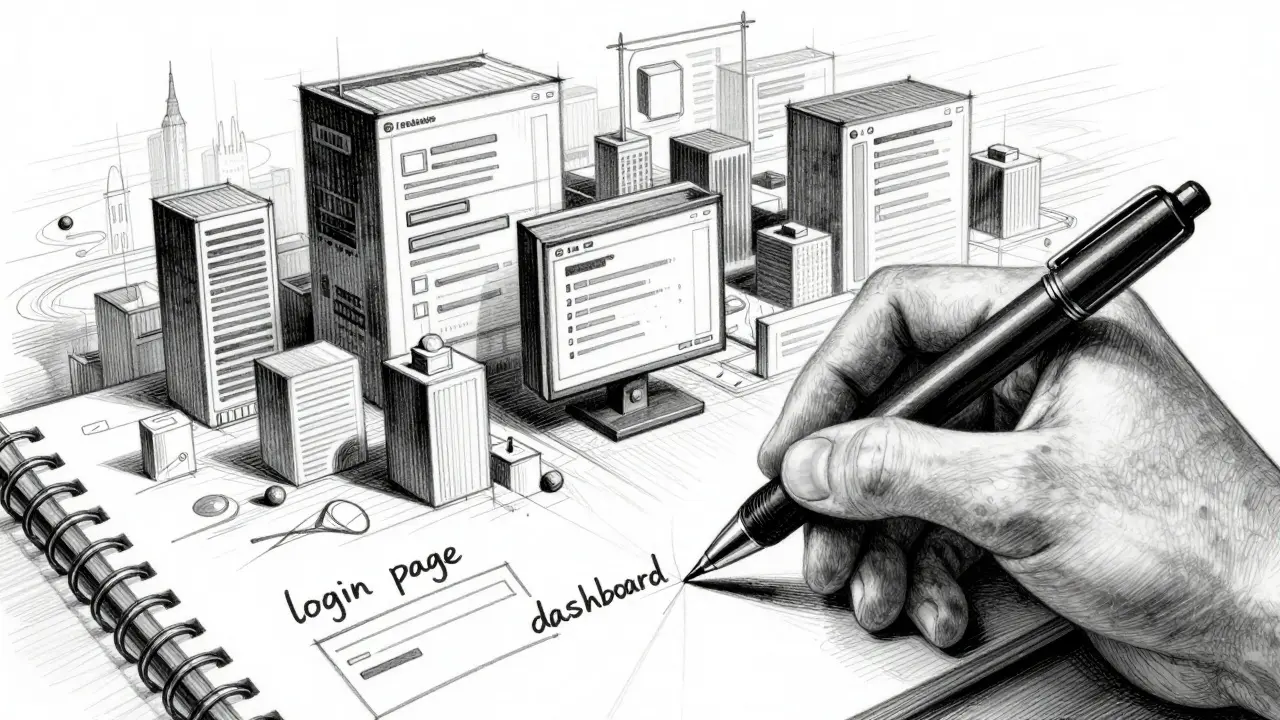
- Write Clear Prompts: Be specific. Instead of saying "make a login page," say "create a secure login form with email and password fields, plus a 'forgot password' link that sends a reset email." Use examples like "similar to Calendly but for group bookings" to guide the AI.
- Generate and Iterate: Let the AI generate the initial code. Review the output. If something looks wrong, highlight it and ask for changes. Expect 2-3 refinement cycles per feature, as noted in Quixy's support logs.
- Test with Real Users: Share the prototype link with potential customers. Watch how they interact with it. Do they understand the navigation? Does the core feature work as expected?
- Gather Feedback: Use the insights from testing to refine your next iteration. Remember, the goal is validation, not perfection.
This process allows you to stay in control of the product direction while leveraging AI for the heavy lifting of code generation.
Limitations and Risks
Vibe coding is powerful, but it is not magic. There are significant limitations you must acknowledge. The biggest issue is the "complexity ceiling." Most platforms struggle with highly customized algorithms or specialized integrations. Tanium's 2024 analysis found that 78% of non-technical users hit walls when trying to implement advanced machine learning features without developer help.
Another risk is technical debt. Graphite's 2024 study revealed that vibe-coded prototypes often contain 40% more UI inconsistencies and 22% more logical edge-case errors than professionally written code. Industry veteran Martin Fowler warns against mistaking prototype speed for production readiness. What works for 10 users might crash with 100. ACM SIGSOFT reports that 68% of prototype code generated by these systems contains architectural patterns unsuitable for production without significant refactoring.
Security is another concern. Only 12% of Fortune 500 companies permit vibe coding for internal tools due to governance issues. Ensure you are not exposing sensitive data during the prototyping phase.

Best Practices for Success
To maximize the benefits of vibe coding while minimizing risks, follow these guidelines:
- Use for Validation Only: Treat your vibe-coded app as a disposable prototype. Google Cloud recommends a maximum lifespan of two weeks before engaging professional developers for scaling.
- Be Specific in Prompts: Ambiguity leads to bugs. Provide context, examples, and constraints in your descriptions.
- Plan for Handoff: Assume you will eventually need a developer. Keep your documentation organized and note any custom logic you added manually.
- Avoid Regulated Domains Initially: Healthcare and finance require precise technical control. Start with less regulated industries to build confidence.
- Leverage Community Support: Join forums like the "Vibe Coding Founders" subreddit to troubleshoot issues and share successes.
By treating vibe coding as a strategic tool for rapid experimentation rather than a final solution, you can de-risk your startup journey significantly.
The Future of No-Code Development
The market for vibe coding is exploding. Gartner projects the segment to reach $2.8 billion by 2026, growing at a 47% CAGR. Adoption among tech-savvy non-technical founders stands at 38%, up from negligible levels in early 2023. As AI models become more context-aware, we will see improved error explanations and better handling of complex integrations. McKinsey predicts that by 2027, 90% of non-technical founder journeys will include a vibe coding phase for validation.
However, this doesn't mean developers are obsolete. Instead, the role of the developer shifts from writing boilerplate code to architecting scalable systems and refining AI-generated outputs. For founders, this hybrid approach-using AI for speed and humans for quality-is the new standard.
Can I launch a fully functional SaaS product using only vibe coding?
While you can build a functional prototype quickly, launching a scalable SaaS product usually requires professional developer intervention. Vibe coding excels at validation but often produces code with high technical debt that struggles under load. Use it to prove your concept, then hire developers to refactor and scale the application.
Is vibe coding free?
Many platforms offer free tiers for basic prototyping, but serious usage typically involves subscription fees ranging from $0 to $500 per month. Costs depend on the complexity of the app and the level of AI assistance required. Always check the pricing model of specific tools like Knack or GitHub Copilot.
Do I need any coding knowledge to use vibe coding?
No prior coding knowledge is required. The entire premise of vibe coding is to allow non-technical users to build apps using natural language. However, understanding basic concepts like databases, APIs, and user flow will help you write better prompts and evaluate the AI's output more critically.
How long does it take to build a prototype?
Most non-technical founders can create a functional prototype in 1-3 days. Some case studies show simple tools being built in under 24 hours. The time varies based on the complexity of the features and how many iterations are needed to get the design right.
What are the biggest risks of vibe coding?
The main risks include technical debt, scalability issues, and security vulnerabilities. AI-generated code may not be optimized for performance or secure against common attacks. Additionally, modifying AI-generated code later can be difficult if you don't understand the underlying structure. Always treat vibe-coded apps as temporary validation tools.


