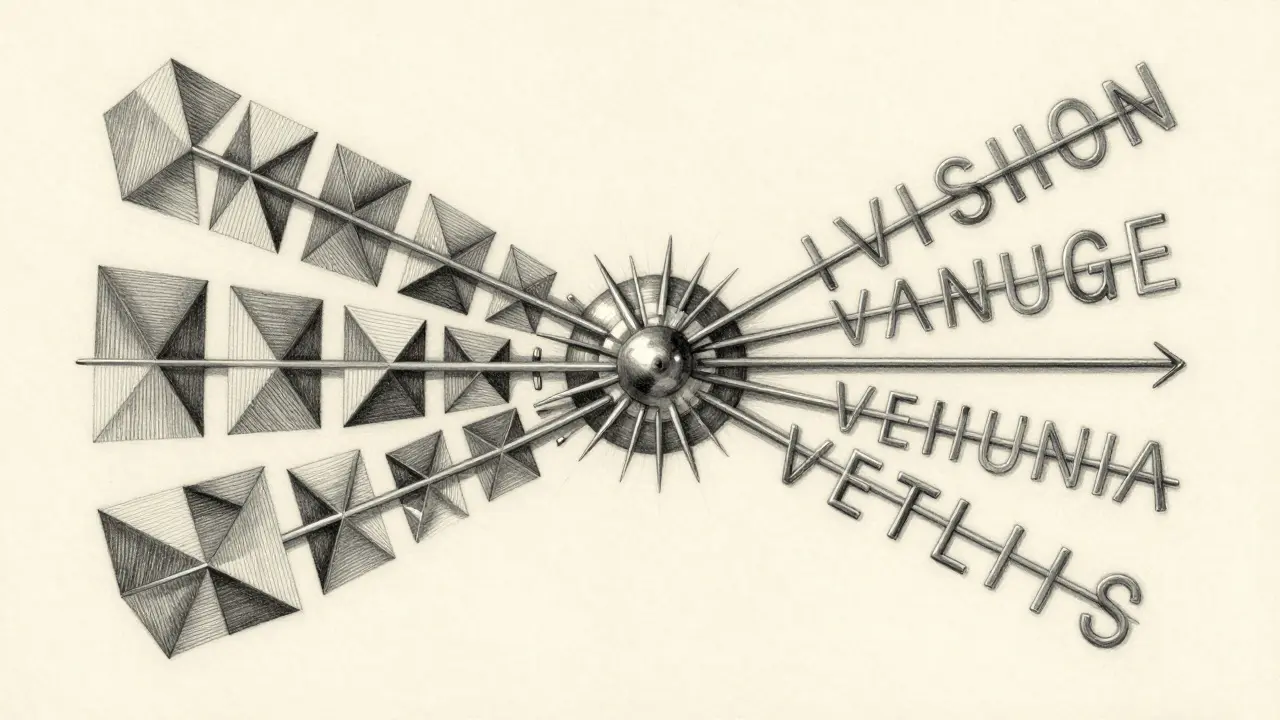
For years, artificial intelligence lived in silos. You had one model for reading text and a completely different one for seeing images. If you wanted an AI to describe a photo, you needed a pipeline that stitched these separate systems together. It was clunky, inefficient, and often inaccurate. That era is ending. The rise of Vision-Language Transformers represents a fundamental shift in how machines perceive the world. These models don't just look at pictures or read words; they understand both simultaneously within a single, unified architecture.
This isn't just a technical tweak. It’s a move toward mimicking human cognition. When you see a picture of a dog playing fetch, your brain doesn't process the visual data and the concept of 'dog' separately. You integrate them instantly. Vision-Language Transformers (VLTs) aim to replicate this seamless integration by treating both pixels and words as sequences of tokens processed by the same underlying engine.
The Core Architecture: One Model, Two Modalities
To understand why VLTs are such a big deal, you first need to look at what came before. Traditional Vision-Language Models (VLMs) typically relied on dual-encoder architectures. Imagine two parallel streams: one stream processes the image using a vision encoder (like ResNet or ViT), and another processes the text using a language encoder (like BERT). A fusion mechanism then tries to bridge the gap between these two distinct representations.
While effective, this approach has limitations. The separation creates a bottleneck where information can be lost during translation from visual features to textual embeddings. VLTs solve this by unifying the representation space. Instead of separate encoders, a VLT preprocesses both images and text into a common sequence format. An image is broken down into patches, which are then tokenized similarly to how words are tokenized in natural language processing.
Here is how the flow works in a unified transformer:
- Tokenization: Both image patches and text words are converted into numerical tokens.
- Sequence Formation: These tokens are arranged into a single input sequence, often with special markers indicating whether a token comes from an image or text source.
- Attention Mechanism: The transformer's self-attention layers allow every token to interact with every other token. A word like "red" can directly attend to the pixel patches representing a red car, regardless of their position in the sequence.
- Generation: The model generates output sequences, whether that’s a caption for an image or an image based on a text prompt.
This unified approach eliminates the need for complex cross-modal alignment layers. The attention mechanism handles the association naturally. Research from institutions like Sun Yat-sen University has demonstrated that formulating both image-to-text and text-to-image tasks as sequence generation problems leads to more robust and versatile models.
Key Players and Architectural Variations
Not all vision-language transformers are built the same way. While the core principle of unification remains, different research groups have developed distinct strategies to optimize performance. Understanding these variations helps clarify the landscape of modern multimodal AI.
| Model/Approach | Architecture Type | Key Innovation | Primary Use Case |
|---|---|---|---|
| VL-T5 | Unified Transformer | Uses text prefixes to unify multiple vision-language tasks within a single T5-based framework. | Multitask learning (captioning, VQA, retrieval) |
| ViLBERT | Dual Encoder + Co-Attention | Processes image and text in parallel streams with co-attention mechanisms for interaction. | Visual Question Answering (VQA) |
| CLIP | Dual Encoder (Contrastive) | Trains image and text encoders to map similar concepts close together in a shared embedding space. | Image classification, zero-shot transfer |
| Unified Generative Frameworks | Single Stream Transformer | Treats bidirectional generation (image-to-text, text-to-image) as masked sequence prediction. | Creative generation, content creation |
Models like VL-T5 stand out because they leverage the versatility of the T5 architecture. By adding specific text prefixes (e.g., "caption:" or "answer:") to the input, the same model can switch between tasks without architectural changes. This efficiency is crucial for deployment in resource-constrained environments.
In contrast, earlier models like ViLBERT relied on Faster R-CNN for object detection within images, creating a hybrid system that combined traditional computer vision with deep learning. While powerful, these hybrid systems were harder to train end-to-end compared to pure transformer approaches. The trend is clearly moving toward fully unified, end-to-end trainable architectures.
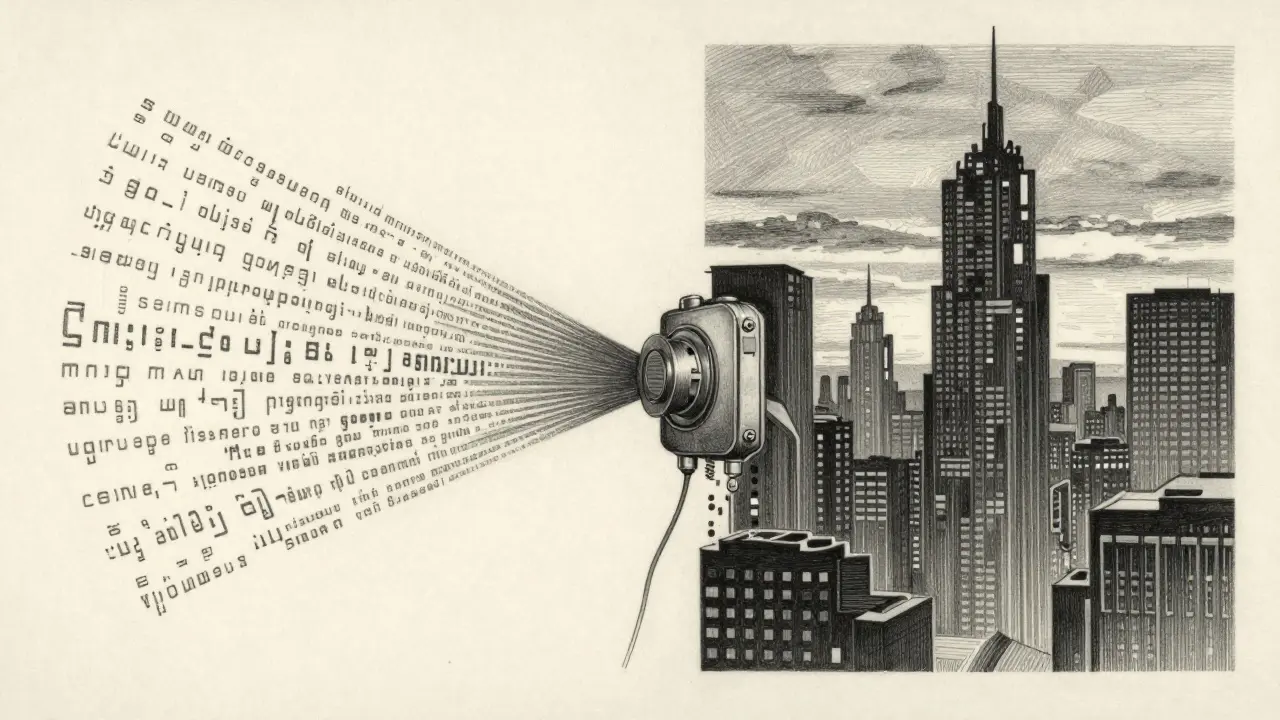
Bidirectional Generation: From Pixels to Words and Back
The true power of Vision-Language Transformers lies in their ability to handle bidirectional tasks. Most previous models were specialized: some were good at captioning, others at retrieval. VLTs excel at generating either modality from the other.
Text-to-Image Generation has seen explosive growth thanks to these unified frameworks. When you type a prompt like "a cyberpunk city at sunset," the model doesn't just search for matching images. It understands the semantic relationships between "cyberpunk," "city," and "sunset." It generates pixel values that align with these concepts, creating novel visuals rather than retrieving existing ones. This capability is revolutionizing marketing, game design, and concept art.
Image-to-Text Generation, commonly known as image captioning, is equally transformative. Modern VLTs extract high-level features from an image and map them to coherent sentences. But it goes beyond simple description. Advanced models can answer questions about the image (Visual Question Answering) or even write creative stories based on visual cues. For example, a visually impaired user could upload a photo of a crowded street, and the model could not only identify objects but also describe the atmosphere and potential actions happening in the scene.
Research indicates significant performance gains with this unified approach. Studies on benchmarks like MS-COCO have shown improvements ranging from 100% to over 120% in image-to-text generation quality compared to prior non-unified methods. This jump isn't just incremental; it suggests that the unified architecture captures deeper semantic connections between modalities.
Technical Challenges and Solutions
Building a model that sees and speaks fluently is no small feat. Several technical hurdles remain, though researchers are making steady progress.
Modality Alignment is perhaps the biggest challenge. Images and text have fundamentally different statistical properties. Text is discrete and sequential; images are continuous and spatial. Aligning these two domains requires sophisticated pretraining strategies. Contrastive learning, popularized by CLIP, helps by pulling related image-text pairs closer together in the embedding space while pushing unrelated pairs apart. However, fine-tuning for generative tasks requires more nuanced alignment than simple classification.
Computational Cost is another major factor. Processing high-resolution images alongside long text sequences demands massive computational resources. A single image might be represented by thousands of tokens, significantly increasing the quadratic complexity of the self-attention mechanism. To mitigate this, developers use techniques like patch merging, low-rank adaptation (LoRA), and efficient attention variants (such as FlashAttention). These optimizations allow VLTs to run on consumer-grade hardware, democratizing access to multimodal AI.
Data Scarcity and Quality also play a role. Training robust VLTs requires vast datasets of paired images and text. While web-scraped data provides volume, it often contains noise and biases. Curated datasets like COCO, Visual Genome, and LAION provide cleaner signals but are limited in scale. Researchers are increasingly focusing on synthetic data generation and self-supervised learning techniques to reduce reliance on manually annotated pairs.

Real-World Applications Beyond the Hype
Vision-Language Transformers are moving from research labs into practical applications across various industries. Here’s where you’ll see them impacting daily life in 2026 and beyond:
- Accessibility Tools: Apps that describe surroundings in real-time for the visually impaired are becoming more accurate and context-aware. Instead of just saying "chair," a VLT-powered app might say "a wooden chair with a cushion, positioned near a window with sunlight streaming in."
- E-Commerce Search: Shoppers can upload a photo of an outfit they saw on the street, and the system will find similar products by understanding style, color, and pattern-not just exact matches. This visual search is powered by the model’s ability to link visual features to product descriptions.
- Content Creation: Marketing teams use text-to-image generation to create ad variations rapidly. Social media managers generate captions automatically, ensuring tone and context match the visual content.
- Medical Imaging Analysis: Radiologists use VLTs to assist in diagnosing conditions. The model can highlight anomalies in X-rays or MRIs and generate preliminary reports, reducing workload and improving diagnostic accuracy.
- Education: Interactive learning platforms use VLTs to create personalized educational materials. A student can upload a diagram from a textbook, and the AI can explain the concepts, answer questions, or generate practice problems based on the visual content.
These applications demonstrate that VLTs are not just academic exercises. They are solving real problems by bridging the gap between how humans perceive information and how machines process it.
The Future of Multimodal Learning
We are still in the early stages of this evolution. As we move further into 2026, several trends are emerging. First, we’re seeing a shift toward smaller, more efficient models. The goal is no longer just bigger parameters but smarter architectures that achieve high performance with fewer resources. Techniques like knowledge distillation and modular design are key here.
Second, there’s a growing focus on reasoning capabilities. Current VLTs are excellent at association and generation, but they struggle with complex logical reasoning that requires multi-step inference. Integrating symbolic reasoning with neural networks is a hot area of research. Imagine a model that doesn’t just describe an image but can deduce cause-and-effect relationships within it-such as predicting that a glass placed too close to the edge of a table will fall.
Finally, ethical considerations are coming to the forefront. With the ability to generate realistic images and text, VLTs raise concerns about misinformation and deepfakes. Developers are implementing watermarking, provenance tracking, and bias mitigation strategies to ensure responsible deployment. Open-source communities on platforms like HuggingFace and GitHub are playing a crucial role in auditing models and sharing best practices.
Vision-Language Transformers represent a paradigm shift from fragmented, single-modality AI to holistic, multimodal understanding. By unifying images and text within a single transformer framework, these models unlock new possibilities for creativity, accessibility, and automation. As the technology matures, we can expect even more seamless interactions between humans and machines, where the distinction between seeing and speaking becomes irrelevant.
What is the difference between a Vision-Language Transformer and a standard Transformer?
A standard Transformer, like those used in GPT or BERT, processes only one type of data, usually text. A Vision-Language Transformer (VLT) is designed to handle multiple modalities-specifically images and text-simultaneously. It uses a unified architecture where both image patches and text tokens are processed through the same attention mechanisms, allowing the model to learn relationships between visual and linguistic concepts directly.
How do Vision-Language Transformers improve image captioning?
Traditional image captioning models often rely on separate encoders for images and text, leading to information loss during fusion. VLTs treat image captioning as a sequence-to-sequence task within a unified framework. This allows the model to attend to specific visual features when generating each word, resulting in more accurate, detailed, and contextually relevant captions. Recent studies show over 100% improvement in caption quality on benchmarks like MS-COCO compared to older methods.
Can Vision-Language Transformers generate images from text?
Yes, text-to-image generation is one of the primary applications of unified VLTs. By treating image generation as a sequence prediction problem, the model can produce novel images based on textual descriptions. This is widely used in creative fields like graphic design, advertising, and game development. Models like VL-T5 and newer generative frameworks excel at this bidirectional task.
What are the main challenges in developing Vision-Language Transformers?
Key challenges include modality alignment (bridging the gap between visual and textual data distributions), computational cost (processing large amounts of image data requires significant resources), and data quality (needing vast, clean datasets of paired images and text). Additionally, ensuring ethical use and mitigating biases in generated content remains a critical concern for developers.
Are Vision-Language Transformers available for open-source use?
Yes, many VLT implementations and related models are available on platforms like HuggingFace and GitHub. Organizations and researchers frequently release pre-trained weights and codebases to facilitate community experimentation. This open-source ecosystem accelerates innovation and allows developers to fine-tune models for specific applications without building from scratch.


