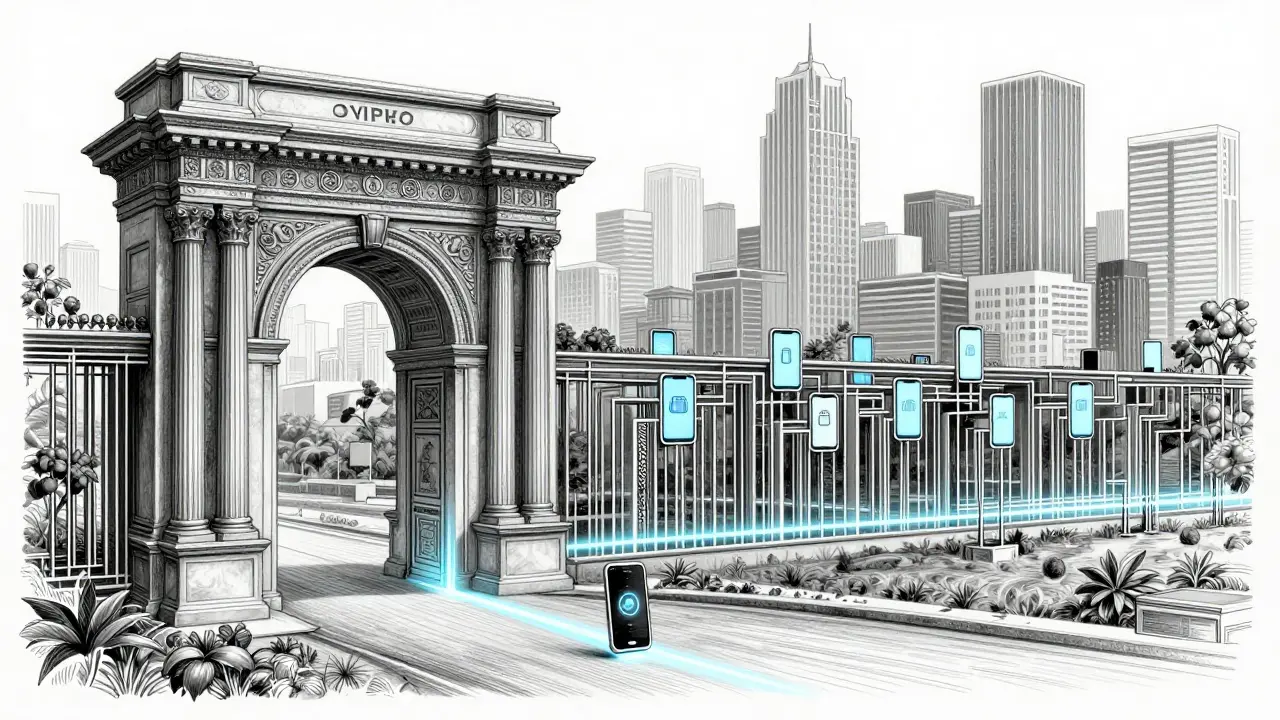
When you build a system with dozens or even hundreds of microservices, things get messy fast. One service needs to talk to another. External apps need to reach your backend. Security, monitoring, and traffic control become nightmares if you don’t have the right tools in place. That’s where API Gateways and Service Meshes come in - but they’re not the same thing, and mixing them up can cost you time, money, and stability.
What an API Gateway Actually Does
Think of an API Gateway as the front door to your microservices system. Every request from a mobile app, web browser, or partner system hits this single entry point first. It doesn’t just pass traffic through - it handles authentication, rate limits, protocol translation, and routing. If you’re using AWS Lambda, Azure Functions, or Google Cloud Run, the API Gateway is what connects your external users to those serverless functions. In 2025, 98% of API Gateways used path-based routing. That means if a request comes in to/api/users, it gets sent to the users service. If it hits /api/payments, it goes to the payments service. Simple. Predictable. And it’s why companies like Netflix and Amazon built these tools in the first place - to avoid having each microservice handle its own security and routing logic.
Most API Gateways also enforce authentication. About 87% use OAuth 2.0, and 76% rely on JWT tokens. That means your frontend doesn’t need to know how to talk to each service’s security system - it just gets a token, and the gateway checks it before letting the request through. Rate limiting? Almost all of them (92%) use token bucket or leaky bucket algorithms to prevent abuse. And if you’re serving both REST and gRPC clients, a good gateway will translate between them automatically.
The big players? AWS API Gateway, Kong, and Apigee. AWS charges $3.50 per million requests as of early 2026. Kong’s Enterprise version starts at $50,000 a year. Apigee demands a $250,000 minimum commitment. You’re not just paying for software - you’re paying for reliability, scale, and support when things break at 3 a.m.
What a Service Mesh Actually Does
Now imagine you’ve got 200 microservices talking to each other inside your cluster. One service calls another to get user data. That service calls a third to validate a payment. Then another to log the event. Each hop adds latency. Each connection could fail. And if one service goes down, the whole chain collapses. That’s where a Service Mesh steps in. It’s not a single component - it’s a network of tiny proxies, called sidecars, that sit right next to each service. These sidecars handle all communication between services. They’re invisible to the code, but they do the heavy lifting: service discovery, mutual TLS encryption, load balancing, retries, circuit breaking, and observability. In 2025, 92% of Service Meshes automatically encrypted traffic between services using mTLS. No more hardcoded certificates or manual key rotation. 88% support canary releases - you can send 5% of internal traffic to a new version of a service, watch for errors, and roll back before it affects everyone. 85% use circuit breaking: if a service starts returning 10% errors, the mesh stops sending it traffic until it recovers. The two main players are Istio and Linkerd. Istio, backed by Google, IBM, and Lyft, has 45% market share. It’s powerful but heavy - each sidecar can use up to 100MB of memory. Linkerd, created by Buoyant, is leaner. Its sidecars use just 20MB. That’s why companies running IoT devices or resource-constrained environments prefer Linkerd. In a 2025 case study, a health tech firm switched from Istio to Linkerd and cut their cluster’s memory usage by 38%.North-South vs. East-West Traffic
Here’s the key difference most people miss: API Gateways handle north-south traffic. That’s traffic coming from outside your cluster - users, partners, mobile apps. Service Meshes handle east-west traffic - service-to-service calls inside your cluster. You don’t use a Service Mesh to expose your API to customers. You don’t use an API Gateway to manage how your inventory service talks to your shipping service. Trying to do so creates complexity, not simplicity. A 2025 Sysdig report found that 98% of API Gateways are deployed at the network edge - as Kubernetes Ingress controllers or standalone gateway pods. Service Meshes live inside the cluster, with sidecars injected into every pod. That’s why API Gateways can handle 15,000 requests per second per instance. Service Meshes add 1-2ms of latency per hop. That’s fine for internal calls - but terrible for public APIs. PayPal’s team found that after adding Istio to their microservices, internal failure rates dropped by 63%. Why? Because the mesh automatically retried failed calls, rerouted traffic around broken services, and encrypted everything. But they still used Kong as their API Gateway to handle external traffic. They didn’t try to force one tool to do both jobs.
When to Use Which
Use an API Gateway when:- You’re exposing APIs to external clients (customers, partners, mobile apps)
- You need to manage authentication for third-party users
- You’re supporting multiple protocols (REST, gRPC, WebSocket)
- You want to enforce rate limits or quotas per API key
- You’re using serverless functions and need a trigger layer
- You have more than 50 internal services talking to each other
- You need automatic encryption between services
- You want to do canary releases, blue-green deploys, or A/B testing internally
- You’re seeing frequent service failures and need automatic retries and circuit breaking
- You need detailed metrics on service-to-service latency and error rates
Costs, Complexity, and Skills
API Gateways are easier to adopt. Setup usually takes 2-4 weeks. You need to know HTTP, REST, and basic authentication. Most teams already have those skills. Service Meshes? They’re harder. Full production deployment takes 3-6 months. You need to understand Kubernetes networking, sidecar injection, and how Envoy works under the hood. A 2025 O’Reilly survey found only 15% of companies had enough internal expertise to manage a Service Mesh without outside help. And the cost isn’t just financial. Sidecars eat CPU and memory. In a Red Hat benchmark, each sidecar added 15-20% overhead. That means you need more pods, more nodes, more cluster capacity. For small teams or startups, that’s a dealbreaker. That’s why only 35% of organizations use Service Meshes - but adoption is growing at 22% per year. Mid-sized companies (500-5,000 employees) still avoid them because of complexity. Large enterprises (10,000+ employees)? 92% use both.
Convergence? Or Just Confusion?
Some vendors are trying to merge the two. Kong’s 2026 roadmap includes “service mesh lite” features. Istio now supports Gateway API for external traffic. Ambassador’s new control plane claims to unify both. But experts warn against it. William Morgan, creator of Linkerd, said in October 2025: “Service Mesh solves the problem of reliable service-to-service communication that API Gateways weren’t designed for - they’re different layers solving different problems.” Cindy Sridharan, author of Distributed Systems Observability, put it bluntly: “API Gateways handle the public face of your system while Service Meshes ensure the backstage operations run smoothly - attempting to use one for the other’s purpose creates architectural debt.” Gartner’s 2026 report says organizations using both patterns with clear separation achieve 40% better operational outcomes than those trying to consolidate. Even with new features, the distinction remains.What’s Next?
Istio 1.22, released in December 2025, introduced “ambient mode” - a new way to deploy the mesh without sidecars, cutting resource use by 40%. That could make it more viable for smaller teams. Kong Gateway 3.7, released January 2026, added AI-powered traffic anomaly detection. It can now spot unusual patterns in API usage and auto-block suspicious requests. The Service Mesh Interface (SMI) specification hit version 2.0 in late 2025, making it easier to switch between Istio, Linkerd, and Consul without rewriting configs. But here’s the bottom line: if you’re building a modern microservices system, you’re probably going to need both. Don’t try to force one tool to do the job of the other. Use an API Gateway for external clients. Use a Service Mesh for internal communication. Keep them separate. Keep them simple. And your system will thank you.Can I use an API Gateway instead of a Service Mesh?
You can try, but you’ll run into problems. API Gateways are designed for external traffic, not internal service communication. They don’t handle service discovery, automatic mTLS, or circuit breaking between services. Trying to use one for both roles leads to brittle configurations, increased latency, and harder debugging. Most teams that try this end up adding a Service Mesh anyway - after months of frustration.
Is Istio better than Linkerd?
It depends on your needs. Istio has more features - fine-grained traffic control, policy enforcement, and integration with complex security systems. But it’s heavier, with sidecars using up to 100MB of memory. Linkerd is lighter (20MB per sidecar), easier to install, and faster to set up. If you’re running in resource-constrained environments like IoT or edge computing, Linkerd wins. If you need enterprise-grade traffic policies and deep observability, Istio is the better fit. Many teams use both in different parts of their architecture.
Do I need both if I only have 10 microservices?
Probably not. With 10 services, you can manage communication with basic service discovery, simple health checks, and maybe a reverse proxy. Adding a Service Mesh adds overhead you don’t need yet. Focus on good API design and logging first. If you start seeing frequent failures, timeouts, or need canary releases, then it’s time to consider a mesh. API Gateways still make sense if you’re exposing APIs externally, even with a small number of services.
How much does it cost to run an API Gateway and Service Mesh together?
Costs vary widely. AWS API Gateway charges $3.50 per million requests - so if you hit 100 million calls a month, that’s $350. Kong Enterprise starts at $50,000/year. Service Meshes don’t have direct licensing fees - Istio and Linkerd are open source. But they increase your infrastructure costs: more CPU, more memory, more pods. A typical cluster might need 20-30% more resources to handle sidecars. For a medium-sized company, that could mean an extra $15,000-$30,000/year in cloud bills. The real cost is often the engineering time to set it up and maintain it.
What’s the biggest mistake teams make with API Gateways and Service Meshes?
Trying to use one tool to do both jobs. People think, “I already have an API Gateway - I’ll just use it for internal traffic too.” Or they install Istio and try to expose public APIs through it. That creates tangled configurations, unpredictable performance, and debugging nightmares. The cleanest, most reliable systems keep API Gateways at the edge for external traffic, and Service Meshes inside for internal communication. They’re teammates, not competitors.


