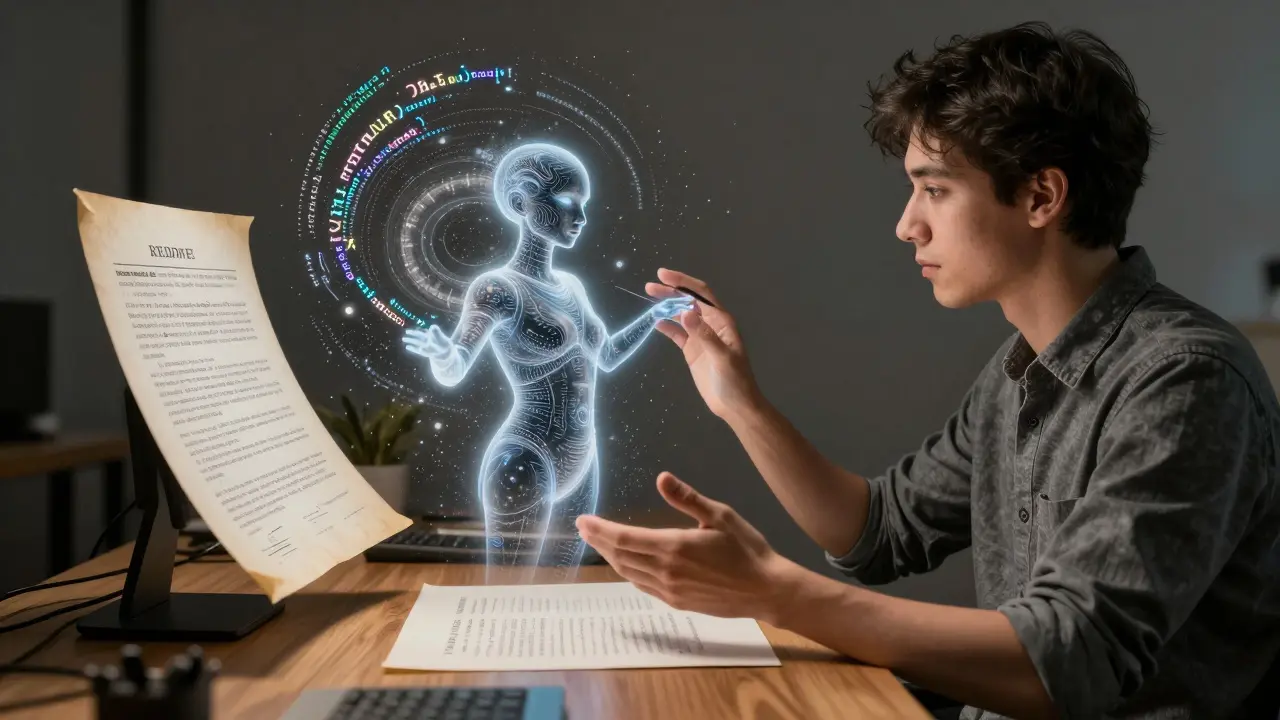
Most developers still think of coding as typing lines of logic, one by one. But since 2024, a new way of building software has taken root - one where you don’t write code so much as vibe it. Vibe coding is when you talk to an AI like a teammate, describe what you need, and let it generate the code. You don’t just accept what it gives you - you test it, tweak your instructions, and keep refining until it gets it right. It’s faster. It’s less exhausting. But it’s also wildly different from how most teams have worked for decades. And that’s where the real challenge begins: changing how people think, work, and get rewarded.
Why Vibe Coding Isn’t Just a New Tool - It’s a New Mindset
Imagine asking an AI to build a login page. You type: "Make a clean login form with email and password fields, and a "Forgot Password" link." The AI spits out HTML, CSS, and JavaScript in seconds. Looks good. You click run. It crashes because the backend API endpoint doesn’t exist. Now what? If you’re used to traditional coding, you’d go back and fix the code yourself. In vibe coding, you don’t fix the code - you fix the conversation. You say: "The login form needs to connect to /api/v2/auth/login. Make sure the fetch request uses POST and includes a CSRF token." You’re not debugging code. You’re debugging instructions.
This shift - from writing code to guiding AI - changes everything. Developers aren’t just learning new tools. They’re learning to think differently. Instead of holding the whole system in their head, they’re now responsible for clarity, context, and quality control. The AI doesn’t make mistakes because it’s dumb. It makes mistakes because your prompt was vague, incomplete, or misaligned with the architecture. The skill isn’t in typing faster. It’s in asking better questions.
Training: From Code Writer to AI Director
Training for vibe coding isn’t about learning a new programming language. It’s about retraining how developers approach problems. Three core areas need focus:
- Prompt engineering - Not just "make a button," but "build a responsive button with hover animation, accessible focus states, and ARIA labels. Use Tailwind CSS. Keep it under 200 lines."
- Project structuring - Break work into small, testable pieces. Use markdown files to outline features, acceptance criteria, and edge cases before asking for code. Don’t let AI run wild on a 5,000-line monolith.
- Iteration discipline - Accept the first output. Test it. Then say: "This works, but the error handling doesn’t match our logging standards. Update it to use the centralized logger from utils/logger.js."
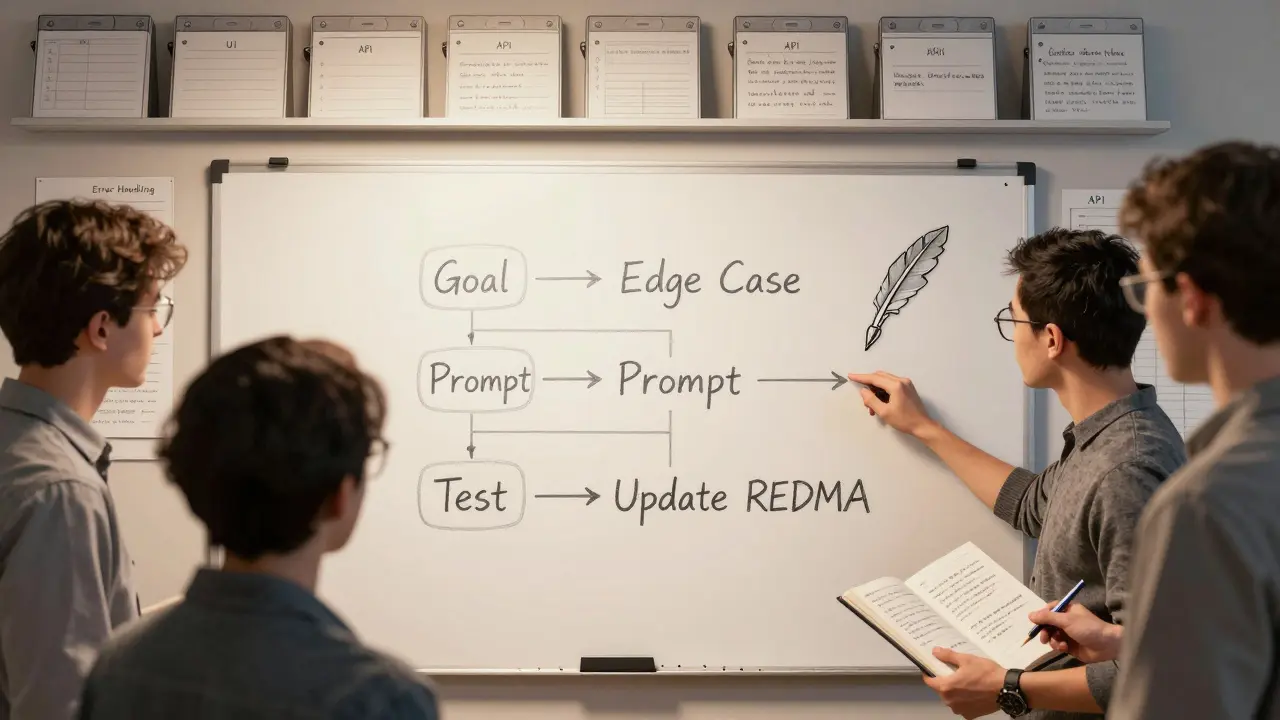
Teams that succeed don’t train developers to use AI. They train them to manage AI. That means creating templates: a standard project README structure, a prompt checklist, and a review flow. One team at a SaaS startup in Austin started every vibe coding session with a 5-minute whiteboard session: "What’s the goal? What’s the edge case we’ve seen before? What’s the one thing that could break?" That simple ritual cut bugs by 60% in three months.
Tools: The Infrastructure That Makes Vibe Coding Work
You can’t vibe code effectively with just ChatGPT and a text editor. You need tools that support structure, memory, and collaboration.
- Refact.ai - This platform has a "Think" button that uses advanced reasoning models (like GPT-o3-mini) to plan before generating code. It also auto-splits large tasks into smaller files so the AI doesn’t lose context.
- Git and GitHub - Non-negotiable. Every change must be committed with a clear message: "Updated login flow per AI gen v2. Added CSRF validation. Fixed token expiry bug." This isn’t just version control - it’s an audit trail of your AI collaboration.
- README as a living document - After every AI-generated change, you ask the AI to update the README. "Update the README to reflect the new auth flow and API endpoint changes." This turns documentation from a chore into a feedback loop.
- Prompt libraries - Keep a folder of proven prompts: "Generate a React component with TypeScript, hooks, and unit tests," or "Explain this error in plain English." The best developers don’t reinvent prompts - they reuse and refine them.
One team at a fintech startup built a Notion database of 87 high-performing prompts. They tagged them by use case: "UI component," "API endpoint," "test suite," "error handling." New hires didn’t learn to code - they learned to search and adapt. Their onboarding time dropped from 6 weeks to 11 days.
Incentives: Reward the Right Behavior
Here’s the problem: Most companies still measure developers by how many story points they complete or how many lines of code they write. That’s the wrong metric for vibe coding.
What should you reward instead?
- Quality of prompts - Did the developer ask a clear, context-rich question that led to working code on the first try? Track this.
- Iteration efficiency - How many rounds did it take to get the feature right? A developer who gets it right in two tries is more valuable than one who needs seven.
- Documentation updates - Did they update the README? The test suite? The architecture diagram? That’s part of the deliverable now.
- Team knowledge sharing - Did they add a new prompt to the library? Did they mentor someone else? That’s leadership.
One company in Seattle stopped tracking story points. Instead, they started a monthly "Vibe Award" for the best prompt, the cleanest AI-generated code, and the most helpful documentation update. Winners got a half-day off. Engagement shot up. Turnover dropped. Developers said: "I finally feel like I’m doing real work, not just typing."
Why Most Companies Fail at Vibe Coding Adoption
It’s not the tech. It’s the culture.
Teams that fail cling to the old mindset: "The AI should get it right the first time." They punish developers when the code breaks. They demand perfection. They treat AI like a magic box, not a collaborator.
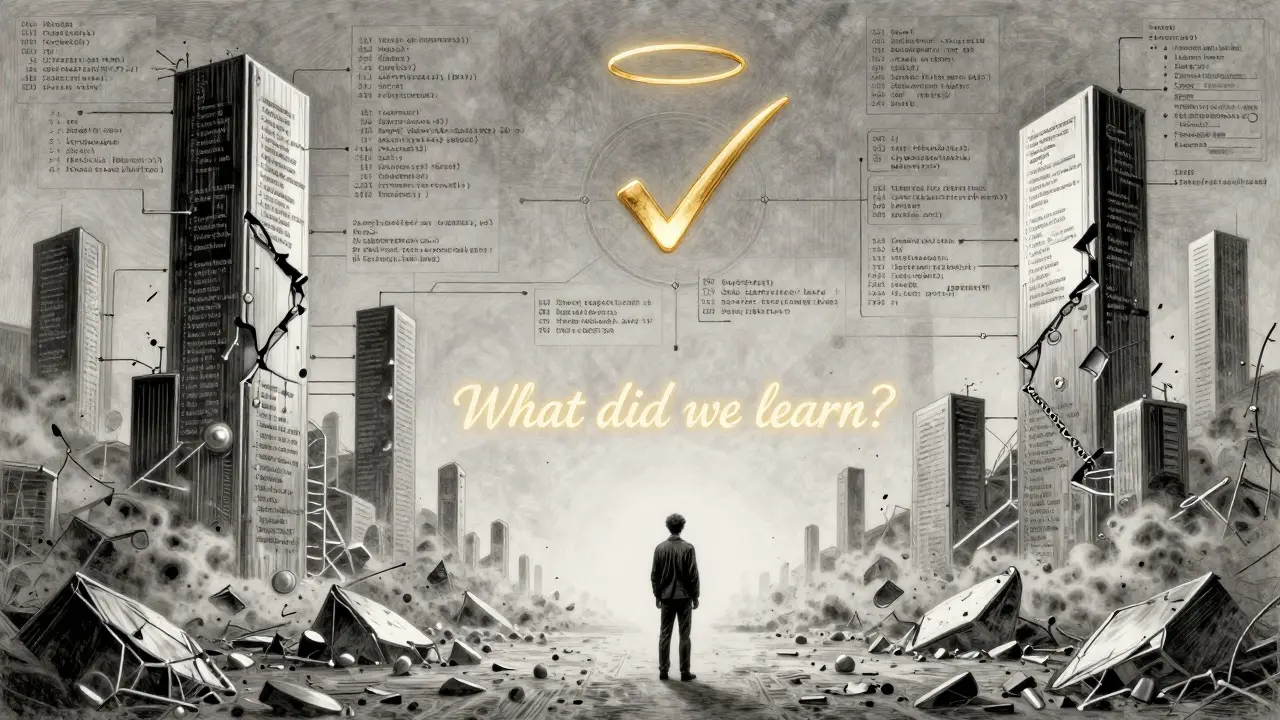
Successful teams do the opposite. They treat every AI-generated output as a draft. They celebrate the "ugly first version" because it surfaces the real questions. They don’t say: "Why did this fail?" They say: "What did we learn?"
Another common failure? No standardization. One dev uses Claude 3.7. Another uses GPT-4o. One writes prompts in Slack. Another uses a Notion doc. The result? Inconsistent output, duplicated work, and confusion. The fix? Document your standards. Which models are approved? What’s the prompt template? How do you handle context limits? Write it down. Share it. Enforce it gently.
The Bigger Picture: Vibe Coding as a Team Sport
Here’s the quiet revolution: Vibe coding isn’t just for developers anymore. Product managers are starting to use it to build prototypes. Designers are asking AI to generate UI mockups based on Figma specs. Even marketing teams are using it to draft landing page copy.
That’s the real win. Vibe coding isn’t just changing how code is written. It’s changing who gets to build things. The barrier to creating software is dropping. But that means organizations need to change how they support it - not just with tools, but with trust, structure, and recognition.
The companies that win won’t be the ones with the best AI. They’ll be the ones that figured out how to train their people, equip them with the right tools, and reward the right behaviors. Because in vibe coding, the most valuable skill isn’t coding. It’s collaborating - with AI, with your team, and with the process itself.
Is vibe coding just another name for AI pair programming?
Not exactly. AI pair programming usually means the AI suggests code while you type. Vibe coding flips that: you do the talking, the AI does the typing. You’re not reviewing suggestions - you’re directing a full production. It’s less like having a partner, and more like having a highly skilled intern who never sleeps.
Can vibe coding replace junior developers?
It can reduce the need for entry-level coding roles - but not eliminate them. Junior devs are still valuable for testing, documentation, and understanding edge cases. The shift is from "write code" to "manage AI output." Junior developers who learn to ask sharp questions and review AI work are becoming more valuable, not less.
What’s the biggest mistake teams make when starting vibe coding?
Skipping structure. Jumping straight into generating code without planning, without clear criteria, and without version control leads to chaos. Teams that succeed start with a one-page project brief, a prompt template, and a Git workflow. Everything else follows.
Do I need expensive AI tools to vibe code?
No. You can start with free tools like Claude 3.7 or GPT-4o via ChatGPT. But if you’re scaling to a team, tools like Refact.ai or Clarifai that support context management, modular file generation, and team memory become essential. The real cost isn’t the tool - it’s the time lost from poor prompts and inconsistent workflows.
How do I measure ROI on vibe coding adoption?
Track three things: time to first working prototype, number of iteration cycles needed to reach production, and reduction in bug reports from AI-generated code. Teams that switch to vibe coding typically cut prototype time by 40-60% and reduce bugs caused by implementation errors by 30% or more within six months.


