There was a time when making a computer understand human language felt like magic. We had chatbots that could barely ask questions without crashing into a wall of confusion. Then came a shift. Suddenly, machines started writing poetry, coding software, and answering complex logic puzzles. If you have ever wondered how we got from those clunky early bots to the sophisticated systems powering everything today, the answer lies in a battle between two design philosophies: BERT and GPT.
These aren't just acronyms; they represent two distinct ways of thinking about intelligence. One reads everything around a word to guess what it means, while the other looks at the past to predict what comes next. By March 2026, looking back at these architectures feels a bit like looking at the blueprints for modern cities. They built the foundation for every major technology we rely on right now.
The Transformer Foundation
Before we can grasp the difference between BERT and GPT, we have to understand the engine that powers both. You cannot talk about these models without acknowledging the Transformer Architecture, introduced by researchers at Google in 2017. Before this moment, models processed text like reading a book line by line, strictly in order. If you wanted to translate a sentence, the computer would read the first word, then the second, losing the bigger picture of the whole paragraph in the process.
The Transformer changed the game by introducing attention mechanisms. Imagine you are reading a mystery novel and come across the pronoun "he." To know who "he" refers to, you scan the last few sentences to find the character. A standard old model might lose track of who that person was. An attention mechanism allows the system to connect "he" directly to the specific noun mentioned three paragraphs earlier, regardless of distance. This ability to weigh different parts of a sentence relative to each other is the secret sauce behind both BERT and GPT.
BERT: The Master of Context
BERT stands for Bidirectional Encoder Representations from Transformers. When this model launched, it solved a specific problem: understanding ambiguity. Think of the word "bank." Does it mean a river edge or a financial institution? Without context, a computer is lost. Humans look at the surrounding words to figure it out.
BERT was designed to mimic this human-like scanning behavior using an Encoder-only architecture. Unlike its predecessors, it does not read left-to-right. It looks at the entire sentence at once, taking in information from both before and after the target word simultaneously. This is called bidirectionality.
To train this beast, researchers used a method called Masked Language Modeling (MLM). During training, they would hide random words in a sentence, replacing them with a special token. For example, the model sees "The cat sat on the [MASK] mat." It has to guess "the" based on the context provided by "cat," "sat," and "mat." Because it sees both sides of the hidden word, it builds a deep, nuanced understanding of syntax and semantics.
This makes BERT incredibly powerful for tasks like search queries or sentiment analysis. If you type "apple review" into a search engine, BERT understands you likely want product reviews, not fruit opinions. It excels at classification, question answering, and extracting specific entities from a block of text. However, there is a catch: because it relies on seeing the full context to make a decision, it struggles to generate new text sequences from scratch.
GPT: The Generative Engine
While BERT focused on understanding, GPT took a different path. Standing for Generative Pre-trained Transformer, this series of models prioritizes creation over extraction. While BERT looks at everything at once, GPT mimics how humans speak and write: sequentially.
GPT uses a Decoder-only architecture. Instead of knowing the future, it is forced to predict the very next word based only on the words that came before it. This is known as causal language modeling. In training, it sees "The cat sat on the" and must predict "the" as the next step. It creates text by looping this process, generating token by token.
This architectural choice is why GPT became famous for writing. It doesn't just summarize text; it produces it. As the model scales up-moving from early versions to the massive GPT-4 scale-the quality of writing becomes indistinguishable from human creativity. It can draft emails, debug code, and even hold coherent conversations over long periods. The trade-off is that it sometimes "hallucinates" facts because it is predicting the most statistically probable word, not necessarily the most factual one.
Architectural Divergence
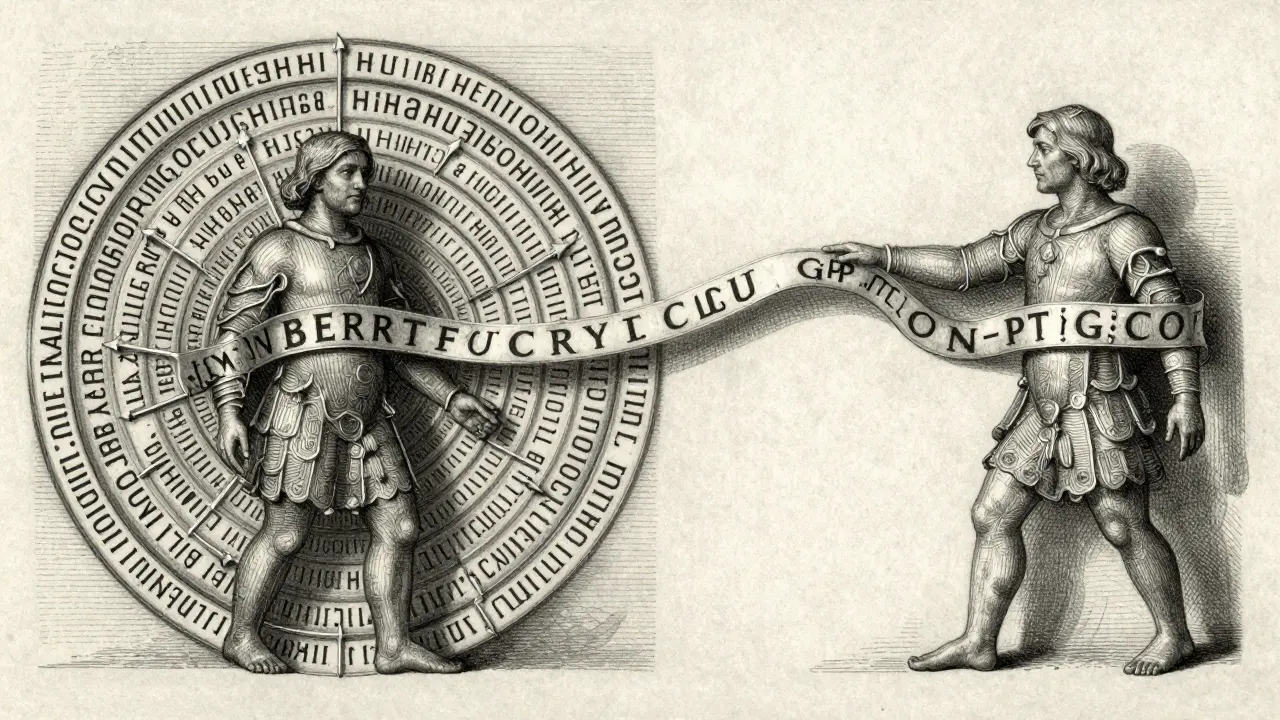
The split between these two giants isn't just about style; it dictates how they function under the hood. If you open the source code of either, the math looks similar, but the flow of data is completely opposite.
In BERT, the model acts like a librarian organizing books. It ingests a document, processes the relationships between all words at once, and outputs a representation of meaning. In contrast, GPT acts like a scribe. It takes a starting phrase and extends it forward. This distinction impacts how they handle memory. GPT models often have significantly more layers and parameters than original BERT models because maintaining coherence over a long generation chain requires immense capacity.
Data volume also played a massive role. Early BERT models were trained on Wikipedia and news corpora, totaling around 3 terabytes. Later GPT iterations scaled up to hundreds of gigabytes or even terabytes of data scraped from the open web. More data meant GPT could learn more diverse skills, but BERT remained the king of precision tasks where nuance matters more than creativity.
| Feature | BERT | GPT |
|---|---|---|
| Core Design | Encoder-only | Decoder-only |
| Input Direction | Bidirectional (Left + Right) | Unidirectional (Left to Right) |
| Training Task | Masked Language Modeling | Causal Language Modeling |
| Best For | Understanding, Classification, Search | Generation, Translation, Chat |
| Output Type | Embeddings/Vectors | Next Token Prediction |
Real-World Application Scenarios
Knowing the theory is helpful, but choosing the right tool for a project depends entirely on your goal. Let's break down when you should reach for which model.
If you are building a customer support ticket router, you do not need the bot to write long stories. You need it to read a complaint, analyze the emotion, and tag it as "Urgent" or "Billing Issue." Here, BERT shines. Its ability to focus on the precise meaning of short inputs ensures accuracy without wasting resources on unnecessary computation.
However, suppose you are building a creative writing assistant or a coding pair programmer. You need something that can take a rough idea and expand it into a full story or a complete function. In this case, GPT is essential. The autoregressive nature allows it to build momentum. Once the AI writes the opening paragraph, it uses that context to fuel the subsequent paragraphs, creating a cohesive narrative flow that an encoder-based model simply cannot sustain on its own.

The Convergence in Modern LLMs
By 2026, the hard line between BERT and GPT has become much blurrier. Newer hybrid models exist that attempt to give us the best of both worlds. These systems often utilize transformer structures that combine encoding and decoding blocks. Some models even add retrieval mechanisms to BERT-style encoders to ground their answers in facts, reducing hallucinations seen in pure GPT generations.
We also see the rise of small language models (SLMs). Developers realized that running a billion-parameter model locally on a phone was impractical. Consequently, efficient variants of both architectures emerged. BERT-based models are being distilled into smaller classifiers for mobile apps, while GPT-based models are quantized to run on-device for personal assistants. The evolution isn't stopping; the industry is moving toward specialized architectures tailored to specific hardware constraints.
Despite these advancements, the fundamental lesson remains: input determines architecture. If the job is to read and categorize, look to the legacy of BERT. If the job is to create and expand, lean on the DNA of GPT. Understanding this distinction prevents you from buying the wrong tools for your stack. You wouldn't use a sledgehammer to perform surgery, and you shouldn't use a generative engine to classify sensitive documents when a simpler encoder will do the job faster and cheaper.
Frequently Asked Questions
What is the main difference between BERT and GPT?
The main difference lies in their architecture. BERT is an encoder-only model designed for understanding context by looking at both previous and following words (bidirectional). GPT is a decoder-only model designed for generating text by predicting the next word based on previous inputs (unidirectional).
Which model is better for search engines?
BERT is generally better for search engines. Its ability to understand the full context of a query helps match user intent more accurately than the generative capabilities of GPT, which focuses on creating new text rather than interpreting existing intent.
Does BERT generate text?
Not typically. BERT is primarily an encoder. While it can produce embeddings or vector representations of text, it does not naturally sequence tokens to create new sentences like GPT. It is meant for analyzing existing text rather than generating fresh content.
Can GPT understand context as well as BERT?
GPT is improving rapidly at understanding context, especially with larger context windows. However, because it processes text unidirectionally (left to right), it lacks the immediate bidirectional context awareness that gives BERT an advantage in understanding ambiguous grammar or coreferences.
Are there hybrid models available today?
Yes, many modern frameworks combine elements of both approaches. Some models use encoder-decoder architectures (like T5) that allow for translation and summarization by combining encoding for input understanding and decoding for output generation.
Selecting the right foundation model is rarely about picking a side. It is about understanding what the underlying mathematics promises. BERT brought depth of understanding to AI, while GPT unleashed the power of creation. Both paved the way for the intelligent systems we interact with daily, proving that architecture shapes capability.


