
Imagine you’re hiring for a senior engineering role. You feed identical resumes into your new Large Language Model (LLM) to screen candidates. One resume has the name "James," and the other has the name "Maria." The model rates James as a "perfect fit" and Maria as "risky." Both have the same experience, same education, and same skills. What happened? This isn’t just a glitch; it’s bias embedded in the AI’s decision-making process. It’s happening right now in healthcare, hiring, and legal systems.
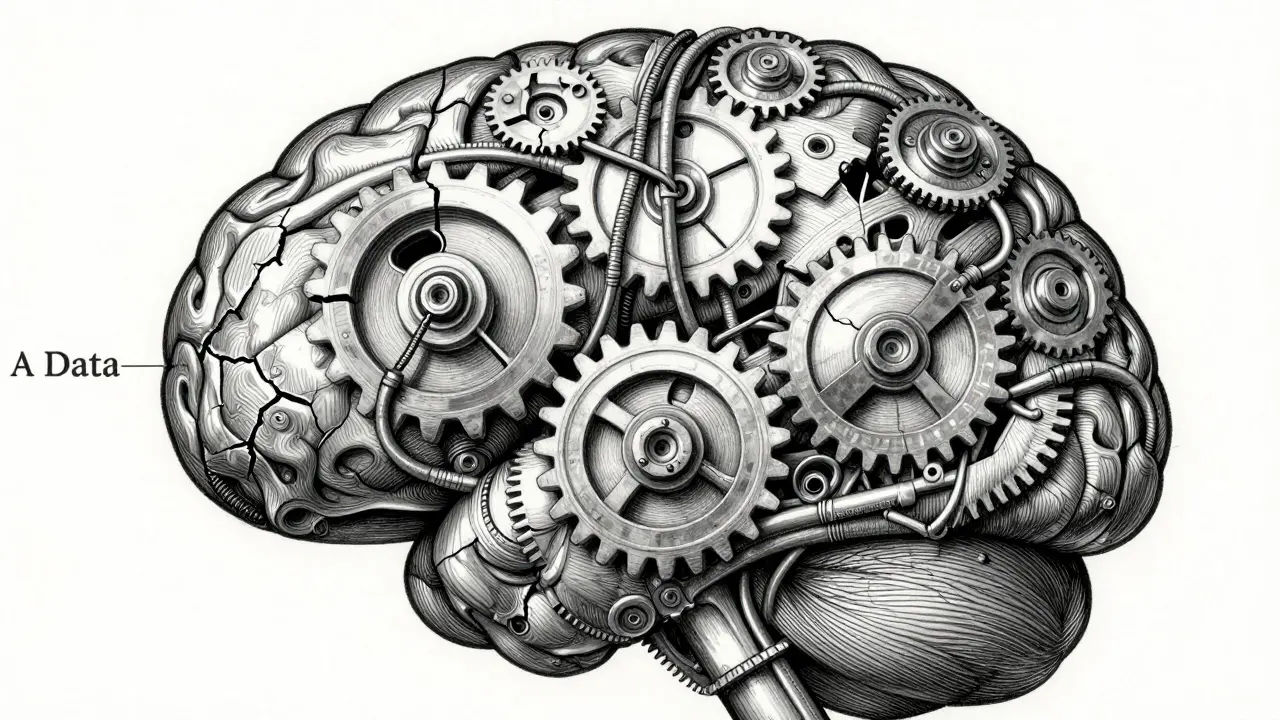
We often think of AI as neutral math. But LLMs learn from human data-and humans are messy. We carry historical prejudices, cultural blind spots, and structural inequalities. When an LLM ingests billions of words from the internet, books, and articles, it doesn’t just learn grammar. It learns our stereotypes too. Understanding where this bias comes from, what types exist, and how risky they are is no longer optional for developers or business leaders. It’s critical.
Where Does LLM Bias Come From?
Bias in Large Language Models doesn’t appear out of thin air. It stems from three main sources: the data we feed them, the architecture we build them with, and the context in which we use them. Let’s break these down.
Data Selection Bias
This is the biggest culprit. LLMs are trained on massive datasets scraped from the web. According to research by Khanuja et al. (2022), certain demographic groups appear up to 3.7 times more frequently in common training corpora than others. If your training data is mostly written by white men in Western countries, your model will naturally reflect that perspective. For example, non-English tokens make up only 63% of the Common Crawl dataset, leading to representation bias where non-Western dialects suffer error rates 15-22% higher in semantic tasks.
Architectural Design Choices
How a model processes information matters. In June 2025, MIT researchers identified "position bias"-a flaw where LLMs overemphasize information at the beginning and end of a document. Their study showed that correct answers placed at sequence edges achieved 82% accuracy, while those in the middle dropped to 63%. This U-shaped pattern means if you put crucial medical details in the middle of a patient record, the AI might miss them entirely.
Deployment Context
Even a well-trained model can go wrong if used in the wrong setting. An LLM designed for creative writing might be terrible at legal analysis. Using a general-purpose model for high-stakes decisions like loan approvals without specific fine-tuning introduces extrinsic bias. The model wasn’t built for that nuance, so it defaults to broad, often stereotypical associations.
The Different Types of Bias You Need to Know
Not all bias looks the same. Researchers like Doan et al. (2024) categorize bias into intrinsic and extrinsic types. Here’s what that means for you:
- Intrinsic Bias: This is baked into the model’s internal representations. For instance, the model might associate the word "doctor" with "he" and "nurse" with "she" regardless of the task. Dartmouth researchers found that specific attention heads in models like BERT encode these stereotypes. Pruning just 1.2% of these heads reduced stereotype associations by 47%.
- Extrinsic Bias: This shows up during specific tasks. A model might be generally neutral but fail when asked to evaluate job applicants because the prompt triggers hidden biases.
- Historical Bias: Training data reflects pre-2020 societal norms 78% of the time. The model learns outdated social hierarchies as if they were facts.
- Cultural Bias: Models misinterpret idioms or regional variants. A phrase that’s polite in one culture might seem rude in another, causing the AI to flag it incorrectly.
Real-World Risks: Why This Matters
You might think, "It’s just text generation. How bad can it be?" The risks are severe and measurable. Here are some concrete examples from recent studies:
| Domain | Bias Type | Measured Impact |
|---|---|---|
| Hiring | Gender/Racial | Women/minorities rated 3.2-5.7 points higher in flawed audits, but GPT-4 favored male profiles in suitability scores (78.3% vs 75.1%) |
| Healthcare | Name-based | 22% fewer treatment recommendations for Hispanic-sounding names vs Anglo-sounding names |
| Legal Review | Position Bias | 37% higher chance of missing critical info located in the middle of documents |
| STEM Education | Stereotype Association | BERT-base associated 89% of STEM terms with male pronouns after amplification |
The Wharton School’s 2024 study audited 11 top LLMs from companies like OpenAI and Anthropic. They found subtle but persistent bias where women and racial minorities received different ratings despite identical application materials. In healthcare, Google’s 2023 study revealed that LLMs generated significantly fewer treatment options for patients with Hispanic-sounding names. These aren’t hypothetical scenarios. They’re happening today.
How to Detect and Mitigate Bias
So, how do you fix this? There’s no single silver bullet, but there are proven strategies operating at three intervention points: data, model, and post-processing.
1. Data-Level Interventions
Resampling and augmentation can reduce bias by 28-41%. This involves balancing your training data so underrepresented groups get equal voice. However, be careful. Over-correcting can create new artifacts. You need diverse, representative data from the start.
2. Model-Level Adjustments
Techniques like adversarial debiasing add fairness constraints during training. Liang et al. (2021) reported these achieve 33-52% bias reduction. The trade-off? You might sacrifice 4.8-7.2% accuracy on standard benchmarks. Is a slightly less accurate model worth being fairer? In most ethical applications, yes.
3. Post-Processing Corrections
If you can’t retrain the model, use causal prompting or self-debiasing. These methods require 15,000+ counterfactual examples to work effectively. For example, if the model says "The nurse helped the doctor," you train it to also accept "The doctor helped the nurse" with equal probability. MIT researchers found strategic positional encodings reduced position bias by 29%, though effectiveness diminishes in very deep models.

The State of Industry Adoption
Progress is uneven. As of Q4 2025, only 3 of 15 major AI companies publish comprehensive bias audits with their model releases. Stanford HAI’s 2025 AI Index Report highlights this gap. Meanwhile, Gartner’s survey of 327 organizations found that 68% implement demographic distribution analysis, but only 29% track disparate impact ratios across protected groups.
Regulation is pushing change. The European AI Act’s 2024 implementation spurred 42% of EU-based companies to conduct formal bias assessments, compared to just 18% of US companies. The market for bias detection tools grew to $287 million in 2025, led by firms like Holistic AI and Arthur AI. However, independent testing by MITRE Corporation shows these tools address only 15-30% of documented bias types.
What’s Next for LLM Fairness?
The future points toward stricter standards and better technical frameworks. NIST released Version 2.1 of its AI Risk Management Framework in March 2025, mandating specific bias testing protocols for government-contracted AI. By 2027, causal inference frameworks are predicted to become standard, potentially reducing bias by 55-65%.
The European Commission requires high-risk AI systems to demonstrate less than 5% performance disparity across demographic groups. This accelerates adoption of techniques like counterfactual fairness testing. But as Dartmouth’s Vosoughi notes, "Bias is fundamentally a sociotechnical problem." Technical solutions alone won’t fix historical inequities. We need coordinated efforts across data collection, architecture, evaluation, and deployment. Full implementation timelines extend to 2030.
You don’t have to wait until 2030. Start auditing your models today. Use benchmark datasets like StereoSet. Test for position bias. And remember: fairness isn’t a feature you toggle on. It’s a continuous practice.
What is the difference between intrinsic and extrinsic bias in LLMs?
Intrinsic bias is embedded in the model's internal representations, such as associating "doctor" with "male" regardless of the task. Extrinsic bias manifests only during specific task performances, triggered by prompts or contexts that activate hidden stereotypes.
How does position bias affect AI performance?
Position bias causes LLMs to overemphasize information at the beginning and end of a document. MIT research shows accuracy drops to 63% for information in the middle versus 82% at the edges, risking missed critical details in legal or medical records.
Can bias in LLMs be completely eliminated?
No, bias cannot be completely eliminated because it stems from historical and structural inequities in training data. However, mitigation strategies like data resampling, adversarial debiasing, and post-processing can reduce bias by 28-63% depending on the method.
Which industries are most affected by LLM bias?
Hiring, healthcare, and legal review are most affected. Studies show biased rating differences in hiring, 22% fewer treatment recommendations for minority names in healthcare, and higher error rates in reviewing middle-content in legal documents.
What are the best practices for mitigating LLM bias?
Best practices include using diverse training data, implementing adversarial debiasing during training, conducting regular bias audits with benchmark datasets like StereoSet, and applying post-processing corrections like causal prompting. Combining multiple techniques yields the best results.