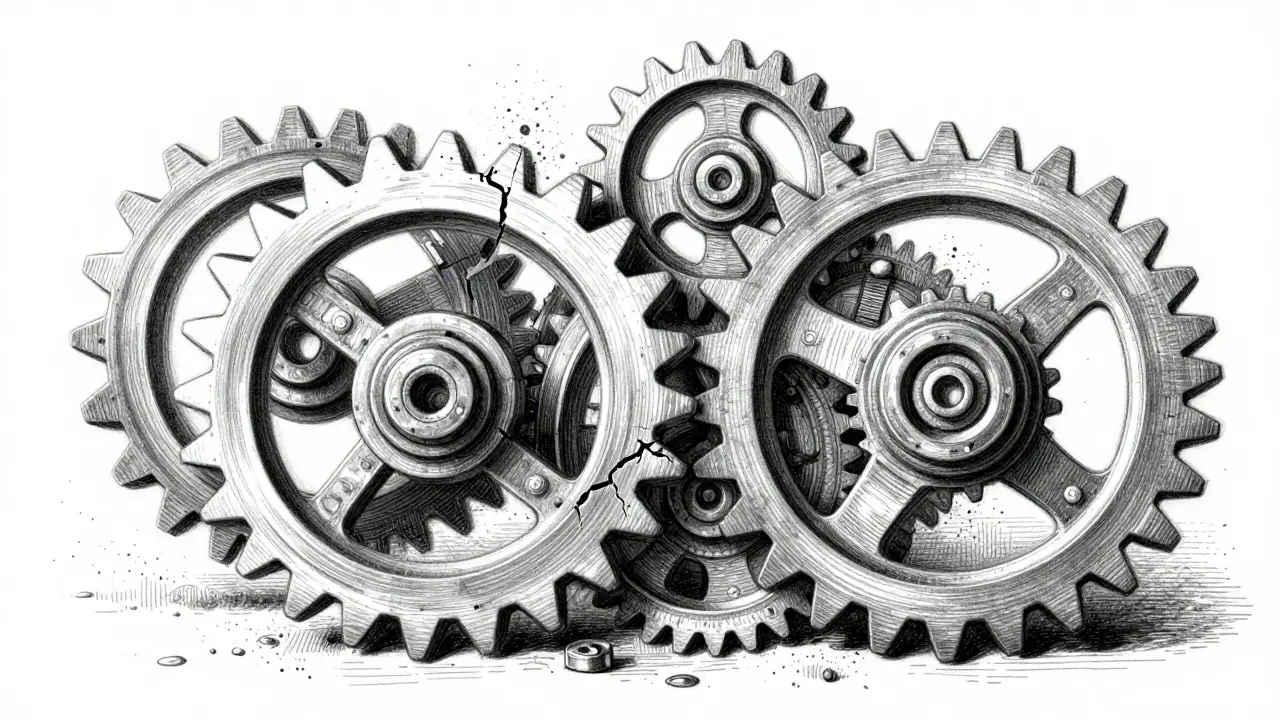
Most Retrieval-Augmented Generation (RAG) systems start strong but quickly lose their edge. You build the pipeline, test it with a handful of queries, and launch it into production. Then reality hits. Users ask questions you didn't anticipate, context windows get crowded with irrelevant noise, and accuracy drops. This isn't just bad luck; it's a structural flaw in static RAG architectures. Without a mechanism to learn from real-world usage, your system is stuck in time.
The solution isn't more data-it's better feedback. By implementing human feedback loops, you transform your RAG system from a static tool into a dynamic, self-improving engine. This approach captures user interactions and structured human reviews to continuously optimize retrieval quality. According to Label Studio's 2024 analysis, approximately 67% of RAG failures stem from poor retrieval quality that could be corrected through human-in-the-loop mechanisms. Let’s look at how to build these loops effectively.
Why Static RAG Fails in Production
To understand why feedback loops matter, we first need to see where standard RAG breaks down. Traditional RAG relies on semantic similarity metrics to retrieve documents. It assumes that if a document looks similar to a query, it’s relevant. But relevance is nuanced. A document might be semantically similar but lack the specific factual nuance the Large Language Model (LLM) needs to answer correctly.
In early 2023, researchers identified a critical limitation: semantic similarity alone fails to capture LLM sequencing preferences. If the retriever returns five documents, the order matters immensely. An LLM reads top-down. If the most critical fact is buried in the fifth chunk, the model might ignore it or hallucinate an answer based on the less relevant first chunk. Standard evaluation metrics often miss this because they treat retrieved chunks as a bag of words, not a sequence. This gap between pre-trained knowledge and real-world application needs creates a reliability crisis.
Dr. Jane Chen, Director of AI Research at Crossing Minds, noted in March 2025 that treating RAG as a dynamic optimization process rather than static retrieval fundamentally changes how we approach LLM reliability. The goal is to close the gap between what the model *thinks* is relevant and what humans *actually* find useful.
The Architecture of Human Feedback Loops
Implementing a feedback loop requires moving beyond simple "thumbs up/down" buttons. You need a structured architecture that captures granular signals. The Pistis-RAG framework is a specialized neural architecture developed by Crossing Minds that processes user feedback through list-wide alignment models offers a blueprint for this. Developed in mid-2024, it operates through two distinct phases: feedback alignment and online querying.
The feedback alignment phase uses online learning to improve the ranking model's sensitivity to both human and LLM preferences. Crucially, it focuses on list-wide feedback integration rather than assessing individual documents in isolation. This means the system learns not just which documents are good, but how they work together to form a coherent context window. The framework was trained on over 15,000 human-labeled query-response pairs from public datasets like MMLU and C-EVAL.
Here is how the technical flow works:
- Capture: When a user interacts with the RAG output, the system logs the original query, the generated answer, the retrieved documents, and any explicit or implicit feedback (e.g., edits made by the user).
- Process: A feedback signal processor analyzes these inputs. Unlike automated metrics that only check for factual correctness, human review identifies contextual gaps-what information was missing that would have improved the response?
- Align: The ranking model updates its weights. It learns to prioritize documents that contain the specific contextual elements humans flagged as valuable.
- Deploy: The updated model goes live, improving future retrieval for similar queries.
Google Cloud’s 2025 optimization guide notes that effective feedback loops require minimum latency thresholds of under 200ms for real-time adaptation. If the feedback processing takes too long, the user experience suffers, and the loop breaks. Speed is essential for maintaining trust in the system.
Performance Gains: Data-Driven Results
You might wonder if the engineering overhead is worth it. The data suggests a resounding yes. In their July 2024 study, the Pistis-RAG research team demonstrated significant advantages over traditional RAG approaches. Their implementation achieved 63.42% accuracy on MMLU English evaluations, compared to 57.36% for baseline RAG systems. That is a 6.06% improvement-a massive leap in the world of LLM benchmarks.
For Chinese evaluations using C-EVAL, the gains were even starker: 68.21% accuracy versus 61.13% for standard implementations, a 7.08% boost. These aren't marginal gains; they represent a shift from mediocre to reliable performance.
| Method | MMLU Accuracy Gain | C-EVAL Accuracy Gain | Convergence Speed | False Positive Reduction |
|---|---|---|---|---|
| Standard RAG | Baseline | Baseline | N/A | N/A |
| Human Feedback Loop (Pistis-RAG) | +6.06% | +7.08% | Fast | -42% |
| RLHF (Traditional) | Variable | Variable | Slow (-18.3%) | Low |
| Automated Metrics Only (Ragas) | Minimal | Minimal | Instant | High Error Rate |
Compared to Reinforcement Learning with Human Feedback (RLHF), which is traditionally used for aligning base LLMs, RAG-specific feedback loops show 18.3% faster convergence to optimal performance metrics. This is because you are optimizing a narrower problem space-retrieval relevance-rather than the entire language model's behavior.
Implementation Challenges and Pitfalls
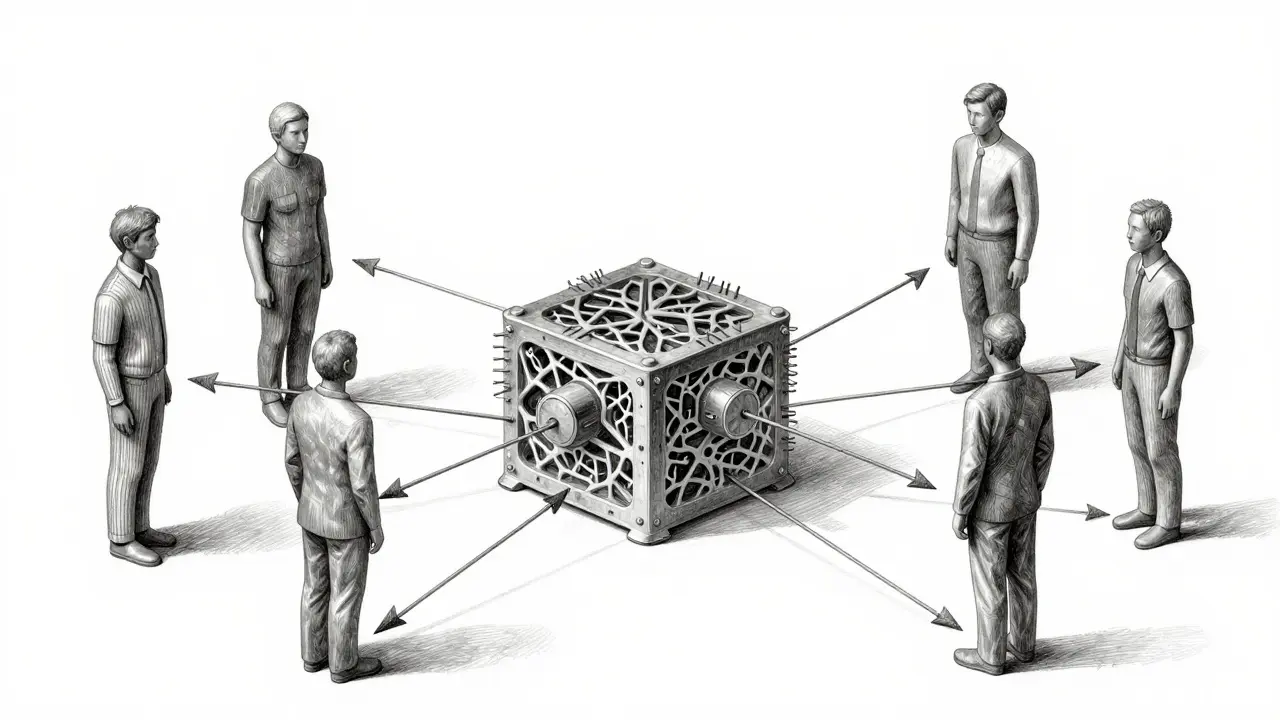
Despite the benefits, human feedback loops are not plug-and-play. Braintrust’s 2025 industry survey of 127 RAG implementations revealed that feedback loop RAG requires approximately 35% more engineering resources for initial setup. The complexity lies in building the infrastructure to capture, store, and process feedback without disrupting the user experience.
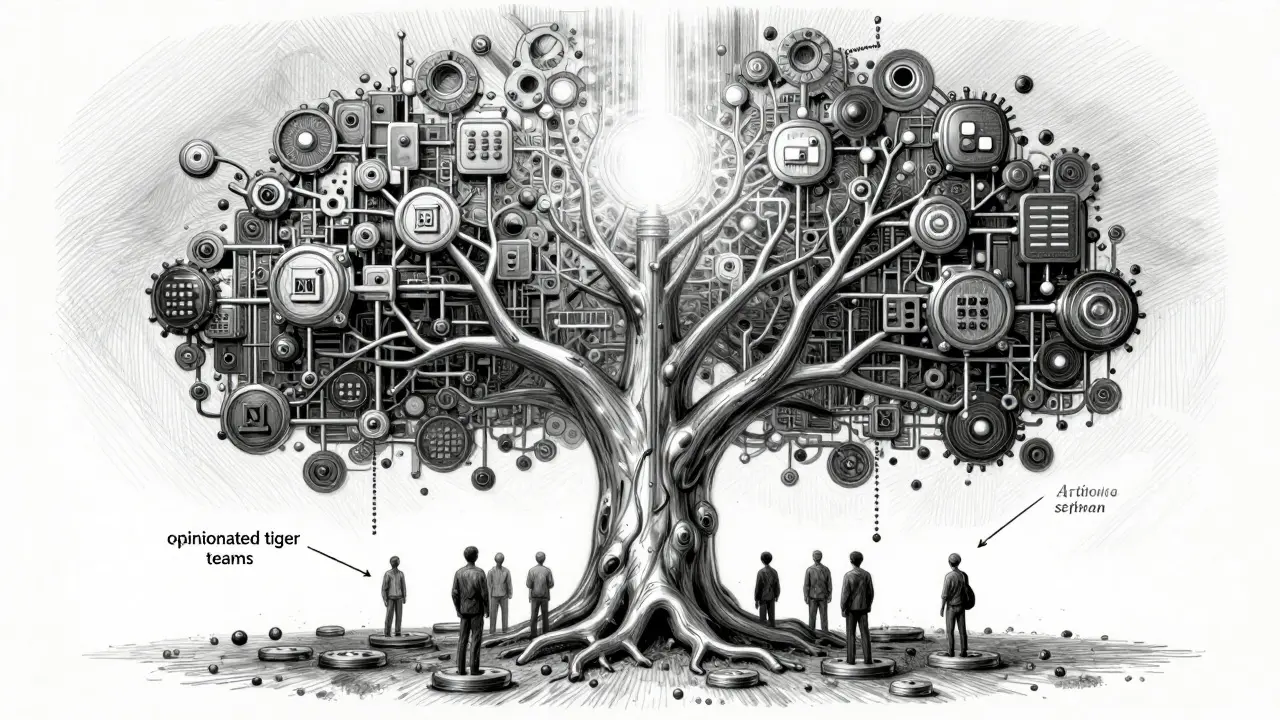
One major pitfall is feedback fatigue among human reviewers. If your team spends hours manually reviewing every bad response, burnout sets in fast. Google Cloud’s 2025 best practices guide addresses this by recommending "opinionated tiger teams." These are small groups of carefully selected personas that match your target users. Ideally, this team includes both technical experts who understand the domain and non-technical users who represent the average customer. In one case study, this approach reduced implementation time by 47%.
Another risk is bias amplification. Dr. Emily Zhang of Stanford's Human-Centered AI Institute warned in June 2025 that over-reliance on implicit user feedback without structured review can amplify biases present in user interactions. If your user base has demographic biases, and you blindly optimize for their preferences, your RAG system may become skewed. MIT’s September 2025 study showed unmitigated feedback loops can increase demographic bias by up to 22% in certain contexts. You must implement guardrails, such as regular audits of feedback sources, to ensure fairness.
Integration complexity also causes issues. A GitHub issue on the Pistis-RAG repository documented a case where improper feedback weighting caused retrieval quality to degrade by 18.2% before being corrected. This highlights the need for careful calibration. Not all feedback is equal. A correction from a domain expert should carry more weight than a casual click. You need a weighting strategy that reflects the credibility of the feedback source.
Tools and Frameworks for Success
You don’t have to build everything from scratch. Several tools have emerged to support human-in-the-loop workflows. Label Studio is an open-source data labeling tool widely used for creating human-in-the-loop frameworks for RAG evaluation remains a market leader, offering robust interfaces for packaging contextual elements for reviewers. Its community forum averages 87 new posts weekly about human-in-the-loop RAG implementations, indicating strong active usage.
Other key players include Confident AI, which provides evaluation metrics frameworks specifying that contextual precision must exceed 0.85 for optimal feedback integration, and Braintrust, which offers comprehensive implementation guides. For those interested in advanced ranking models, the Pistis-RAG framework by Crossing Minds is currently capturing approximately 29% market share according to Gartner's Q4 2025 analysis.
When choosing a tool, consider documentation quality. Pistis-RAG scores 4.6/5 for comprehensiveness, while newer open-source alternatives average 3.2/5. Good documentation reduces the learning curve, which typically spans 8-12 weeks for engineering teams with existing RAG experience.
Market Trends and Future Outlook
The adoption of human feedback loops is accelerating rapidly. The global market for RAG optimization tools reached $2.8 billion in Q3 2025, growing at 47% year-over-year. Enterprise adoption rates show 63% of organizations with mature RAG deployments have implemented some form of human feedback mechanism. Financial services (78%), e-commerce (72%), and healthcare (65%) are leading this trend.
Regulatory pressures are also driving adoption. The EU's 2025 AI Act requires documented human oversight mechanisms for high-risk RAG applications in finance and healthcare. Deloitte’s November 2025 compliance analysis estimates this regulation accelerated adoption in these sectors by 34%. As regulations tighten globally, human feedback loops will transition from a competitive advantage to a compliance requirement.
Looking ahead to 2026, several developments are expected. Crossing Minds plans to release Pistis-RAG 2.0 in Q2 2026 with multimodal feedback capabilities, allowing the system to learn from image and video contexts as well as text. Confident AI is developing context-aware feedback weighting scheduled for Q1 2026. Meanwhile, the open-source RAGBench consortium is working on standardized feedback loop evaluation protocols expected in March 2026. Gartner predicts 75% of enterprise RAG systems will incorporate human feedback loops by 2027, up from 28% in late 2025.
Getting Started: A Practical Checklist
If you’re ready to implement human feedback loops, start with these steps:
- Define Your Review Process: Establish a structured workflow that packages the original query, model’s answer, retrieved documents, and relevant automated metrics for reviewers.
- Select Your Team: Form an "opinionated tiger team" with diverse personas. Include both technical experts and representative end-users.
- Choose Your Tool: Evaluate platforms like Label Studio or Pistis-RAG based on your team’s proficiency in vector database operations and evaluation frameworks.
- Set Latency Targets: Ensure your feedback processing pipeline meets the under-200ms threshold for real-time adaptation.
- Monitor Bias: Implement regular audits to detect and mitigate demographic bias in feedback signals.
- Iterate Quickly: Start with a pilot program focusing on high-impact queries. Measure improvements in contextual precision and user satisfaction before scaling.
By taking these steps, you move beyond static retrieval and create a RAG system that gets smarter with every interaction. The initial investment in engineering resources pays off through sustained accuracy improvements and reduced operational costs over time.
What is a human feedback loop in RAG?
A human feedback loop in RAG is a system that incorporates user interactions and structured human reviews to continuously optimize retrieval quality and response accuracy. It transforms RAG from a static information retrieval system into a dynamic framework that learns from real user interactions, addressing limitations where retrieval relevance degrades in production environments.
How much does human feedback improve RAG accuracy?
According to the Pistis-RAG framework research published in July 2024, human feedback loops can improve accuracy by 6.06% on MMLU English benchmarks and 7.08% on C-EVAL Chinese evaluations compared to baseline RAG systems. These improvements come from better alignment between retrieved documents and LLM sequencing preferences.
What are the main challenges of implementing feedback loops?
The main challenges include implementation complexity requiring 35% more engineering resources, feedback fatigue among human reviewers, risk of bias amplification if feedback sources are not audited, and integration issues that can temporarily degrade retrieval quality if feedback weighting is improperly calibrated.
Which industries are adopting human feedback loops for RAG?
Financial services (78%), e-commerce (72%), and healthcare (65%) are leading adoption rates as of late 2025. Regulatory requirements like the EU's 2025 AI Act are also accelerating adoption in high-risk sectors by mandating documented human oversight mechanisms.
How long does it take to implement a feedback loop?
The learning curve typically spans 8-12 weeks for engineering teams with existing RAG experience. Using "opinionated tiger teams" with diverse personas can reduce implementation time by up to 47%, according to Google Cloud's 2025 best practices guide.
What is the Pistis-RAG framework?
Pistis-RAG is a framework developed by Crossing Minds that uses list-wide feedback alignment models to process user feedback. It operates through feedback alignment and online querying phases, achieving higher accuracy than standard RAG by training on human-labeled query-response pairs from datasets like MMLU and C-EVAL.
Can feedback loops introduce bias into RAG systems?
Yes, if not properly managed. MIT's September 2025 study showed unmitigated feedback loops can increase demographic bias by up to 22%. Experts recommend implementing guardrails and regular audits of feedback sources to prevent bias amplification from user interactions.


