
Building a Retrieval-Augmented Generation (RAG) system is easy. Making it trustworthy is hard. You can plug in an embedding model, connect a vector database, and feed the results into a large language model. The output might look impressive at first glance. But when you dig deeper, you often find that the system is hallucinating facts, ignoring relevant documents, or providing answers that contradict the source material. This is why evaluating your RAG pipeline is not just a nice-to-have feature; it is the difference between a useful tool and a liability.
To build a reliable system, you need to move beyond simple "does it work?" tests. You must measure three specific pillars: how well the system finds information (Recall), how accurately it selects the right context (Precision), and whether the final answer stays true to that context (Faithfulness). Let’s break down how to measure these metrics effectively so you can trust your AI’s output.
The Three Pillars of RAG Evaluation
Evaluating a RAG system requires looking at it as two distinct stages: retrieval and generation. If you only evaluate the final answer, you won’t know if a bad response came from missing data or poor reasoning. By separating these stages, you can pinpoint exactly where the breakdown occurs.
| Stage | Metric | What It Measures |
|---|---|---|
| Retrieval | Recall@k | Whether the correct document appears in the top k retrieved results. |
| Retrieval | Mean Reciprocal Rank (MRR) | The ranking position of the first relevant document. |
| Generation | Faithfulness | If the answer is supported by the retrieved context without adding external facts. |
| Generation | Context Overlap | How much of the generated answer is directly derived from the provided text. |
| End-to-End | Answer Correctness | Whether the final answer matches the ground truth reference. |
Measuring Retrieval Quality: Recall and Precision
The foundation of any RAG system is its ability to find the right information. If the retriever fails, the generator has nothing to work with. This is where Recall@k becomes critical. Recall measures the proportion of relevant documents that are successfully retrieved out of all available relevant documents in your knowledge base. For example, if there are five documents containing the answer to a user's question, and your system retrieves three of them in the top results, your recall is 60%.
However, recall alone doesn't tell the whole story. You also need to consider Precision, which measures how many of the retrieved documents are actually relevant. High recall with low precision means you are flooding the LLM with noise. This increases token costs and confuses the model, leading to diluted or incorrect answers. A balanced approach uses Mean Reciprocal Rank (MRR) to ensure that the most relevant documents appear at the very top of the list, not buried under irrelevant pages.
Latency is another hidden factor in retrieval quality. In real-time applications like customer support chatbots, a highly accurate retriever that takes ten seconds to respond is useless. You must measure Response Time alongside accuracy to ensure your system meets user expectations for speed.
Ensuring Generation Faithfulness
Once the context is retrieved, the Large Language Model generates the answer. This is where Faithfulness comes into play. Faithfulness measures whether the generated answer adheres strictly to the retrieved information. It checks if the model is inventing facts, distorting meanings, or relying on its pre-trained knowledge instead of the provided context.
A common mistake is assuming that a factually correct answer is always good. In some domains, such as legal or medical advice, you want the model to be grounded in your specific source documents, even if those documents contain outdated information. This metric is called Groundedness. Groundedness ensures the response is anchored in the provided context. If the context says "The sky is green," a faithful model will say "The sky is green" based on the text, while a correctness-focused model might correct it to "blue." Choosing between groundedness and correctness depends on your use case.
To measure faithfulness automatically, you can use LLM-as-a-judge methods. Here, a separate, more capable LLM evaluates the generated answer against the retrieved context. It assigns a score based on whether every claim in the answer can be inferred from the source text. Tools like FactScore automate this process by breaking down the answer into atomic claims and verifying each one against the context.

Context Overlap and Utilization
Another key metric is Context Overlap. This measures how much of the generated answer is directly based on the provided documents. High context overlap indicates strong grounding, meaning the model is using the retrieved data rather than hallucinating. Low overlap suggests the model is relying on its internal training data, which increases the risk of hallucination.
Complementing this is Utilization, which assesses how effectively the system uses the provided context. A high utilization score means the model extracted all necessary information from the chunks without needing extra prompts or retries. If utilization is low, it might indicate that your chunking strategy is too fragmented, forcing the model to piece together incomplete thoughts.
End-to-End Performance and Human Feedback
Automated metrics are essential for scaling, but they don't capture everything. End-to-end evaluation looks at the entire system's performance from the user's perspective. The gold standard here is Human Rating, where domain experts rate answers on a scale of 1 to 5 for quality, relevance, and clarity. While expensive and slow, human feedback provides insights into nuance and tone that automated metrics miss.
In production environments, you can implement live user feedback mechanisms. Simple thumbs-up/thumbs-down buttons allow you to collect real-world data on how users perceive the system's value. This data helps you identify patterns in failures that automated tests might overlook, such as ambiguous queries or edge cases in specific industries.
Optimizing Your RAG Pipeline
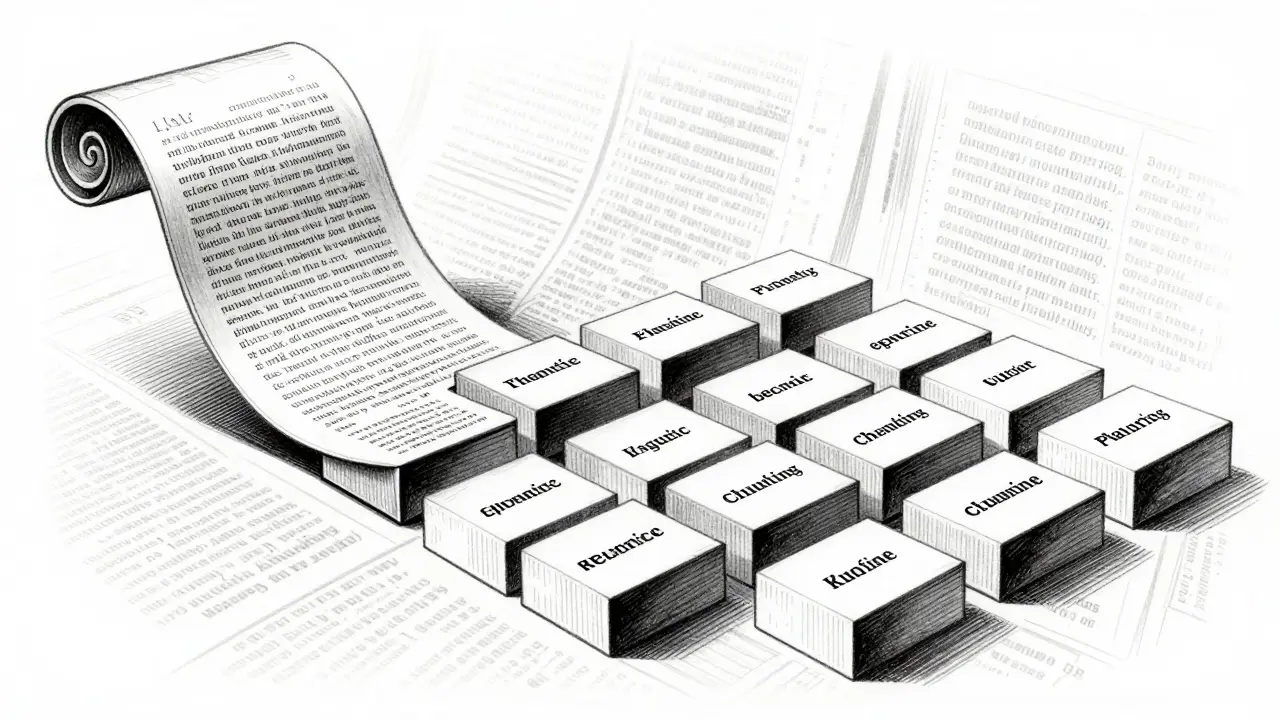
Once you have identified weaknesses through evaluation, you can optimize your pipeline. One effective strategy is Semantic Chunking. Instead of splitting documents by fixed character counts, semantic chunking breaks text at logical boundaries, such as paragraphs or sections. This preserves context and improves retrieval accuracy.
You can also fine-tune your retriever using task-specific corpora. By using contrastive loss, you train the retriever to keep similar documents closer together in the vector space and push irrelevant ones away. For example, in a healthcare chatbot, fine-tuning ensures that the term "stroke" prioritizes medical conditions over painting techniques.
Reranking is another powerful technique. After initial retrieval, a cross-encoder model re-evaluates the top results and reorders them based on relevance to the query. This step significantly boosts precision by filtering out false positives from the initial vector search.
Common Pitfalls to Avoid
When building evaluation frameworks, avoid the trap of optimizing for single metrics in isolation. Improving recall might hurt precision, and increasing faithfulness might reduce creativity in open-ended tasks. You need to balance these competing goals based on your specific workload requirements.
Another pitfall is neglecting the behavior layer. Analyzing token predictions and attention scores can provide early warning signals for potential hallucinations. Low confidence tokens during generation often indicate that the model is unsure or fabricating information. Monitoring these signals allows you to intervene before bad outputs reach the user.
Finally, remember that evaluation is an iterative process. As your knowledge base grows and changes, your retrieval and generation performance will shift. Continuous testing and monitoring are essential to maintain trust and reliability in your RAG system.
What is the difference between faithfulness and correctness in RAG?
Faithfulness measures whether the answer is supported by the retrieved context, regardless of factual accuracy. Correctness measures whether the answer is factually true according to ground truth. A model can be faithful but incorrect if the source document contains errors.
How do I measure Recall@k in my RAG system?
Recall@k is calculated by dividing the number of relevant documents retrieved in the top k results by the total number of relevant documents in the dataset. For example, if 3 out of 5 relevant docs are in the top 10 results, Recall@10 is 0.6.
Why is Context Overlap important?
Context Overlap indicates how much of the generated answer is derived from the provided documents. High overlap reduces hallucination risks by ensuring the model relies on retrieved data rather than its pre-trained knowledge.
What tools can I use for automatic RAG evaluation?
Tools like Ragas, DeepEval, and FactScore provide automated metrics for faithfulness, context recall, and answer relevance. They use LLM-as-a-judge approaches to score responses without manual intervention.
How does semantic chunking improve retrieval?
Semantic chunking splits documents at logical boundaries rather than fixed lengths. This preserves context and coherence, making it easier for the retriever to find complete and meaningful information.


