
You just deployed a large language model that’s brilliant at general reasoning but embarrassingly outdated. It doesn’t know about the new tax laws passed last month, or the product recall that happened yesterday. Now you have two choices: spend weeks and thousands of dollars retraining the model, or plug it into a live database of current documents. This is the core tension in modern AI deployment: Retrieval-Augmented Generation (RAG) versus retraining or fine-tuning Large Language Models (LLMs). One keeps your AI smart by giving it open-book access to fresh data; the other tries to teach it new facts permanently. Which one actually solves your factuality problem without breaking the bank?
The Core Difference: Open Book vs. Memorization
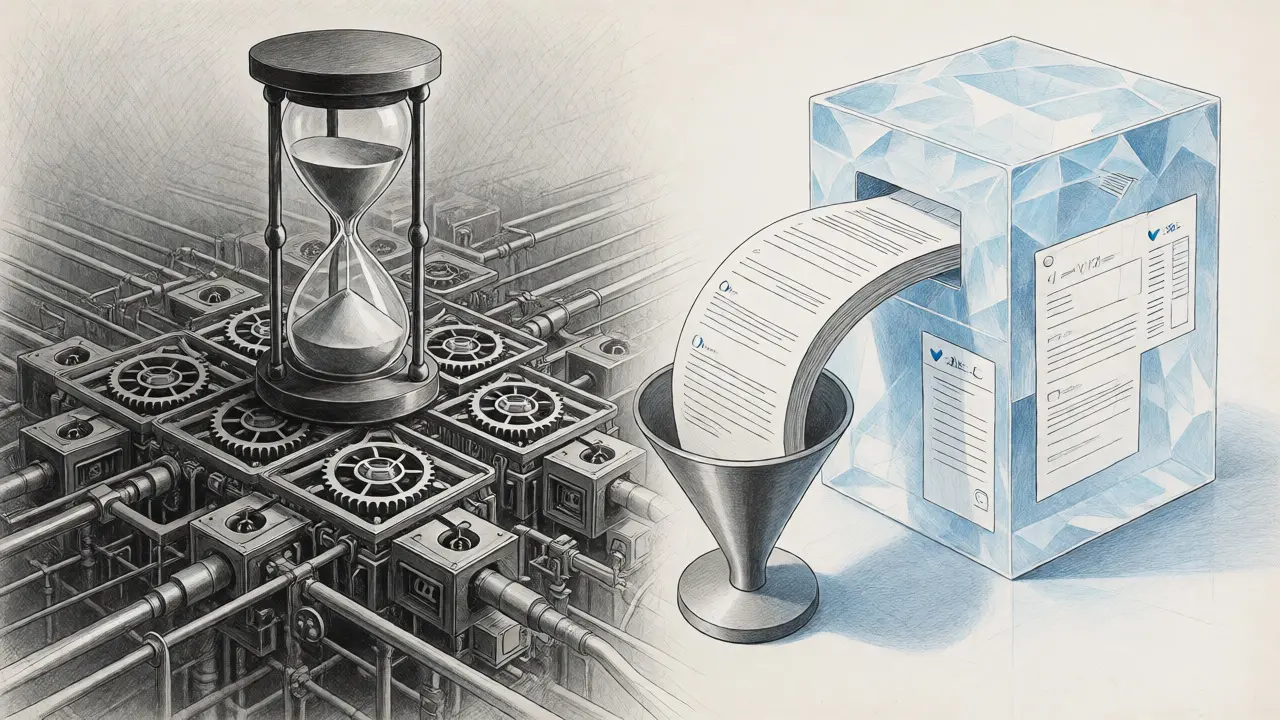
Think of an LLM like a student taking a test. Retraining or fine-tuning is like making the student memorize every textbook before entering the exam room. If they forget a page, or if the textbook gets updated after they study, they’re stuck with old info. RAG, on the other hand, lets the student keep the textbooks on their desk during the test. They can look up the answer right when they need it.
Fine-tuning modifies the model's internal weights by training it on specific datasets. It embeds expertise directly into the neural network. This makes the model faster at inference because it doesn't need external lookups, but it creates a static snapshot of knowledge. If new information arrives, you must run the entire training process again.
RAG operates differently. It retrieves relevant chunks of text from an external vector database at the moment of inference. The model then uses this retrieved context to generate its response. The knowledge stays outside the model. Updating the system means simply adding new documents to the database, not touching the model weights.
Why Retraining Struggles with Dynamic Facts
Here is the dirty secret about Large Language Models: they are notoriously bad at learning new factual information through simple fine-tuning. Research published in 2023 showed that while models can learn style or format easily, injecting specific new facts via unsupervised fine-tuning is unreliable. You might need to expose the model to dozens of variations of the same fact for it to stick, and even then, it might hallucinate or ignore it.
Worse, retraining introduces the risk of catastrophic forgetting. When you train a model on new data, it often overwrites older knowledge. You fix the issue with new legal codes, but suddenly the model starts messing up basic grammar or historical dates it previously knew perfectly. This instability makes retraining a high-stakes gamble for businesses needing consistent reliability.
The Operational Economics: Cost and Speed
Let’s talk money and time, because these are usually the deciding factors for CTOs. Retraining a large model is expensive. It requires massive GPU clusters, weeks of compute time, and careful dataset preparation. Every time your data changes significantly-say, a quarterly earnings report release-you trigger another costly cycle.
RAG shifts the cost structure. Instead of paying for heavy compute cycles, you pay for storage and retrieval infrastructure. Industry analysis suggests that integrating external information via RAG can reduce operational costs by roughly 20% per token compared to continually fine-tuning traditional LLMs. More importantly, the update speed is nearly instant. Add a PDF to your vector store, index it, and the next query sees the new info. No waiting for training jobs to finish.
| Feature | RAG (Retrieval-Augmented Generation) | Fine-Tuning / Retraining |
|---|---|---|
| Knowledge Location | External Database (Vector Store) | Internal Model Weights |
| Update Mechanism | Add/Update Documents | Full or Partial Retraining Cycle |
| Catastrophic Forgetting Risk | Low (Historical data remains accessible) | High (New data may overwrite old) |
| Implementation Speed | Fast (Hours to Days) | Slow (Weeks to Months) |
| Cost Profile | Lower Compute, Higher Storage/Query Costs | High Compute, Lower Query Latency |
| Best For | Dynamic, Frequently Changing Data | Static, Specialized Tasks & Style |
When to Choose RAG Over Retraining
If your business lives in fast-moving industries like finance, news, or tech support, RAG is almost always the better choice. Why? Because your "ground truth" changes daily. A stock price from Tuesday is useless on Wednesday. Retraining a model every day to capture Tuesday's price is absurdly inefficient. RAG handles this naturally by pulling the latest entry from your database.
RAG also shines when you need transparency and auditability. In regulated sectors like healthcare or government, you need to prove why the AI gave a specific answer. With RAG, you can show the exact document chunk the model used. With a fine-tuned model, the knowledge is buried in billions of parameters-a black box that is hard to explain to a compliance officer.
Furthermore, RAG prevents overfitting. When you fine-tune on a small, niche dataset, the model often becomes too specialized. It might stop answering general questions well because it’s obsessed with your specific domain. RAG keeps the base model’s general intelligence intact while grounding it in your specific data.
The Case for Fine-Tuning and Retraining
Does this mean retraining is dead? Absolutely not. There are specific scenarios where embedding knowledge into the model is superior.
First, consider latency-sensitive applications. Retrieving data adds milliseconds to the response time. If you need sub-100ms responses for real-time trading algorithms, the overhead of a vector search might be too high. A fine-tuned model answers instantly because the knowledge is already there.
Second, think about style and tone. If you want your AI to write exactly like your brand voice, using specific jargon, sentence structures, and formatting rules, fine-tuning is powerful. RAG can provide the facts, but it struggles to consistently enforce a complex stylistic persona unless you use very sophisticated prompting. Fine-tuning bakes that personality into the weights.
Third, for highly specialized tasks with static knowledge, such as medical diagnosis based on established textbooks that rarely change, fine-tuning smaller, cheaper models can be more cost-effective than running large general-purpose LLMs with RAG pipelines. You create a lightweight expert that does one thing exceptionally well.

The Hybrid Strategy: Best of Both Worlds
Most successful enterprises don't choose one or the other. They combine them. The most efficient AI strategy often looks like this: Use a large, general-purpose LLM as your base. Apply RAG to handle all dynamic, factual, and frequently changing knowledge. This ensures your AI is always up-to-date and grounded in reality. Then, apply light fine-tuning to optimize the model for specific output formats, tone, or narrow domain-specific reasoning patterns.
This hybrid approach leverages the strengths of each method. RAG handles the "what" (facts), while fine-tuning handles the "how" (style and format). It mitigates the risks of catastrophic forgetting because the bulk of your knowledge lives externally, while still gaining the efficiency and consistency benefits of a tuned model for routine interactions.
Implementation Pitfalls to Avoid
Before you rush to implement either, watch out for common traps. With RAG, the quality of your retrieval is everything. If your vector database returns irrelevant chunks, the model will hallucinate based on bad context. Garbage in, garbage out. Invest heavily in your chunking strategy and embedding models.
With fine-tuning, beware of the "illusion of competence." A model might sound confident while stating incorrect facts because it has learned the pattern of answering rather than the actual truth. Always validate fine-tuned models against a held-out set of recent facts, not just the training data.
Finally, remember that retraining is distinct from fine-tuning. Retraining involves training from scratch or near-scratch with combined old and new data. It’s computationally brutal and usually reserved for major version upgrades of foundation models, not weekly content updates. Don't confuse the two.
Is RAG cheaper than fine-tuning?
Generally, yes, especially for frequent updates. While RAG has infrastructure costs for vector databases, it avoids the massive compute costs of repeated training cycles. Studies suggest RAG can be up to 20 times cheaper than continuously fine-tuning a large model for dynamic knowledge.
Can fine-tuning teach an LLM new facts effectively?
It is difficult and unreliable. Research shows LLMs struggle to retain new factual information through unsupervised fine-tuning. They often require many examples of the same fact to learn it, and even then, they may hallucinate or forget it. RAG is more reliable for factual accuracy.
What is catastrophic forgetting?
Catastrophic forgetting occurs when a machine learning model loses previously learned information upon learning new information. During fine-tuning, updating the model's weights for new data can overwrite the weights responsible for older knowledge, degrading performance on previous tasks.
When should I use fine-tuning instead of RAG?
Use fine-tuning when you need to control the model's style, tone, or output format strictly, or when dealing with static, specialized domains where knowledge rarely changes. It is also useful for reducing latency in real-time applications where external retrieval adds too much delay.
Do I need both RAG and fine-tuning?
Many enterprise solutions benefit from a hybrid approach. Use RAG to inject up-to-date, factual knowledge from external sources, and use fine-tuning to adapt the model's behavior, style, and reasoning patterns to your specific application needs.

