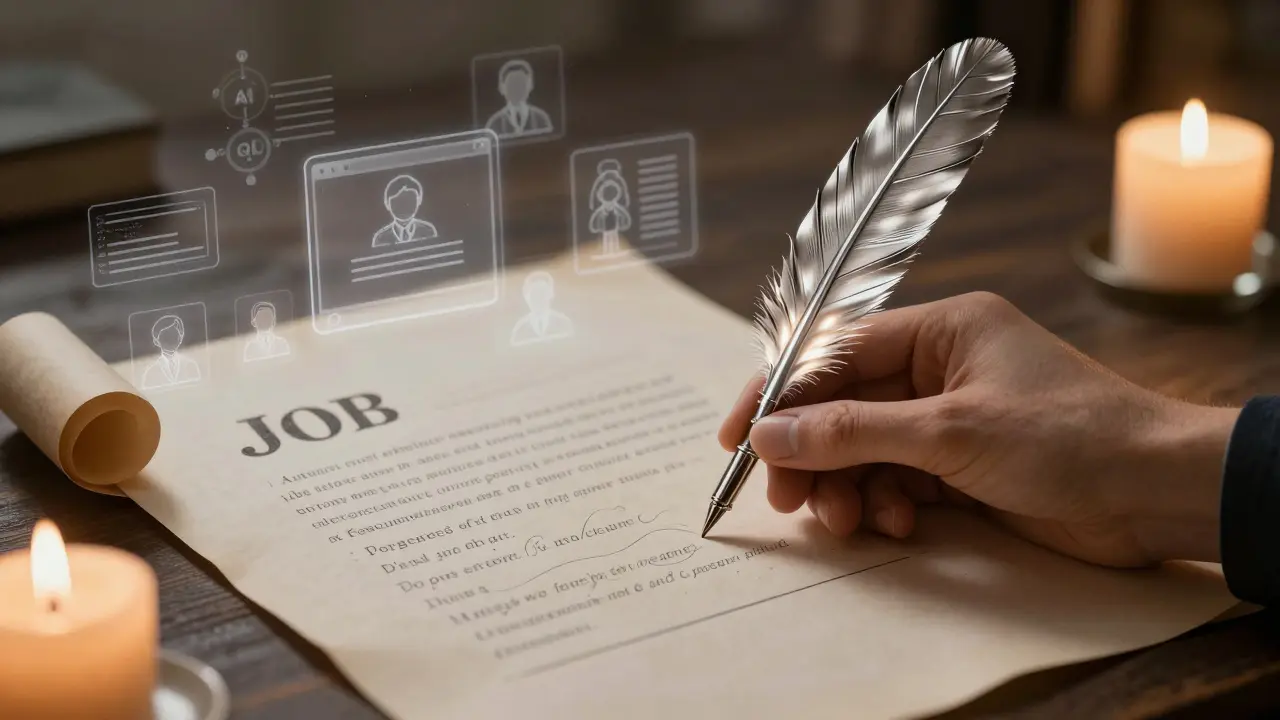
Every year, HR teams spend an average of 3 to 5 hours writing a single job description. That’s not just time lost-it’s money, energy, and morale drained from tasks that could be shaping culture, not formatting bullet points. Now, generative AI is changing that. It’s not replacing HR professionals. It’s freeing them from the grind so they can focus on what actually matters: people.
How Generative AI Writes Job Descriptions That Actually Work
Old-school job posts often sound like they were written by a robot-because they were. Generic phrases like “team player,” “self-starter,” and “results-driven” filled pages without meaning. Generative AI doesn’t just rewrite them-it learns what works.
Tools like Gloat’s AI Job Description Builder and Eightfold’s talent intelligence platform analyze millions of successful postings across industries. They detect bias, match keywords to applicant tracking systems (ATS), and tailor tone to company culture. One study found AI-generated job descriptions reduced gender-biased language by 94%, compared to just 62% with basic GPT-4 prompts. That’s not luck-it’s data.
But here’s the catch: AI doesn’t know your company’s voice unless you teach it. A startup in Austin used GPT-4 to draft engineering roles and got back robotic, corporate-sounding posts. Candidates noticed. Engagement dropped 18%. Then they fed the AI 20 past postings that actually attracted great hires. Within days, applications jumped 40%. The AI didn’t write better posts-it learned what *they* valued.
Today’s top tools integrate with Workday, SAP SuccessFactors, and Oracle HCM Cloud. They pull from real data: past hires, performance reviews, even exit interview themes. The result? Job descriptions that don’t just attract applicants-they attract the right ones.
Interview Guides That Adapt to the Candidate
Interview guides used to be static. One-size-fits-all questions: “Tell me about a time you failed.” “Where do you see yourself in five years?” They sounded rehearsed. Candidates memorized answers. Hiring managers got tired of hearing them.
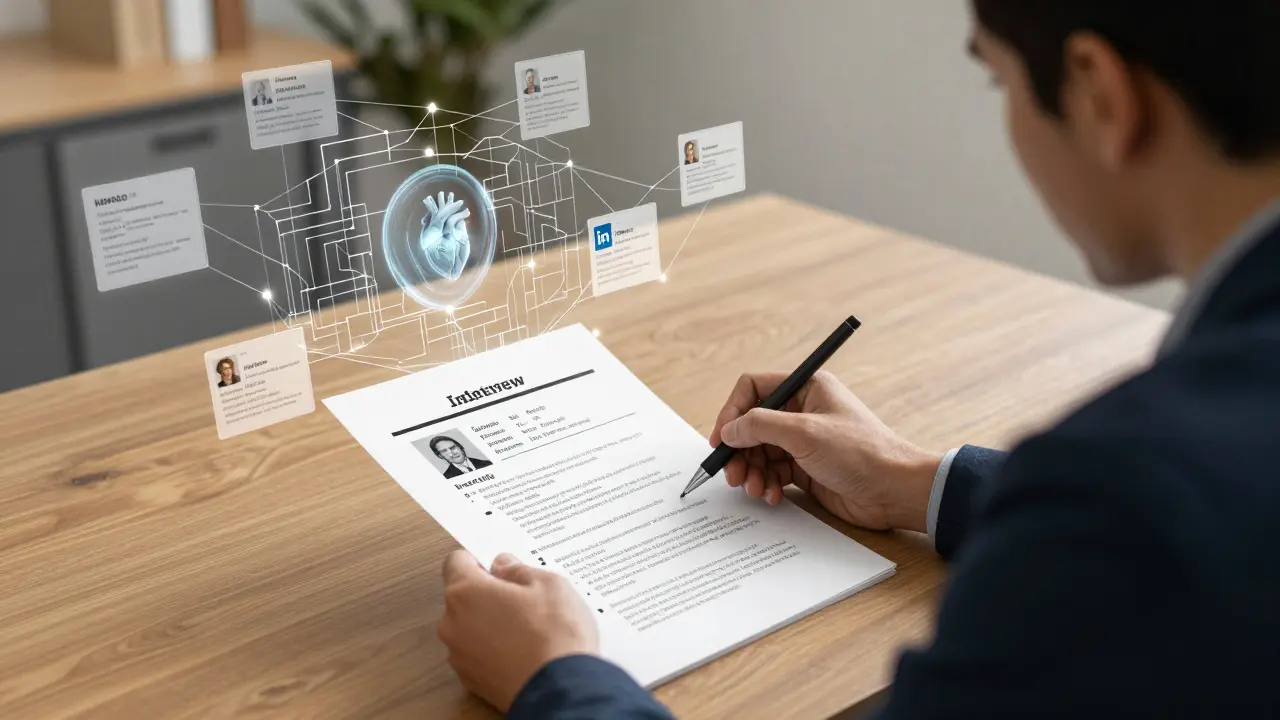
Generative AI changes that. Systems like HireVue and Beamery now generate dynamic interview guides based on the candidate’s resume, LinkedIn profile, and even their responses to pre-screening questions. If someone highlights project leadership in their background, the AI suggests behavioral questions about team conflict or decision-making under pressure. If they switched careers, it probes motivation and transferable skills.
At Unilever, AI-powered interviews cut scheduling time by 76% and raised candidate satisfaction by 32 points. Why? Because candidates felt heard. The questions weren’t canned-they felt personal.
But AI doesn’t replace human judgment. It enhances it. A recruiter in Chicago used an AI tool to generate questions for a senior UX designer role. The system flagged a red flag: the candidate had left three jobs in five years. The AI suggested asking, “What did you learn from leaving each role?” The candidate opened up about burnout and a desire for mentorship-not a dealbreaker, but critical context. The hire stuck. Two years later, they became a team lead.
Tools like Anthropic’s Claude 2 and Google’s Gemini now understand context better than ever. By early 2025, Claude scored 89% accuracy interpreting complex HR policies during interviews. Gemini hit 85% in generating multilingual interview guides. That’s huge for global teams.
Onboarding That Feels Human, Not Bureaucratic
Onboarding used to mean a stack of paperwork, a 30-minute IT setup call, and a PDF titled “Company Values 2023.” New hires felt like forms to process, not people to welcome.
Now, AI-driven onboarding platforms like Phenom and Zoho deliver personalized experiences. Within hours of accepting an offer, a new employee gets a tailored welcome message. It references their background: “Welcome, Maria! We noticed your work in sustainable logistics-our green team is excited to have you.”
The AI also auto-generates training paths. If someone comes from a tech background but is joining marketing, the system suggests foundational courses in brand voice and campaign analytics. It schedules check-ins based on role and personality-introverts get one-on-one meetings; extroverts get team lunches.
Small businesses using Zoho’s AI tools saw onboarding completion rates rise by 72%. But there’s a downside. Forty-one percent of users said the content felt too generic. One HR manager in Denver told us, “It called our core value ‘innovation’ five times. We’re a plumbing company. We don’t talk like a startup.”
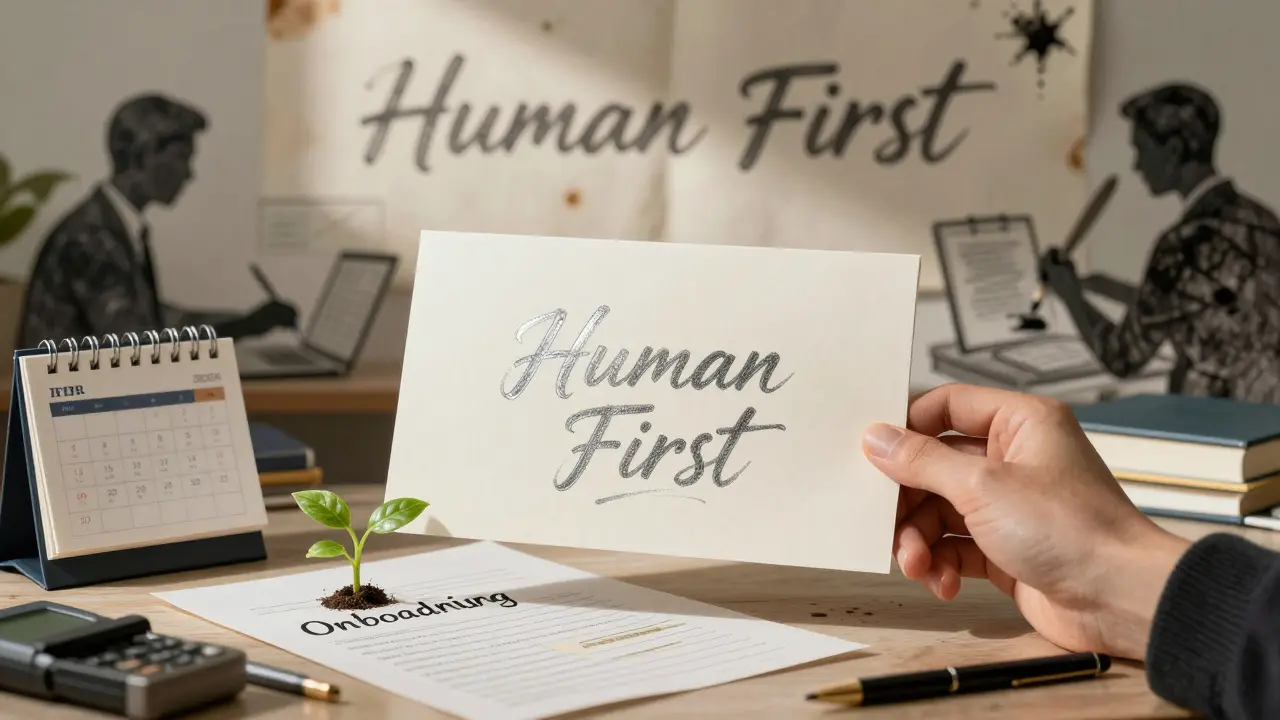
The fix? Human input. Top-performing companies use AI to draft, then HR edits for tone. They add inside jokes, local references, real employee quotes. That’s the sweet spot: AI handles the logistics. Humans handle the heart.
What’s Really Changing in HR
This isn’t just about saving time. It’s about shifting HR’s role entirely.
Three types of AI agents are reshaping the function:
- Conversational agents answer questions like “How do I request PTO?” or “When is benefits enrollment?”
- Functional agents screen resumes, schedule interviews, draft job posts.
- Supervisory agents analyze turnover trends, predict attrition risks, and recommend interventions.
Companies where HR leads AI strategy-not IT-see 3.2 times higher employee trust. Why? Because HR understands the human cost of bad tech. They know when a policy feels cold. They know when a question is invasive. They know when a candidate is being filtered out unfairly.
That’s why 78% of HR leaders plan to adopt “AI co-pilots” by late 2025. Not replacements. Partners.
The Hidden Risks Nobody Talks About
AI isn’t magic. It’s a mirror. If your data is biased, the AI will be too.
A major financial firm got hit with a $2.3 million settlement after AI-generated onboarding materials failed ADA compliance. The system used templates that assumed all employees could read standard print. It didn’t account for visual impairments. No one checked.
Another issue? “AI-generated workslump.” That’s when teams flood systems with low-quality AI drafts. One company reported a 68% increase in content needing review-because everyone used AI without editing. Time saved? Gone. Quality lost? Worse.
And compliance? It’s getting stricter. New York’s Local Law 144 requires bias audits for hiring tools. The EU AI Act classifies HR AI as high-risk. If you’re using AI to screen candidates, you need documentation. You need audits. You need a policy.
Companies that ignore this don’t just risk fines-they risk trust. Employees notice when AI feels impersonal. Candidates notice when language feels robotic. Your brand suffers.
How to Start Smart
You don’t need a $500,000 budget or a team of data scientists. Start small.
- Pick one task. Job descriptions are the easiest win. Use a tool like Gloat or even a fine-tuned GPT-4 with your past posts as training data.
- Train it with your best. Feed the AI 10 job posts that led to high-performing hires. Not the ones you liked-the ones that worked.
- Test, then edit. Run AI drafts past your team. Ask: Does this sound like us? Would someone want to apply?
- Track results. Did applications increase? Did quality improve? Did time-to-hire drop?
- Scale slowly. Once job descriptions work, move to interview guides. Then onboarding.
Training takes time. LinkedIn Learning reports HR pros need about 87 hours of prompt engineering training to use these tools well. That’s not a barrier-it’s an investment. The best HR teams now have an AI liaison: someone who understands both the tech and the human side.
What’s Next
By 2026, the HR AI market will hit $10.8 billion. Tools will get smarter. Agents will plan tasks, adapt feedback, and even suggest team restructuring based on performance data.
But the winners won’t be the ones with the fanciest AI. They’ll be the ones who remember: automation doesn’t replace humanity. It amplifies it.
HR has always been about people. Now, AI lets HR be *more* human.
Can generative AI replace HR professionals?
No. Generative AI automates repetitive tasks like drafting job posts, scheduling interviews, and onboarding paperwork-but it can’t build trust, interpret culture, or handle ethical dilemmas. HR professionals remain essential for making judgment calls, ensuring fairness, and connecting with candidates and employees on a human level. AI is a tool, not a replacement.
How accurate are AI-generated job descriptions?
Top tools like Gloat and Eightfold achieve 87-94% accuracy in matching job requirements to industry standards, based on Hackett Group and Culture Amp benchmarks. They reduce bias by up to 94% when trained on high-performing past postings. However, accuracy drops for niche technical roles-engineering job posts, for example, often need human revision, with 33% requiring major edits according to Deel’s 2024 data.
Is generative AI in HR compliant with laws like the EU AI Act or NYC Local Law 144?
Only if properly managed. The EU AI Act classifies hiring AI as high-risk, requiring documentation, bias testing, and human oversight. NYC’s Local Law 144 mandates annual bias audits for automated hiring tools. Companies using AI for recruitment must maintain audit trails, validate fairness metrics, and ensure transparency. Failure to comply can result in fines or lawsuits, as seen in a $2.3 million case involving ADA violations.
What’s the biggest mistake companies make when using AI for HR?
Using AI without human review. Many companies generate job posts, interview questions, or onboarding materials with AI and assume they’re ready to go. This leads to generic, tone-deaf, or even biased content. The most successful teams treat AI as a first draft-editing for culture, clarity, and compliance. The real value isn’t in automation-it’s in augmentation.
Which HR AI tools are best for small businesses?
Zoho’s HR AI tools are the most accessible for small teams, offering affordable AI-driven onboarding and job description features with simple integrations. Gloat and Eightfold are powerful but better suited for enterprises. Startups can also use fine-tuned versions of GPT-4 or Claude with custom prompts trained on their own past job posts-low cost, high impact if done right.
How long does it take to implement generative AI in HR?
It depends on your readiness. Companies with clean data and existing HR tech (like Workday or SAP) can deploy AI job description tools in 45-60 days. Those starting from scratch with siloed data and no integration may need 6-9 months and $250,000-$500,000. The key isn’t speed-it’s starting small. Pilot one use case, measure results, then expand.
Do employees trust AI in HR?
Trust varies. In companies where HR leads AI strategy, employee trust is 3.2 times higher than where IT runs it. Workers distrust AI when it feels impersonal or opaque. Transparency helps: explain how AI is used, what data it accesses, and how decisions are reviewed. People accept AI when they know it’s being guided by humans who care about fairness.
Next Steps for HR Teams
If you’re thinking about using generative AI in HR, start here:
- Review your top 3 time-consuming HR tasks. Which one could be automated first?
- Collect 10 past job descriptions that led to successful hires. Use them to train your AI.
- Set up a review process: every AI output gets checked by a human before going live.
- Train your team on prompt engineering. Even 10 hours a month makes a difference.
- Talk to your legal team about compliance. Don’t wait for a lawsuit to start.
Generative AI won’t fix broken processes. But it can turn good HR teams into great ones.


