
Why Traditional Fine-Tuning is Expensive
Full fine-tuning a large language model can cost thousands in GPU hours. What if you could adapt it for your task using less than 1% of the parameters? That's exactly what prompt-tuning and prefix-tuning do. These parameter-efficient methods (PEFT) let you tweak frozen models without retraining everything. They're a game-changer for teams with limited resources.
How Prompt-Tuning Works
Prompt-Tuning adds trainable "soft prompts" to the input sequence. These are embedding vectors that aren't actual words but learned representations. Only these prompts are updated during training; the main model stays frozen. For example, if you're fine-tuning for sentiment analysis, the soft prompts might guide the model to focus on emotional cues.
Typically, prompt-tuning uses 10-100 soft tokens. For a 7B parameter model, that's just 0.1% of the total parameters. Hugging Face PEFT library makes it easy to implement-often in under 15 lines of code. This simplicity makes prompt-tuning a go-to for quick deployments.
How Prefix-Tuning Works
Prefix-Tuning takes a different approach. Instead of just modifying the input, it inserts trainable key and value vectors into every transformer layer of the model. These "prefixes" act like internal guides that shape the attention mechanism at each layer.
Prefix-tuning typically requires 0.5-1% of the model's parameters. For example, in a 7B model, that's about 35-70 million parameters. While more than prompt-tuning, it's still tiny compared to full fine-tuning. The Hugging Face PEFT library supports prefix-tuning, allowing you to configure prefix length per layer for optimal performance.
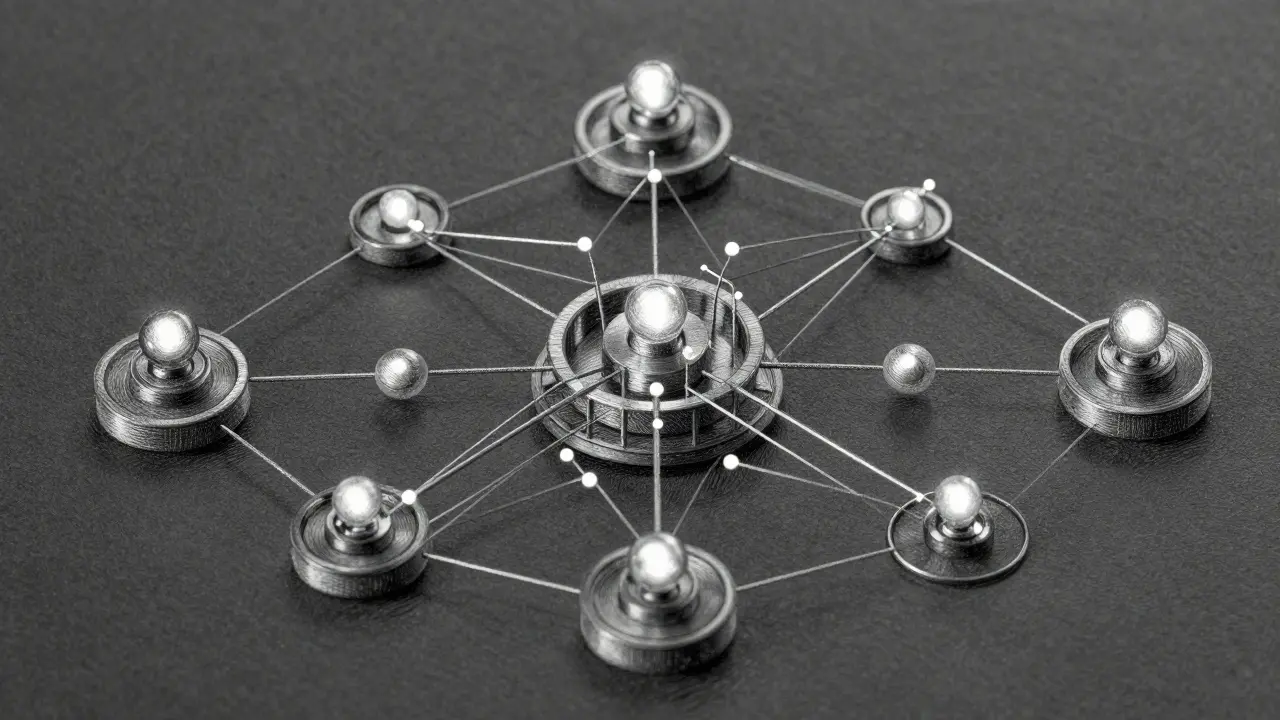
Key Differences Between the Two
Here's how they stack up:
| Aspect | Prompt-Tuning | Prefix-Tuning |
|---|---|---|
| Parameters Modified | 0.1% of model size | 0.5-1% of model size |
| Where It Works | Input sequence only | Each transformer layer's attention mechanism |
| Best For | Simple tasks similar to pretraining | Complex tasks needing deeper model adaptation |
| Training Time | Fast (e.g., 1.2 hours on A100) | Slower (e.g., 3.5 hours on A100) |
| Limitations | Struggles with tasks requiring new attention patterns | Cannot change relative attention patterns fundamentally |
When to Choose Prompt-Tuning
Prompt-tuning shines in scenarios where:
- You need the smallest possible adapter for quick deployments
- Your task is close to what the model was originally trained on (e.g., sentiment analysis on standard datasets)
- You're working with limited GPU resources or edge devices
- You want to swap tasks rapidly without retraining
A real-world example: A Reddit user reported prompt-tuning achieved 82% accuracy on sentiment analysis with just 20 soft tokens in 1.2 hours on a single A100 GPU. That's ideal for startups or teams without dedicated ML infrastructure.
When to Choose Prefix-Tuning
Prefix-tuning is better when:
- You need higher accuracy on complex tasks like medical QA or legal document analysis
- Your task requires the model to adapt deeply across multiple layers
- You have moderate GPU resources and can afford slightly longer training
- You're working on tasks where soft prompts alone aren't enough to guide the model
For instance, a Kaggle competitor used prefix-tuning to hit 78.3% accuracy on a medical QA task with only 0.7% of parameters updated-nearly matching full fine-tuning's 79.1% but with 12x less training time.
What You Need to Know About Limitations
Neither technique is perfect. The arXiv paper from October 2023 found that both methods fail when tasks require fundamentally new attention patterns. For example, when asked to reverse the order of sequences (like sorting numbers descending), prefix-tuning with a small prefix size scored 0% accuracy. Full fine-tuning, however, managed 85%.
This isn't just theoretical. In practice, if your task is too far from the model's original training data, these methods might not work. Always test them against your specific use case.
Practical Tips for Implementation
Here's how to get started:
- Start with prompt-tuning for simple tasks. It's easier to set up and has lower computational costs.
- Use task-relevant token embeddings for initialization-random initialization often leads to poor results.
- For prefix-tuning, limit prefix length to 50 tokens per layer. Stanford researchers found diminishing returns beyond this point.
- Combine with other PEFT methods like LoRA for hybrid approaches. Recent research shows this boosts performance further.
- Monitor performance closely. If accuracy plateaus, consider switching to full fine-tuning for critical tasks.
Frequently Asked Questions
Which method uses fewer parameters?
Prompt-tuning typically uses 0.1% of model parameters, while prefix-tuning uses 0.5-1%. This makes prompt-tuning more parameter-efficient but sometimes less powerful for complex tasks.
Can I combine both methods?
Yes! Recent research shows combining prefix-tuning with LoRA (another PEFT method) creates highly productive fine-tuning. This hybrid approach leverages the strengths of both techniques while reducing overall resource needs.
Do these work with all LLMs?
Both methods work with standard transformer-based models like BERT, T5, and LLaMA-2. However, they're optimized for autoregressive and encoder-decoder architectures. Check compatibility with your specific model before implementing.
Why isn't prefix-tuning always better?
Prefix-tuning modifies more layers, which gives it more control but also introduces complexity. Research shows it can't change the fundamental attention patterns of a model. If your task requires completely new attention behaviors, prefix-tuning might fail where full fine-tuning succeeds.
What's the future of these techniques?
Both methods will continue evolving. Hugging Face's roadmap includes dynamic prefix length adjustment for prefix-tuning, while prompt-tuning is being optimized for edge devices. However, they'll likely complement rather than replace full fine-tuning for high-stakes tasks where absolute accuracy matters.


