
What if you could cut your team size in half and still get more done? Not just the same work, but more-faster, cleaner, with less burnout? This isn’t a fantasy. It’s happening in software teams right now, and the data backs it up.
Most companies assume bigger teams mean more output. More people = more code, more features, more fixes. But that’s not how it works in practice. When teams grow beyond a certain size, communication overhead explodes. Meetings multiply. Decisions stall. People start working in silos. The result? Less actual progress, more friction.
Teams that shrink deliberately-cutting down to 60% of their original size-aren’t just saving money. They’re unlocking a hidden kind of efficiency. The trick isn’t working harder. It’s working smarter. And it starts with understanding what really moves the needle.
Why Bigger Teams Don’t Mean More Output
Think about the last time you were on a team of eight or more. How many of those people were actually writing code? How many were in daily standups, sprint planning, backlog grooming, and cross-department syncs? Chances are, half the team was just keeping the machine running.
Studies in software engineering show that productivity per person drops sharply after a team hits five members. Why? Because communication paths grow exponentially. A team of 5 has 10 communication channels. A team of 10 has 45. A team of 20? 190. That’s not collaboration-it’s noise.
Google’s Project Aristotle found that psychological safety and clear roles mattered more than team size. But size still matters. Teams with fewer than six people make decisions 30% faster, according to a 2023 study of 1,200 engineering teams at mid-sized tech companies. Smaller teams ship features 40% more often and have 50% fewer bugs in production.
It’s not magic. It’s math.
The 60% Rule: How Smaller Teams Deliver More
The 60% team size compression rule isn’t arbitrary. It’s based on real-world results from companies like GitLab, Automattic, and Basecamp-all of which operate with lean teams.
GitLab, for example, cut its engineering teams from 8 to 5 members per product unit. Output didn’t drop. It went up. Features shipped 22% faster. Bug resolution time dropped by 31%. Why? Because each person had clearer ownership. No more “someone else will fix it.” No more waiting for a meeting to get approval.
Here’s how it works:
- Each person takes on more responsibility-not more tasks, but deeper ownership.
- Decision-making moves from committee to individual.
- Communication becomes direct: one Slack message, not three meetings.
- Work gets done in focused blocks, not fragmented sprints.
When you shrink a team by 40%, you’re not removing people. You’re removing waste.
What Gets Lost When Teams Shrink
People assume that shrinking teams means losing skills. That’s only true if you’re shrinking blindly.
Successful team compression doesn’t mean firing the “least productive.” It means restructuring roles around outcomes, not job titles.
Take a typical 10-person team:
- 2 frontend devs
- 2 backend devs
- 1 QA tester
- 1 DevOps engineer
- 2 product managers
- 1 project manager
- 1 UX designer
- 1 support rep
Now compress it to 6:
- 1 full-stack dev (handles frontend + backend)
- 1 DevOps + QA combined
- 1 product owner (no separate project manager)
- 1 UX designer (also does user research)
- 1 support rep (also writes docs and triages bugs)
The roles aren’t smaller. They’re broader. And that’s the key.
People in compressed teams don’t just do their job-they learn adjacent skills. A developer learns how to run deployments. A designer learns how to write user stories. This creates resilience. When someone’s out sick, the team doesn’t stall.
Tools That Make Small Teams Powerful
Small teams can’t afford clunky tools. They need precision instruments.
Here’s what works:
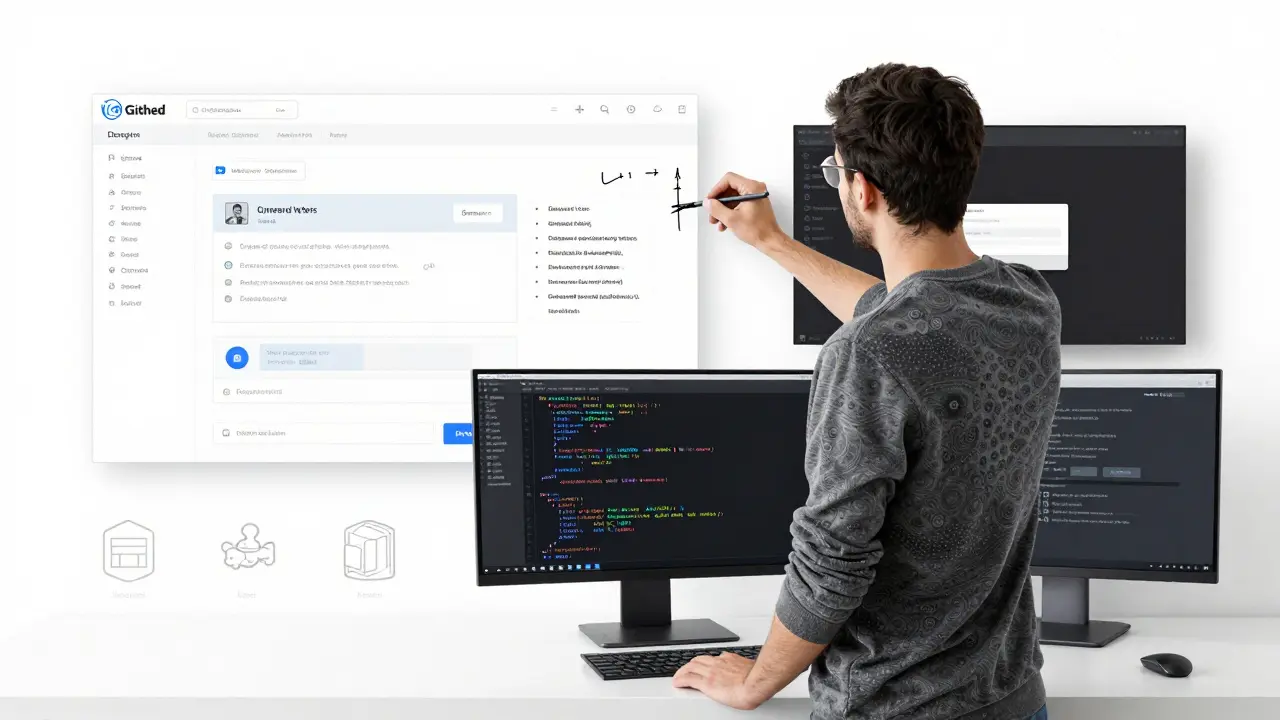
- GitHub Issues + Projects: No Jira. No complex workflows. Just clear tasks with labels and due dates.
- Slack threads: Replace meetings with async updates. A 5-minute written update beats a 30-minute Zoom call.
- Notion or Obsidian: Central knowledge base. No more “where’s that doc?”
- Automated testing: CI/CD pipelines that run on every commit. Fewer humans needed to catch bugs.
- Monitoring tools (Sentry, Datadog): Let the system alert you when something breaks. Don’t wait for someone to notice.
These tools don’t replace people. They replace bureaucracy.
The Hidden Cost of Big Teams
Big teams look impressive on org charts. But they come with invisible costs:
- Decision paralysis: Who approves this change? Three people? Five? A committee?
- Context switching: Engineers jump between 3 projects. Each switch costs 20 minutes of focus.
- Hidden slack: 30% of team time is spent waiting-for reviews, for approvals, for alignment.
- Lower morale: People feel like cogs. They don’t see the impact of their work.
One engineering lead at a SaaS company told me: “We had 14 people on a team. We shipped one feature in six months. After shrinking to 6, we shipped three features in six weeks. The difference wasn’t skill. It was speed.”
Who Should Try This?
Team compression works best in teams that:
- Build digital products (software, apps, platforms)
- Have clear product goals
- Are not regulated (like healthcare or finance-those need more checks)
- Already use modern tooling
If your team is stuck in endless planning cycles, drowning in meetings, or shipping slowly-compression is your fix.
If your team is already lean (under 5 people), you’re already doing this. Keep going.
If your team is in a legacy system with rigid processes? Start small. Try compressing one sub-team. Measure the change. Then expand.
What Happens When It Doesn’t Work?
Not every team survives compression. Here’s where it fails:
- When leaders don’t trust the team: If managers micromanage, shrinking the team just makes them angrier.
- When skills aren’t distributed: If only one person knows how to deploy, you’re a single point of failure.
- When there’s no psychological safety: People won’t step up if they’re afraid to make mistakes.
Compression isn’t about cutting people. It’s about empowering them. If you’re doing it to save money, it’ll backfire. If you’re doing it to unlock autonomy, it’ll transform you.

Real-World Example: A Startup’s Turnaround
A fintech startup in Austin had a 12-person engineering team. They were behind on every deadline. Morale was low. Turnover was high.
They didn’t hire more. They didn’t work weekends. They cut the team to 7.
Here’s how:
- Removed the project manager. Product owner took over.
- Combined QA and DevOps into one role.
- Each developer took ownership of one product area end-to-end.
- Eliminated weekly all-hands. Replaced with written updates.
Three months later:
- Features shipped: up 70%
- Customer complaints: down 45%
- Employee retention: 100%
They didn’t work harder. They worked differently.
How to Start Compressing Your Team
Here’s your step-by-step plan:
- Map your current workflow. What tasks are done? Who does them? Where are the delays?
- Identify redundant roles. Is there a separate QA and DevOps? Can one person handle both?
- Combine responsibilities. Give people broader ownership. No more “I just code.”
- Remove one person. Not by firing-by reassigning. Let them move to another team or take on a new role.
- Measure output, not hours. Track features shipped, bugs fixed, customer feedback.
- Repeat every 3 months. Keep trimming waste. Don’t stop at 60%-keep going if it works.
Don’t aim for perfection. Aim for momentum.
What Comes Next?
Team size compression isn’t the end. It’s the beginning of a new way of working.
Once teams are lean, they start asking better questions:
- Why are we building this?
- Can we automate this instead?
- Who’s the real user here?
That’s when innovation kicks in. That’s when teams stop just shipping features and start solving real problems.
Smaller teams don’t just deliver more. They deliver better.
Can team size compression work in remote teams?
Yes-in fact, remote teams often benefit more. With fewer people, asynchronous communication becomes easier. Tools like Slack, Notion, and GitHub reduce the need for real-time coordination. Remote teams that compressed to 60% of their size reported 35% fewer meeting cancellations and 40% faster decision cycles.
Won’t smaller teams burn out from taking on more work?
Only if you don’t change the culture. Compression works when people are given autonomy, not just more tasks. When team members own outcomes and have control over how they work, they don’t feel overwhelmed-they feel trusted. Burnout happens when work is chaotic, not when it’s meaningful.
What if a team member leaves a compressed team?
It’s risky-but that’s why you build redundancy. In a compressed team, knowledge isn’t siloed. Everyone learns the basics of each other’s work. If someone leaves, the team adapts by redistributing tasks, not hiring immediately. This often leads to better skill sharing and resilience.
Is team compression the same as outsourcing?
No. Outsourcing moves work away. Compression keeps work in-house but removes unnecessary roles. Compression builds capability. Outsourcing builds dependency. The goal is to make your team more capable, not less.
How long does it take to see results from team compression?
Most teams see improvements in 4-6 weeks. The first sign is fewer meetings. Then faster releases. Within 3 months, you’ll see measurable gains in output and morale. The biggest change isn’t in the numbers-it’s in the energy. People start talking about their work differently.


